
—Travis Luyindama, B1Daily
Germany’s “CloudFisher” technology is an advanced form of fog harvesting designed to extract drinkable water from clouds and fog, particularly in arid, mountainous, or coastal regions where conventional water sources are scarce. It was developed by Aqualonis GmbH, a German engineering company, and has been deployed in places such as Morocco, Ethiopia, and Chile.
Below is a detailed, step-by-step explanation of how it works and why it changing the face of the African continent.
1. The Core Idea: Harvesting Water from Air
CloudFisher is based on a simple physical principle: fog is made of microscopic liquid water droplets suspended in air. While invisible up close, fog can contain significant volumes of water if captured efficiently.
Traditional fog nets existed before, but they were fragile, inefficient, and easily damaged by wind. CloudFisher was created to solve those problems.
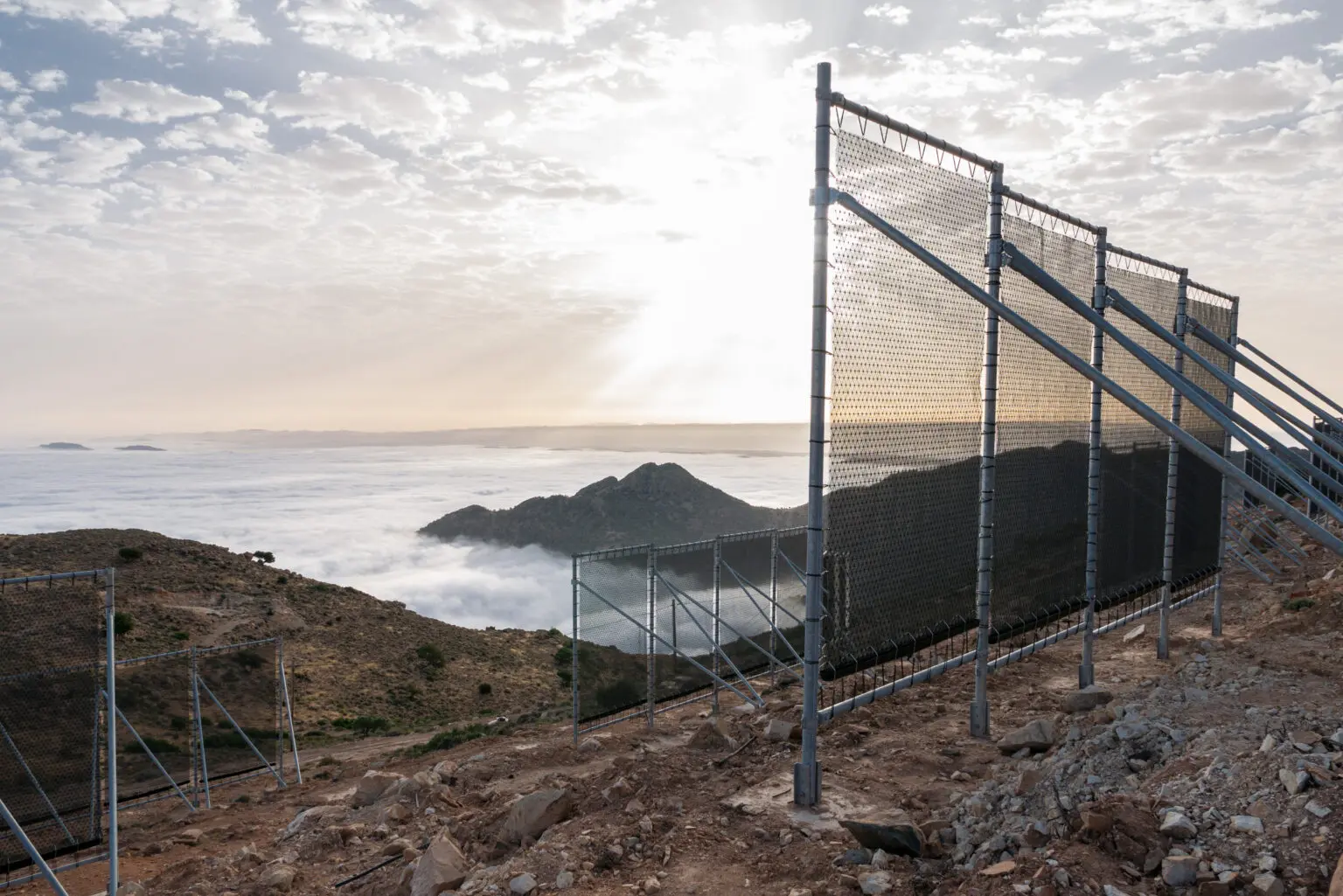
2. Structural Design: Built for Extreme Conditions
Unlike earlier fog collectors, CloudFisher systems are engineered for harsh mountain environments.
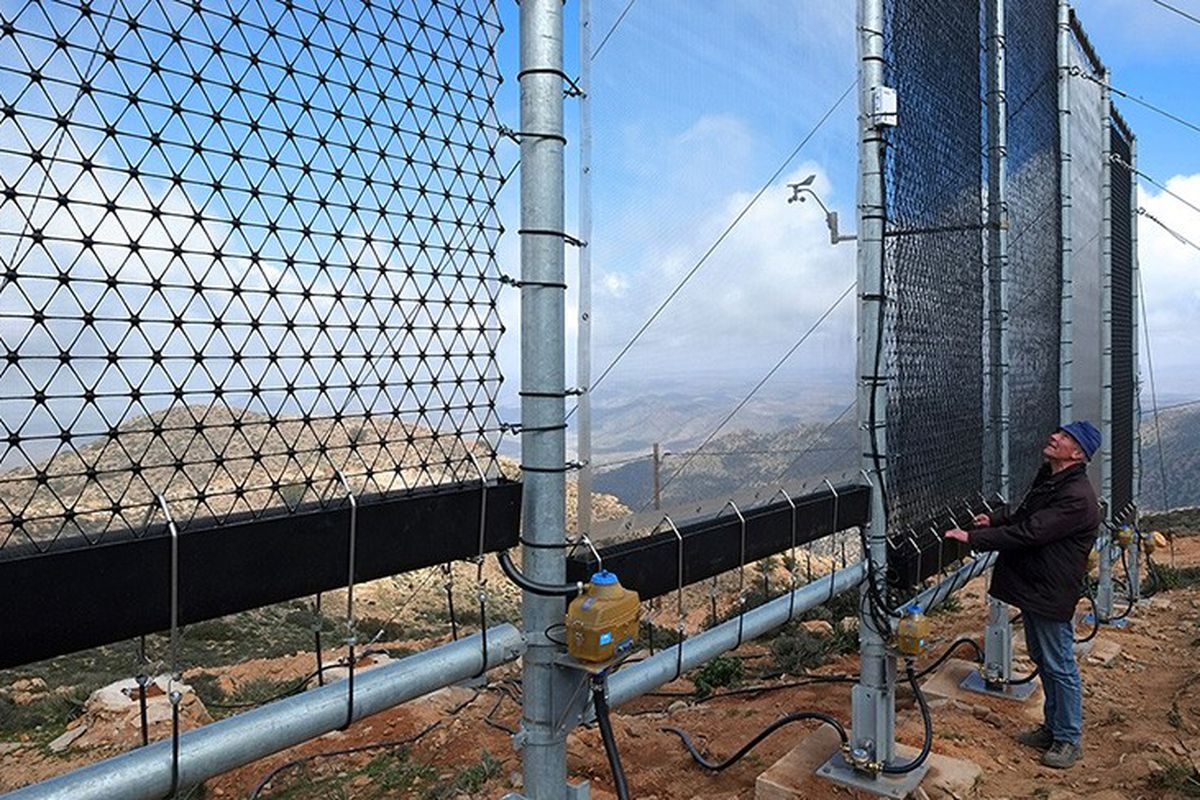
Key structural features:
- High-strength mesh panels made from durable polymers
- Steel cable support system anchored deep into rock or ground
- Aerodynamic flexibility that allows the structure to bend rather than break in high winds (up to ~120 km/h)
- Modular design, allowing systems to scale from small villages to larger communities
The system resembles a large, vertical net—sometimes up to 40 meters long—positioned perpendicular to prevailing fog-laden winds.
3. Mesh Technology: Where the Magic Happens
The mesh is the most critical component.
How it works:
- Fog passes through the mesh
- Tiny droplets collide with the fibers
- Droplets coalesce (merge) into larger drops
- Gravity pulls the water downward
The mesh is engineered to balance:
- Hydrophilicity (to capture droplets)
- Hydrophobicity (to allow water to run off efficiently)
- Optimal pore size (to avoid clogging while maximizing capture)
This is far more efficient than older plastic nets, which lost water to evaporation or wind.

4. Water Collection and Transport
At the bottom of the mesh:
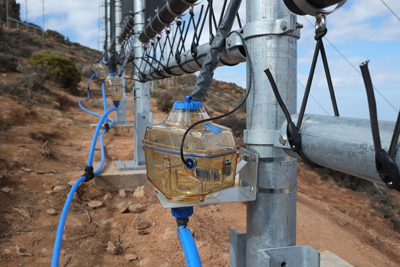
- Water drips into collection gutters
- It flows through pipes by gravity
- Stored in sealed tanks or cisterns
Because the water comes from atmospheric condensation, it is:
- Low in salts
- Free from heavy metals
- Typically requires only basic filtration and disinfection before drinking
5. Output: How Much Water Can It Produce?
Water yield depends on fog density, wind speed, and location.
Typical output:
- Up to 22 liters per square meter per day
- Large installations can produce thousands of liters daily
- Enough to supply entire rural communities with drinking and household water
Importantly, it works without groundwater extraction, preventing aquifer depletion.
6. Energy and Sustainability
CloudFisher systems:
- Require no electricity for collection
- Use gravity instead of pumps
- Have low maintenance costs
- Produce zero emissions
In some setups, solar-powered UV treatment or pumping is added, but the core system is entirely passive.
7. Why Germany’s Approach Is Different
Earlier fog-harvesting attempts often failed due to:
- Mesh tearing
- Wind damage
- Poor water yields
- Short lifespan
CloudFisher addresses these with:
- Engineering-grade materials
- Climate-specific design
- Long operational lifespans (10+ years)
- Community training for maintenance
This makes it a scalable humanitarian technology, not just an experiment.
8. Limitations and Constraints
Despite its promise, CloudFisher is not universal.
It requires:
- Regular fog or low cloud cover
- Elevated terrain or coastal airflow
- Initial infrastructure investment
- Ongoing local management
It will not work in hot, dry deserts with no fog.
9. Broader Significance
CloudFisher represents a shift in water policy thinking:
- Water from air, not extraction
- Climate-adaptive infrastructure
- Decentralized, community-level solutions
As climate change intensifies droughts, fog harvesting is increasingly seen as a climate-resilience technology, especially for regions historically excluded from water infrastructure investment.
In short:
Germany’s CloudFisher technology transforms fog—once an untapped atmospheric phenomenon—into a reliable, clean, and sustainable water source, using smart engineering rather than heavy industrial systems.
—Travis Luyindama, B1Daily




 B1Daily
Leave a comment