—Kel McKnight, B1Daily
The Gachiakuta stage play controversy isn’t about “misunderstandings” or fans being overly sensitive. It’s about a very old pattern playing out in a very modern fandom: Black-coded characters being celebrated, while Black people themselves are kept off the stage.
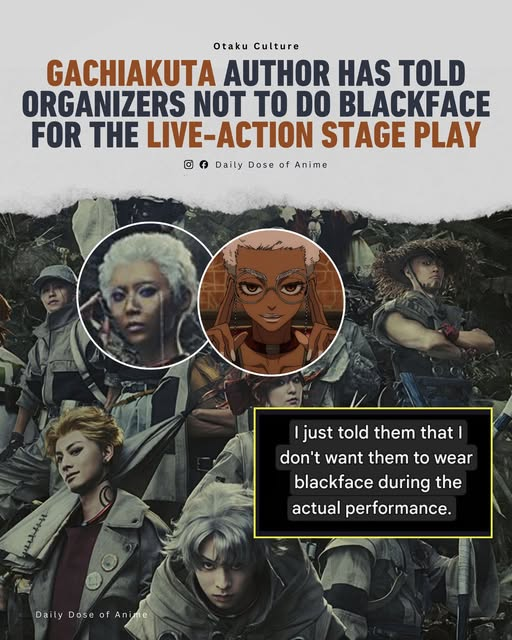
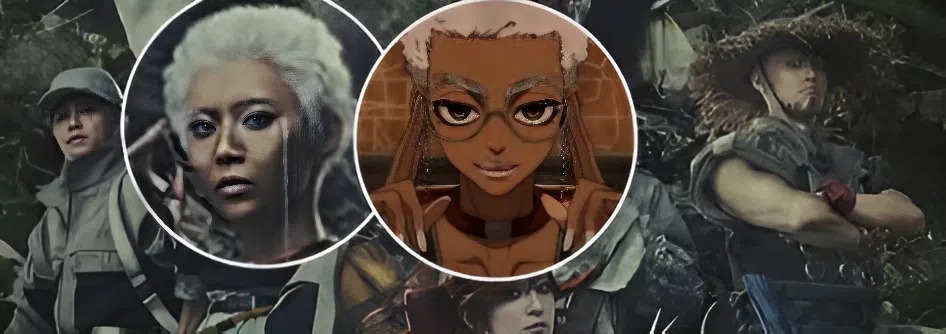
Several characters in Gachiakuta are drawn with unmistakably dark skin, textured hair, and visual cues that clearly read as Black to global audiences. When the stage adaptation revealed that these roles would be played by Japanese actors—possibly using darker makeup—it crossed a line. For Black fans, this wasn’t theoretical. It was familiar.
Intent Doesn’t Cancel Impact
The production committee insists there was no racist intent and that the characters aren’t tied to real-world races. That explanation might work in a vacuum, but anime doesn’t exist in one anymore. Gachiakuta has an international audience, and in the real world, darkening skin to portray Black-coded characters has historical weight that can’t be hand-waved away.
Saying “they’re fictional” doesn’t erase the fact that Black aesthetics were clearly used to design them. If Blackness can inspire the art, then Black people should be allowed to embody it.
“There Aren’t Black Actors” Is a Weak Excuse
The claim that Japan lacks Black actors with stage experience is not a justification—it’s an industry failure. Theater has always adapted when it wanted to. Productions fly in talent, train performers, or collaborate internationally all the time. The refusal to do so here signals not impossibility, but lack of priority.
There are plenty of Black people who speak Japanese and would be willing to act in this play.
If the production can mount a large-scale adaptation of a popular manga, it can make room for Black performers.
Representation Is About Access, Not Just Aesthetics
This controversy exposes a deeper issue: Black characters are often treated as visual flavor rather than people worth representing authentically. Black fans aren’t asking for charity. We’re asking for access—to roles, stages, and creative spaces that already borrow heavily from Black culture.
Anime has gone global. Its casting practices need to grow up with it.
The Bottom Line
Black actors should be allowed—and actively sought out—to play Black-coded roles in Gachiakuta. Anything less sends a clear message: Blackness is welcome, but Black people are optional.
And in 2025, that shouldn’t be acceptable to fans, creators, or the industry at large.
—Kel McKnight, B1Daily


 B1Daily
Leave a comment