—Terrence Dorner, B1Daily
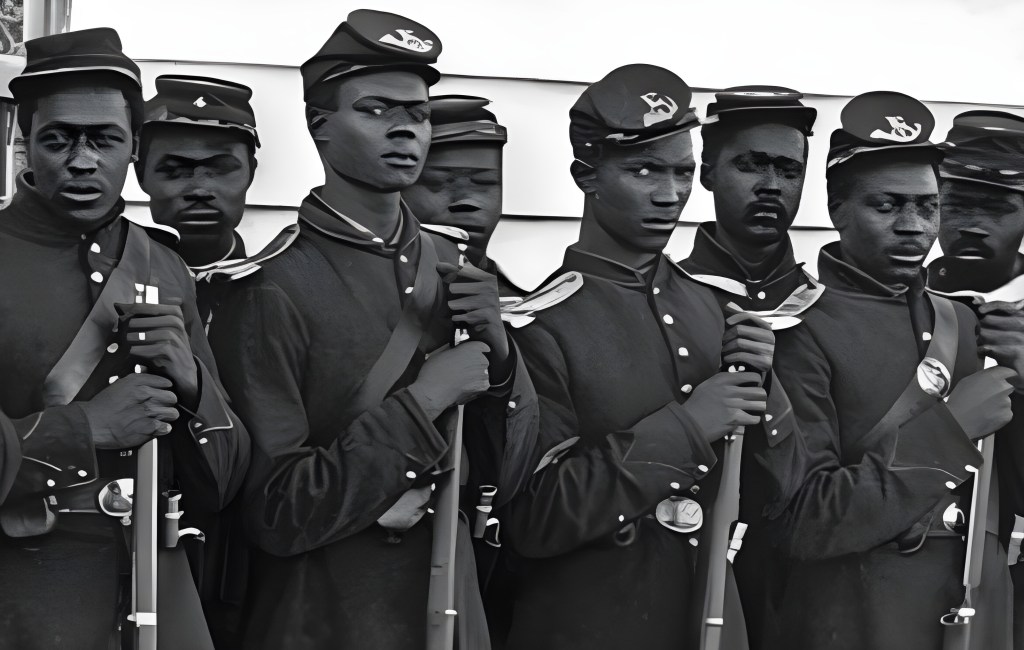
U.S. Black Union troops (U.S. Colored Troops, USCT) faced Confederate snipers frequently, especially in sieges, picket lines, and wooded terrain and they countered them using a mix of doctrine, adaptation, and hard-won experience.

Confederate “sniper” units, more accurately called sharpshooters. Their effectiveness came from terrain use, harassment tactics, and occasional superior weapons like the Whitworth rifle, which was rare and difficult to supply, but the south had more access to ports at the time. Sharpshooters targeted picket lines, officers, and engineers, and they specialized at creating psychological disruption more than strategic impact.
Aggressive counter-fire and marksmanship
Many USCT units were issued standard rifled muskets (Springfield or Enfield) and trained to respond quickly to muzzle flashes, smoke, or sound. When snipers revealed themselves, Black troops were ordered to return concentrated volleys, forcing Confederate skirmishers to relocate or withdraw. Over time, USCT soldiers became adept at identifying likely sniper positions—tree lines, fence gaps, ridge crests.
Skirmisher screens
USCT units often deployed skirmish lines ahead of main forces. These dispersed formations reduced vulnerability to sniping and allowed soldiers to probe enemy positions. Skirmishers worked in pairs or small clusters, making it harder for Confederate sharpshooters to pick off targets and easier to flank them.
Use of terrain and movement discipline
After early heavy casualties, Black troops adapted quickly:
- minimizing skyline exposure
- avoiding predictable routes
- rotating picket positions
- using natural cover aggressively
This was battlefield learning under fire, not classroom instruction.
Night work and engineering
USCT regiments were heavily used for trench digging, fortification, and siege labor (e.g., Petersburg). To counter snipers:
- work was done at night or under cover
- earthworks were built with raised parapets and loopholes
- sharpshooter nests were neutralized by advancing trenches (“saps”)
This reduced sniper effectiveness over time.
Counter-sniper patrols
Some USCT units conducted small patrols or raids specifically to flush out Confederate sharpshooters. These were risky but effective—forcing enemy snipers to abandon fixed positions once discovered.
Psychological hardening
Confederate snipers often targeted Black soldiers deliberately, sometimes accompanied by racial taunts. Instead of breaking morale, this frequently had the opposite effect: USCT troops developed a reputation for steadiness under fire. White Union officers later noted that seasoned Black regiments were often less likely to panic under sniper harassment than newly raised white units.
Retaliation through escalation
When Confederate sniping intensified, Union commanders—including those leading USCT—sometimes responded with:
- artillery harassment of suspected sniper zones
- heavier skirmisher pressure
- denial of cover (burning brush, cutting trees)
Brutal, but effective.

Bottom line
US Black Union troops defeated Confederate snipers through discipline, adaptation, terrain mastery, and relentless pressure—often while enduring harsher treatment and higher risk than white troops. By late war, many USCT units were considered battle-tested and tactically reliable, including in environments where sniping was common.
—Terrence Dorner, B1Daily




 B1Daily
Leave a comment