
—Travis Luyindama, B1Daily
“Sony hack” of 2025 wasn’t a cinematic breach of encrypted servers or a shadowy genius cracking PlayStation Network’s core infrastructure. It was something far more mundane—and far more damning. What actually failed at Sony wasn’t cryptography, but judgment. Not code, but process. And that distinction matters, because it exposes how modern cybersecurity collapses not at the firewall, but at the help desk.
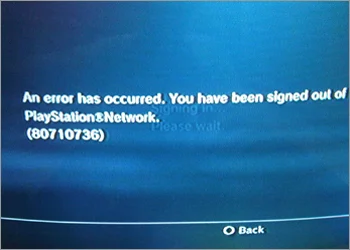
Much of the online discussion framed the incident as a hack “by Lelouch,” giving it the aura of a singular attacker exploiting elite technical skill. In reality, the episode revealed a systemic weakness in how Sony handles account recovery, a vulnerability that quietly nullified protections like two-factor authentication and passkeys. Accounts were taken over not by breaking in, but by being handed over.
Reports from late 2025 showed PlayStation Network users losing access to their accounts even with advanced security features enabled. Emails and passwords were changed, purchases were made, and rightful owners were locked out. Crucially, there was no evidence of malware, no backend breach, no zero-day exploit. Instead, attackers contacted customer support and persuaded Sony’s own systems to do the work for them.
The problem lay in what Sony considered acceptable proof of identity. In some cases, a username paired with a transaction or invoice number was enough to trigger a reset. This is the cybersecurity equivalent of locking your front door with a deadbolt while leaving a spare key taped under the mat. Usernames are public by design, and transaction numbers are frequently exposed in screenshots, email receipts, and shared support threads. Once provided, customer support could reset credentials, effectively bypassing every other layer of security.
This is why two-factor authentication failed—not because it’s ineffective, but because it was applied inconsistently. Sony hardened the login process while leaving account recovery comparatively soft. When support resets an account without re-verifying through the original email, trusted device, or secondary authentication factor, 2FA becomes irrelevant. The attacker doesn’t defeat it; they inherit the account after it’s been reset around it.
This kind of vulnerability is increasingly common in large platforms. Companies invest heavily in encryption and authentication technologies while underestimating the risk introduced by human workflows. Support teams are incentivized to resolve tickets quickly, not to treat every recovery request as a potential intrusion. Attackers understand this perfectly. It’s easier to persuade a system than to penetrate it.
For users, the damage is immediate and personal. A PlayStation Network account isn’t just a login; it’s a digital identity containing years of purchases, saved games, social connections, and payment information. Losing it can mean losing hundreds or thousands of dollars in content, along with weeks of frustrating recovery attempts. Even when access is restored, trust rarely is.
For Sony, the reputational impact is harder to quantify but no less serious. PlayStation Network has a long memory when it comes to security incidents, and each new failure reinforces the perception that user protection is reactive rather than foundational. The irony is that Sony’s technical defenses largely held. What failed was the logic governing who is allowed to override them.

The fix is not exotic. Account recovery should be treated as a high-risk security event, not a customer service convenience. Resetting credentials should require confirmation through original contact channels or trusted devices, with anomaly detection flagging repeated or suspicious recovery attempts. Recovery authentication should be at least as strong as login authentication, not weaker. Anything less turns support into an attack surface.
The lesson of the 2025 Sony incident is uncomfortable precisely because it’s so ordinary. This wasn’t a triumph of hacking brilliance. It was a failure of systems thinking. Sony didn’t lose control of its infrastructure; it lost control of its verification process. In an era where companies race to adopt passkeys and biometrics, the real question isn’t how secure the technology is, but whether the humans and procedures around it respect that security at all.
In the end, the breach wasn’t technical. It was bureaucratic. And those are the hardest vulnerabilities to patch, because they don’t look like threats until it’s already too late.
—Travis Luyindama, B1Daily




 B1Daily
Leave a comment