
—Terrence Dorner, B1Daily
The reported removal of panels honoring Black American WWII soldiers in the Netherlands is not just a bureaucratic decision or a neutral “curatorial choice.” It is wrong, it is ahistorical, and it is racist in effect—whether or not its defenders want to admit that plainly.
Black American soldiers helped liberate Europe while fighting a double war: one against fascism abroad and another against racism within the U.S. military itself. They served in segregated units, were often denied recognition, and returned home to Jim Crow despite risking their lives for a country that refused to see them as equals. Memorial panels in Europe are not symbolic fluff; they exist precisely because history tried to erase these men once already.
Removing those panels sends a clear message: some sacrifices are optional to remember. Some freedom fighters are expendable. When Black soldiers are singled out for erasure under the guise of “streamlining,” “tradition,” or “political neutrality,” the outcome is racial exclusion regardless of the excuse used to justify it.
Donald Trump’s long record makes this context unavoidable. From attacking the 1619 Project, to downplaying Confederate monuments while questioning Black history initiatives, to consistently framing racial reckoning as “divisive,” the pattern is clear. This isn’t about honoring all veterans equally—it’s about resisting any narrative that forces America to confront its racial past honestly. Celebrating Black WWII soldiers complicates the myth of a unified, colorblind America, and that discomfort is exactly what this removal caters to.
What makes this especially insulting is that the Netherlands and other European countries have often done a better job honoring Black American soldiers than the United States itself. European memorials exist because local communities remember who showed up when fascism was at their door. Removing those panels doesn’t just disrespect Black Americans—it disrespects Europeans who chose to preserve the full truth of liberation.
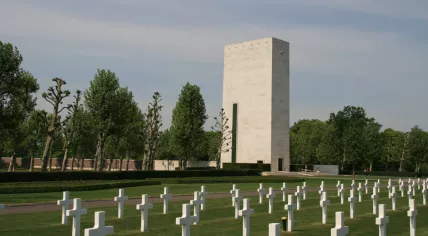
History is not neutral. Choosing what to display and what to hide is a political act. Erasing Black soldiers from WWII remembrance reinforces the lie that freedom was won solely by white hands, while Black contributions remain footnotes at best. That lie has consequences. It shapes whose patriotism is believed, whose grief is honored, and whose descendants are told they belong.
If America is serious about honoring veterans, it cannot selectively forget the ones who make it uncomfortable. Black WWII soldiers do not need permission to be remembered. They earned that recognition with blood, service, and sacrifice. Removing their story is not preservation—it is regression.
And when regression consistently falls along racial lines, calling it racist isn’t inflammatory. It’s accurate.
—Terrence Dorner, B1Daily


 B1Daily
Leave a comment