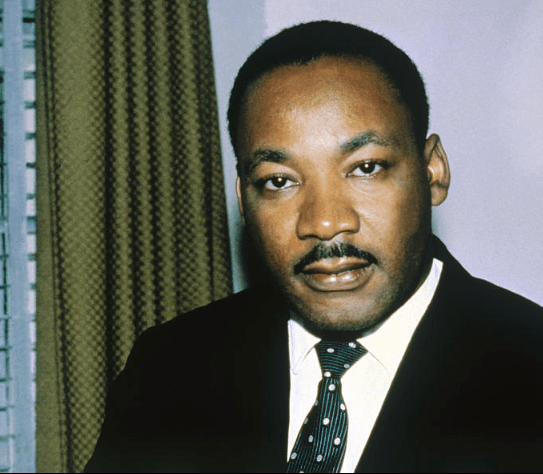
—Barrington Williams, B1Daily
Every January, America drags Martin Luther King Jr.’s name out like a ceremonial prop. Politicians tweet a quote about dreams. Corporations slap his face on banners. Schools assign a paragraph that carefully avoids anything that might make power uncomfortable. Then the country goes right back to pretending King was just a polite preacher who wanted everyone to hold hands.
That version of Martin Luther King Jr. is a lie.
The real King was explicit, relentless, and unapologetic in his demand that the United States pay its debt to Black Freedmen. He called it a check written in bad faith. He called it a promissory note America refused to honor. And he understood—far better than today’s political class—that without material repair, freedom was fraudulent.
King didn’t fight for vibes. He fought for reparations.
King Knew Equality Without Repair Was a Scam
King understood what many still refuse to say out loud: you cannot enslave people for centuries, loot their labor, deny them land, sabotage their wealth, terrorize their communities, and then declare the slate clean with a speech.
He rejected the idea that time alone could heal the damage. He rejected the myth that “opportunity” would somehow trickle down after deliberate exclusion. And he absolutely rejected the insult that Black Americans should be grateful for freedom without compensation.
In 1964, King openly argued that America owed Black people a massive, targeted investment to close the wealth gap it intentionally created. He supported proposals for guaranteed income, land redistribution, and direct economic intervention. This wasn’t radical—it was basic accounting.
And that terrified the system far more than his calls for integration ever did.
Why King Was Silenced When He Shifted to Economics
There’s a reason King is celebrated for Birmingham but erased for Chicago. There’s a reason his opposition to poverty, militarism, and economic exploitation gets buried. When King started naming capitalism, wealth extraction, and state neglect as the enemy, the tone of the response changed.
He wasn’t assassinated because he dreamed.
He was assassinated because he demanded payment.
By the time of his death, King was organizing the Poor People’s Campaign, calling for a restructuring of American economic priorities, and directly challenging federal power. He was no longer useful as a mascot. He had become a liability.
A 21st Century Freedmen’s Bureau Is Not Optional — It’s Overdue
After the Civil War, the U.S. created the Freedmen’s Bureau to assist formerly enslaved people with housing, education, labor contracts, and land. Then it deliberately sabotaged it. Land was returned to former slaveholders. Resources were stripped. Enforcement collapsed. What could have been a foundation for Black economic stability was intentionally dismantled.
That failure still defines the racial wealth gap today.
A modern Freedmen’s Bureau is not charity. It is repair.
It should:
- Deliver direct reparations to descendants of U.S. slavery
- Fund housing, land ownership, and business development
- Address health disparities caused by generational deprivation
- Oversee education and infrastructure investment in historically looted communities
- Operate independently of political sabotage, with long-term authority and enforcement power
Anything less is symbolic nonsense.
The Current Administration Has No Excuse
Every administration loves to quote King. Every administration claims moral inheritance. But none want to finish the work he was killed for demanding.
If this White House wants to prove it understands King beyond soundbites, it must stop hiding behind “study commissions” and start acting. The data already exists. The harm is documented. The beneficiaries of slavery and segregation are still very wealthy. The victims are still paying the price.
King didn’t ask America to feel sorry.
He demanded America do something.
Until reparations are real, until a 21st century Freedmen’s Bureau exists, until the debt is addressed materially and not rhetorically, every glowing tribute to Martin Luther King Jr. is hollow.
You don’t honor King by repeating his safest quotes.
You honor him by confronting the bill he said was past due.
—Barrington Williams, B1Daily



 B1Daily
Leave a comment