—Barrington Williams, B1Daily
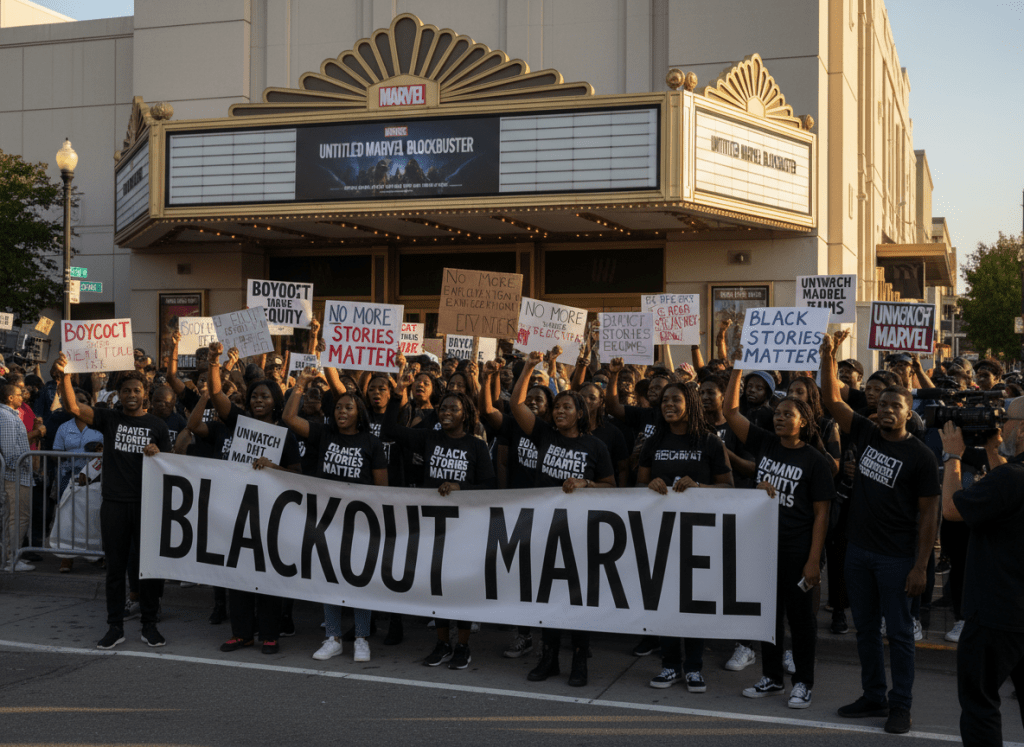
For years, Black audiences have invested time, money, and cultural energy into Marvel with the hope that the franchise would meaningfully center Black characters and creators. Instead, Marvel — operating under Disney’s corporate umbrella — has repeatedly demonstrated that its commitment to Black representation is conditional, limited, and ultimately disposable when profits or public pressure shift. What many once viewed as progress now looks more like managed optics.
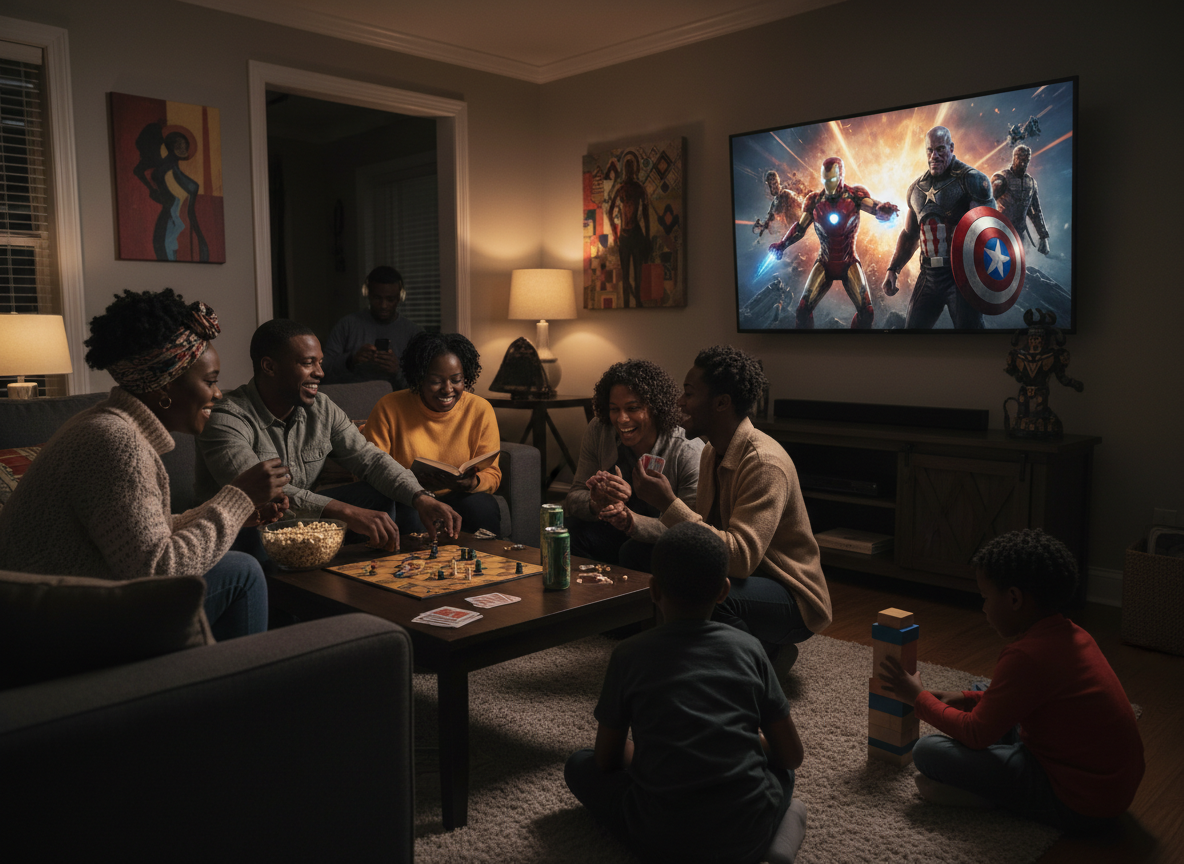
Marvel has shown a consistent habit of sidelining Black heroes rather than fully committing to them. Anthony Mackie’s Sam Wilson finally becoming Captain America should have been a watershed moment. Instead, the character’s rise has been handled cautiously, stripped of narrative weight, and frequently overshadowed by nostalgia for his white predecessor. Mackie himself has pointed out that Black Panther was the only Marvel film with a predominantly Black production crew, a reality that exposes how Black talent is welcomed only when the project itself is marketed as “Black,” rather than integrated throughout the studio’s ecosystem.
The mishandling of Black Panther’s legacy following Chadwick Boseman’s passing further illustrates Marvel’s discomfort with fully centering Black characters long-term. Rather than recasting or boldly continuing the character’s political and cultural power, Marvel pivoted toward a safer ensemble approach that diluted the centrality of Wakanda’s Black leadership in the broader MCU. The decision may have been framed as respect, but it also avoided the risk of allowing a Black superhero to remain a dominant cultural force without a tragedy narrative attached.
Jonathan Majors’ firing represents another clear example of how quickly Marvel discards Black talent when controversy arises. Majors was positioned as the future of the MCU, anchoring multiple phases as Kang the Conqueror. When his legal troubles surfaced, Marvel didn’t simply recast the role or adjust the storyline — it abandoned the entire arc. Other franchises have shown far more willingness to separate characters from actors when those characters remain profitable or narratively valuable. Marvel’s response signaled that a Black actor’s contributions are expendable, even when the studio itself helped build the dependency.
Then there is Blade. A Black superhero who predates the MCU itself, Blade should be a priority. Instead, the Mahershala Ali reboot has languished in development hell, cycling through scripts, directors, and delays. While Marvel continues to fast-track projects centered on familiar white-led franchises, Blade remains stalled, suggesting a lack of urgency when Black characters are involved — even when portrayed by Oscar-winning talent.
Marvel’s diversity strategy too often relies on race-swapping or legacy handoffs rather than creating original, fully empowered Black characters from the ground up. Black heroes are frequently introduced as successors, sidekicks, or symbolic stand-ins rather than narrative anchors. This approach allows Marvel to claim inclusivity without ever surrendering creative control or risk, reinforcing the idea that Black characters are acceptable only within pre-approved frameworks.
This pattern cannot be separated from Disney’s broader history with race. Disney’s archive includes films that openly trafficked in anti-Black stereotypes, romanticized plantation life, and relied on minstrel-coded imagery. For decades, the company avoided addressing these legacies until public pressure forced disclaimers and quiet rebranding. Even now, Disney’s attempts to reckon with its past often feel cosmetic rather than structural, prioritizing brand preservation over accountability.
Despite these issues, Disney continues to profit enormously from Black audiences. Black viewers consistently show up for Marvel films, merchandise, streaming subscriptions, and theme park experiences. Yet behind the scenes, Black creators are rarely given sustained leadership roles, creative autonomy, or franchise-building authority. Representation appears when it is profitable and fades when it becomes inconvenient.
If Black audiences are serious about shifting power, the solution is not endless patience — it is redirection. There is no shortage of Black-led film and television worth supporting outside of Disney. Ava DuVernay’s ARRAY, Issa Rae’s Hoorae Media, Jordan Peele’s Monkeypaw Productions, and Ryan Coogler’s Proximity Media have all demonstrated what happens when Black creators are trusted to lead rather than supplement. Films like Moonlight, Do the Right Thing, Queen & Slim, The Last Black Man in San Francisco, Candyman, and Summer of Soul prove that Black stories do not need corporate dilution to resonate globally.
Boycotting Marvel is not about rejecting superheroes — it is about rejecting a system that treats Black presence as optional and Black power as negotiable. Cultural influence is leverage, and continued consumption without accountability sends the message that tokenism is enough.
Black audiences deserve stories where Black characters are not side projects, contingency plans, or marketing strategies. Until Marvel and Disney demonstrate a sustained commitment to Black leadership, creativity, and narrative control, choosing not to engage is not only reasonable — it is necessary.
—Barrington Williams, B1Daily




 B1Daily
Leave a comment