—Sylvester Loving, B1Daily
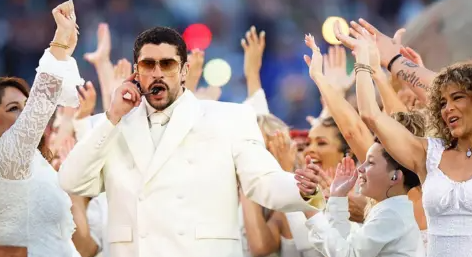
The Super Bowl is never just about football. It’s a national ritual, steeped in Black tradition. From the Wayne family inventing the halftime show idea, to Michael Jackson making the stadium shake for it first official musical guest, for many viewers, especially Black Americans, the halftime show is the real main event. It’s where music, identity, politics, and performance collide on the biggest stage in the country.
That’s why the reaction to the Super Bowl #60 halftime show matters.
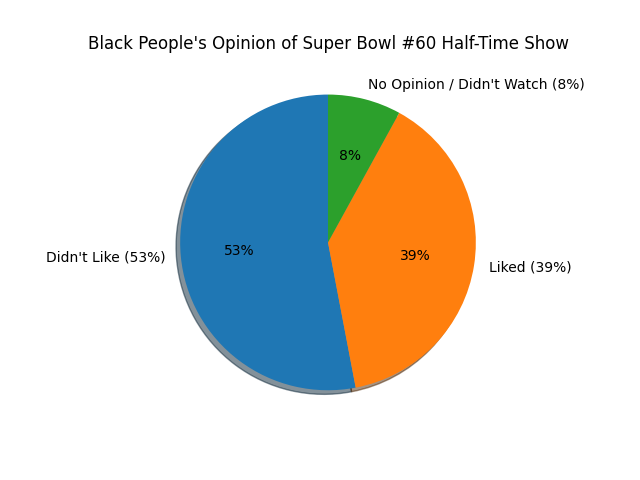
A survey of 5800 Black American viewers opinions on the Super Bowl show conducted by the Learning Institute tells a blunt story: 53 percent of Black Americans reported they didn’t like the halftime performance, compared to 39 percent who said they liked it, while 8 percent had no opinion or didn’t watch. Those numbers don’t suggest outrage, but they do point to a disconnect, one that deserves examination.
A Performance That Didn’t Fully Land
This year’s halftime show leaned heavily into cultural symbolism, artistic nuance, and global influence. It was ambitious, polished, and clearly intentional. But intention doesn’t always equal connection.
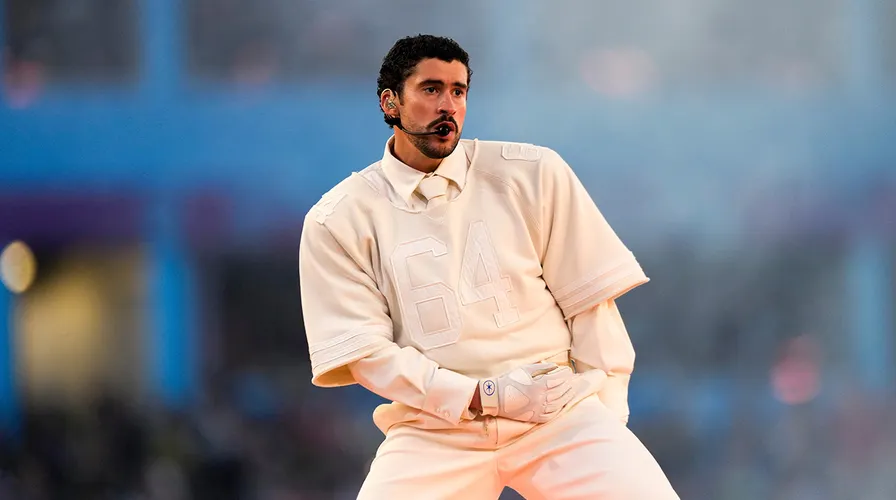
For many Black viewers, the performance felt distant. Not offensive. Not necessarily bad. Just… not for them. When a show prioritizes symbolism over immediacy, or niche cultural cues over shared emotional payoff, it risks losing audiences who tune in expecting a collective moment—something that feels unmistakably big, fun, and unifying.
Expectation Is Everything
Black audiences have seen what a halftime show can be when it fully locks in. Performances in recent years have delivered pride, nostalgia, political subtext, and undeniable crowd energy. Those shows didn’t require explanation; they spoke directly through sound, movement, and cultural memory.
Against that backdrop, anything less than electrifying is going to feel underwhelming. It’s not that Black Americans are resistant to global or experimental art, it’s that the Super Bowl halftime stage is a very specific arena. Viewers expect spectacle that hits instantly and resonates broadly, not something that feels curated for critics or cultural insiders.
Cultural Appreciation vs. Cultural Distance
There’s also an honest truth worth saying out loud: appreciation doesn’t automatically translate to enjoyment. Viewers can respect an artist’s culture, intent, or message and still not feel entertained by the performance itself.
That distinction matters. Too often, dissatisfaction is misread as intolerance or closed-mindedness. In reality, many Black viewers simply didn’t feel emotionally pulled in. They didn’t see themselves reflected in the sound, pacing, or aesthetic. And in a moment as rare and visible as the Super Bowl halftime show, that absence is felt.
The Numbers Speak, Even If They Don’t Shout
The pie chart doesn’t claim to speak for every Black American. No chart ever could. But it does reflect a pattern: more people didn’t like the show than did. That’s not a failure, it’s feedback.
And feedback, especially from a community that has long shaped American music and popular culture, is worth listening to.
Why This Matters Going Forward
The Super Bowl halftime show isn’t just entertainment; it’s a mirror of what the industry believes “America” looks like in that moment. When a majority of Black viewers walk away unsatisfied, it raises questions about who the show is being designed for, and who is being assumed rather than centered.
Black Americans are America’s best performers as demonstrated by Kendrick Lamar’s halftime performance in 2025. Black Americans entertainers should be in complete control creatively concerning any Super Bowl events, especially considering the fact that Black athletes make up over 93% of all players in the league.
If future halftime shows want to recapture that sense of shared excitement, they’ll need to remember something simple: cultural ambition is powerful, but connection is everything.
And on this year’s biggest stage, for many Black Americans, that connection just wasn’t there.
—Sylvester Loving, B1Daily



 B1Daily
Leave a comment