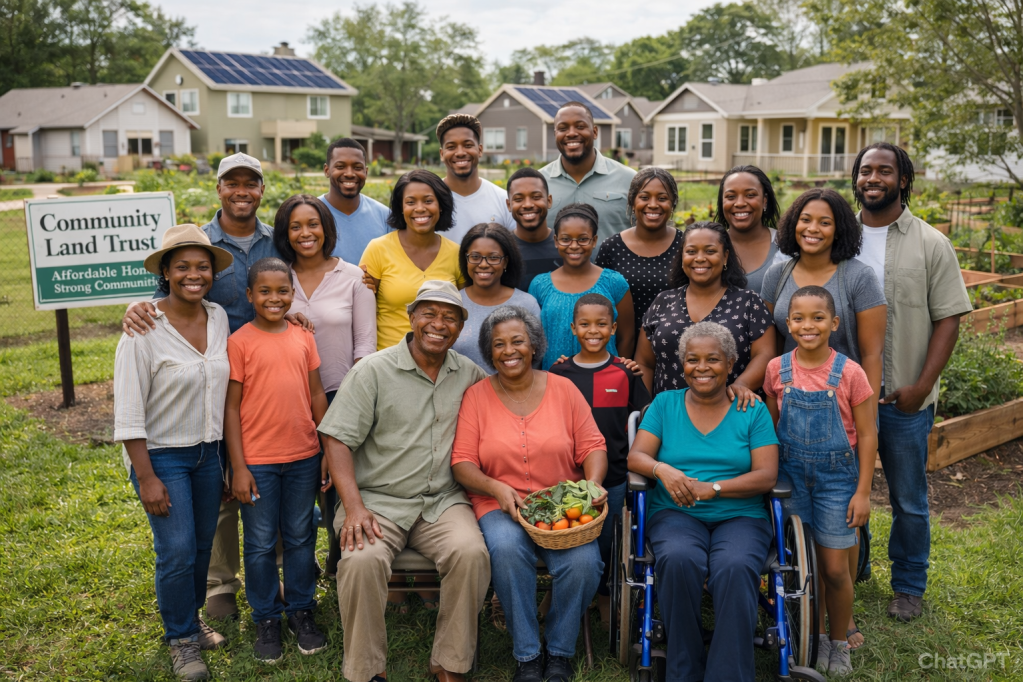
As housing costs skyrocket across the United States and long-standing racial inequities persist, community land trusts (CLTs) are emerging as a powerful tool for housing stability, wealth building, and community empowerment in Black neighborhoods.
Rooted in the struggle for land and economic justice, CLTs offer an alternative to traditional homeownership models that have historically excluded Black Americans and other marginalized groups. By separating ownership of land from the structure built on it, CLTs can remove speculative pressures that often price out long-time residents and accelerate displacement.
What Are Community Land Trusts?
A community land trust is a nonprofit, community-based organization that holds land “in trust” for the long-term benefit of residents and the broader community. Instead of buyers owning both a house and the land beneath it, the CLT retains ownership of the land while selling or leasing the home to a qualified homeowner.
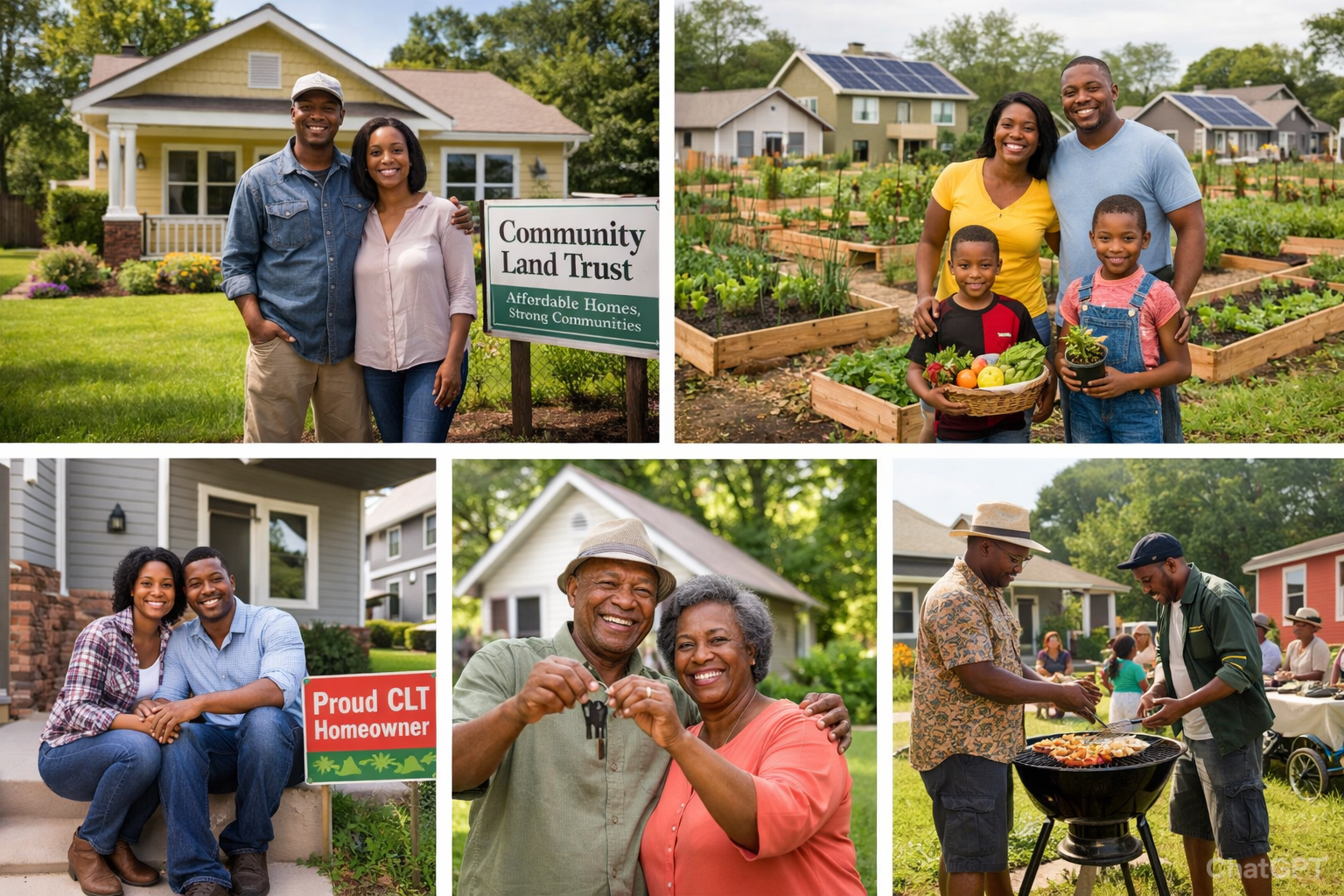
This structure ensures permanent affordability and protects residents from volatile land markets. When a homeowner decides to sell, a resale formula limits the price so that the home remains affordable for the next buyer; keeping housing affordable across generations.
A Legacy of Black Land Ownership and Justice
The CLT model has deep roots in the struggle for Black land ownership. The first community land trust, New Communities, Inc. was established in 1969 in rural Lee County, Georgia, by Black farmers seeking to protect collective land ownership in the face of systemic discrimination and predatory land practices. It became one of the earliest experiments in using collective land stewardship to combat racial barriers in land access.
Since then, CLTs have evolved from rural land stewardship to urban housing affordability tools, especially in neighborhoods at risk of gentrification and displacement.
How CLTs Help Black Families and Neighborhoods
1. Increasing Access to Affordable Homeownership
By removing the cost of land from the purchase price, CLTs significantly reduce financial barriers to homeownership. This makes buying a home often the largest investment a family makes more attainable for first-time buyers, particularly those with lower incomes.
In practice, CLT homeowners own the structure and sign a long-term ground lease (often 99 years) for the land. When they sell, a shared equity formula limits the resale price, keeping it affordable for future buyers while still allowing the seller to capture some equity.
2. Shielding Residents from Gentrification and Displacement
In fast-developing cities, rising home prices can displace long-time residents. CLTs counter these forces by ensuring that a portion of the housing stock remains permanently affordable, even as surrounding property values climb.
Research shows that CLT homeowners are less likely to face foreclosure or severe delinquency compared with other low-income homeowners, demonstrating the model’s resilience during economic downturns.
3. Building Community Power
CLTs aren’t just housing vehicles they are community-controlled institutions. Boards often include residents, neighborhood stakeholders, and public representatives, centering local voices in decisions about land use and development.
This governance structure fosters social cohesion and helps ensure that development reflects the community’s needs, not outside profit motives.
Wealth Building and Long-Term Stability
Affordable homeownership through CLTs helps families accumulate wealth, albeit through a more modest equity model than traditional homeownership; while preserving affordability for others. For example, a 2019 report found that typical CLT homeowners realized thousands in equity gains over time, even as the land trust kept homes below market rates to serve future buyers.
For many Black households, who face persistent racial wealth gaps and barriers to traditional homeownership, CLTs offer a pathway to stability that mitigates speculative market risks.
Scaling the Model for Broader Impact
Although the number of CLTs in the United States remains relatively modest compared to the scale of the affordable housing crisis, their community-driven approach has attracted interest from local governments, nonprofits, and advocacy groups as a long-term strategy for equitable development.
Collaboration between CLTs and city land banks or other public entities has been proposed to expand affordable housing opportunities and embed community control into redevelopment strategies. )
In an era of widening housing inequality and rapidly rising home prices, community land trusts represent a promising model for Black housing stability and community empowerment. By prioritizing lasting affordability, shared equity, and community governance, CLTs help preserve neighborhoods, build intergenerational wealth, and ensure that long-time residents remain at the heart of community life.
For Black Americans seeking solutions that confront both economic exclusion and displacement, CLTs offer more than affordable homes; they offer a strategic foundation for community resilience.




 B1Daily
Leave a comment