—Travis Luyindama, B1Daily
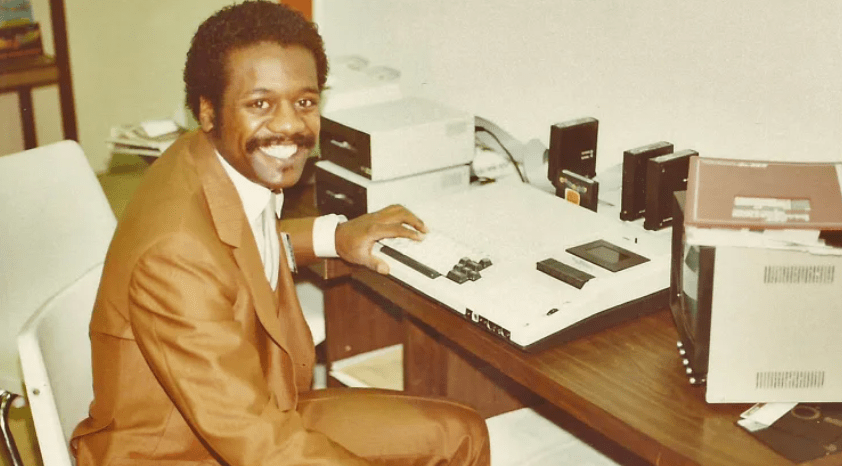
Long before RGB-lit towers and high-end graphics cards defined modern gaming culture, Ed Smith was quietly laying the architectural groundwork for what would become the gaming PC. As lead engineer behind the APF MP1000 and the hybrid APF Imagination Machine, Smith helped pioneer a concept that was ahead of its time: a system that could function both as a gaming console and a personal computer.
Today, that convergence is standard. In the late 1970s, it was revolutionary.
A Console That Thought Like a Computer
When Smith joined APF Electronics in the 1970s, home gaming was still primitive. Many systems were single-purpose devices with hardwired games. But Smith understood something fundamental: the future of interactive entertainment would depend on programmable hardware.
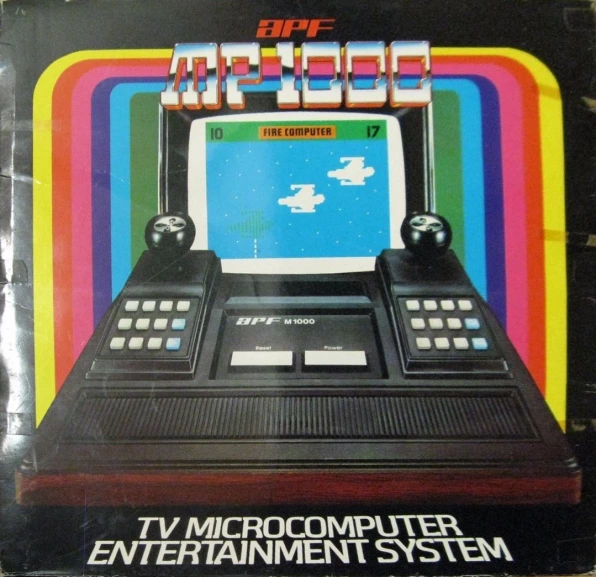
The APF MP1000 used interchangeable cartridges, allowing multiple games to run on one machine. But Smith’s vision did not stop there. He helped develop an expandable system architecture that allowed the console to evolve into something more powerful.
That “something more” became the Imagination Machine.
The Imagination Machine: The Missing Link
Released in 1979, the Imagination Machine transformed the MP1000 into a full-fledged personal computer by adding a keyboard, cassette storage, and expanded memory. It allowed users not only to play games but to write programs, create music, store data, and experiment with computing.
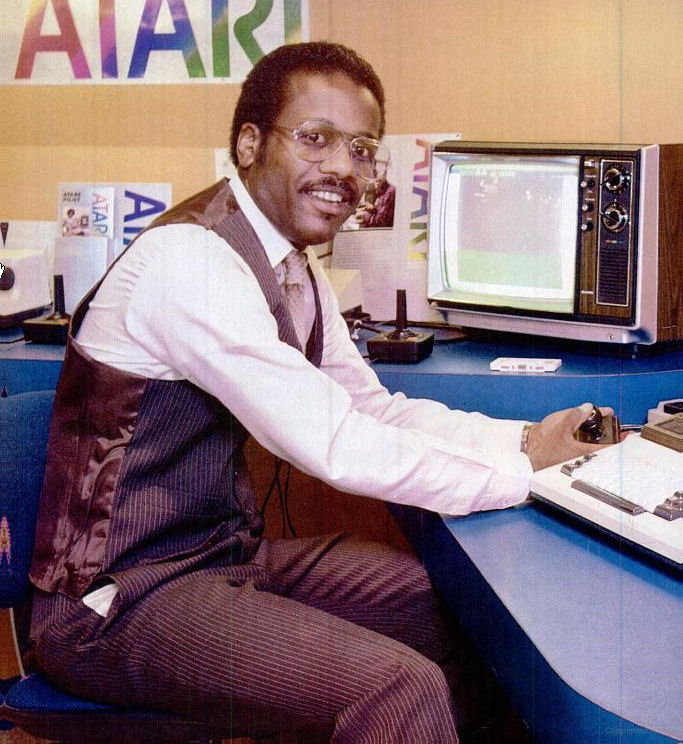
This hybrid design was decades ahead of the mainstream idea that a gaming system and a productivity computer could be one and the same.
Modern gaming PCs operate on that exact principle: one machine, multiple purposes—gaming, creativity, communication, and development. Smith helped demonstrate that interactive entertainment did not need to be siloed from computing power. He blurred the line between toy and tool.
The Architecture That Changed Everything
The importance of Smith’s work lies in system architecture. By building a device where gaming software operated on a microprocessor-based, expandable platform, he helped establish key principles that define gaming PCs today:
A programmable processor as the core engine
Expandable memory
External storage for software
Peripheral integration (keyboard input)
Multi-function capability
While later companies would refine and scale these ideas, Smith helped prove they were viable in a consumer product.
The Imagination Machine showed that gaming hardware could serve as a gateway to broader computing literacy. It was not just about entertainment; it was about empowerment.
A Seminal Figure in Black Technological History
Ed Smith’s role in tech history is not just significant—it is seminal in Black history.
At a time when the technology industry was overwhelmingly white and opportunities for Black engineers were scarce, Smith became one of the earliest African American engineers in the video game industry. His leadership in hardware design and microprocessor integration positioned him at the frontier of consumer computing.
Representation in emerging industries matters because early architects shape the future. Smith was not simply participating in the birth of gaming technology—he was helping design its structure.
His work expanded the imagination of what was possible, both technologically and culturally. For young Black technologists, his presence in that space signaled that innovation was not confined by race, even if opportunity often was.
The Long-Term Impact
Although APF Electronics did not become a household name like Atari or Apple, the ideas embedded in Smith’s systems echoed forward.
The fusion of gaming and computing became standard in the 1980s and 1990s as home PCs began running increasingly sophisticated games. Today’s gaming PCs—machines capable of rendering cinematic worlds while also supporting coding, editing, streaming, and design—operate on the hybrid philosophy Smith helped pioneer.
The modern ecosystem of Steam libraries, modding communities, and indie development rests on the idea that gaming platforms are programmable computers.
That bridge was built, in part, by Ed Smith.
More Than a Footnote
Technology history often remembers brands more than engineers. But the architecture matters more than the logo.
Ed Smith helped create a conceptual and technical bridge between consoles and personal computers. He demonstrated that gaming systems could be expandable, programmable, and educational—laying intellectual groundwork for what would eventually become the gaming PC.
His legacy is both technical and cultural. In Black history, he stands as a pioneering engineer who broke barriers in one of the most transformative industries of the late 20th century. In technology history, he stands as one of the early architects of the idea that entertainment hardware could also be computing hardware.
That idea changed everything.
—Travis Luyindama, B1Daily




 B1Daily
Leave a comment