—Barrington Williams, B1Daily
The latest release of documents tied to Jeffrey Epstein has done what every Epstein document dump seems to do: ignite outrage, fuel suspicion, and deepen political trench warfare.
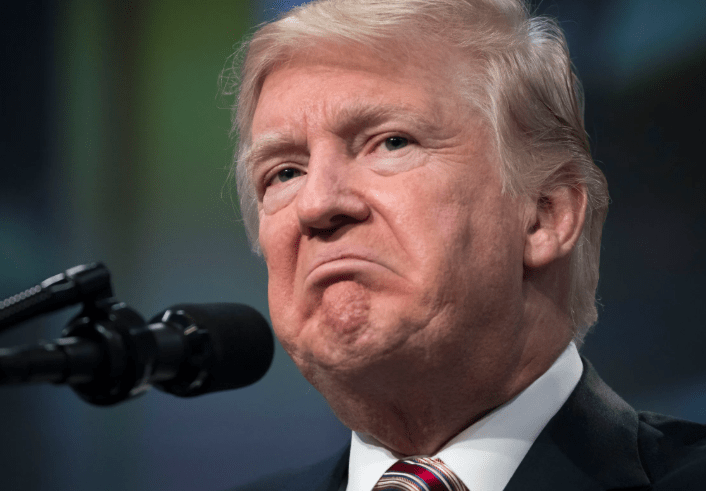
This time, the focus is once again on President Donald Trump.
For example the document below (ID #EFTA01249507, pdf) reveals that a male who identified himself as a victim in the Epstein case called the FBI’s National Threat Operations Center (NTOC) on the afternoon of June 21, 2021 to report that “Donald Trump knew and funded underage sex parties at the Donald Trump Golf course.”
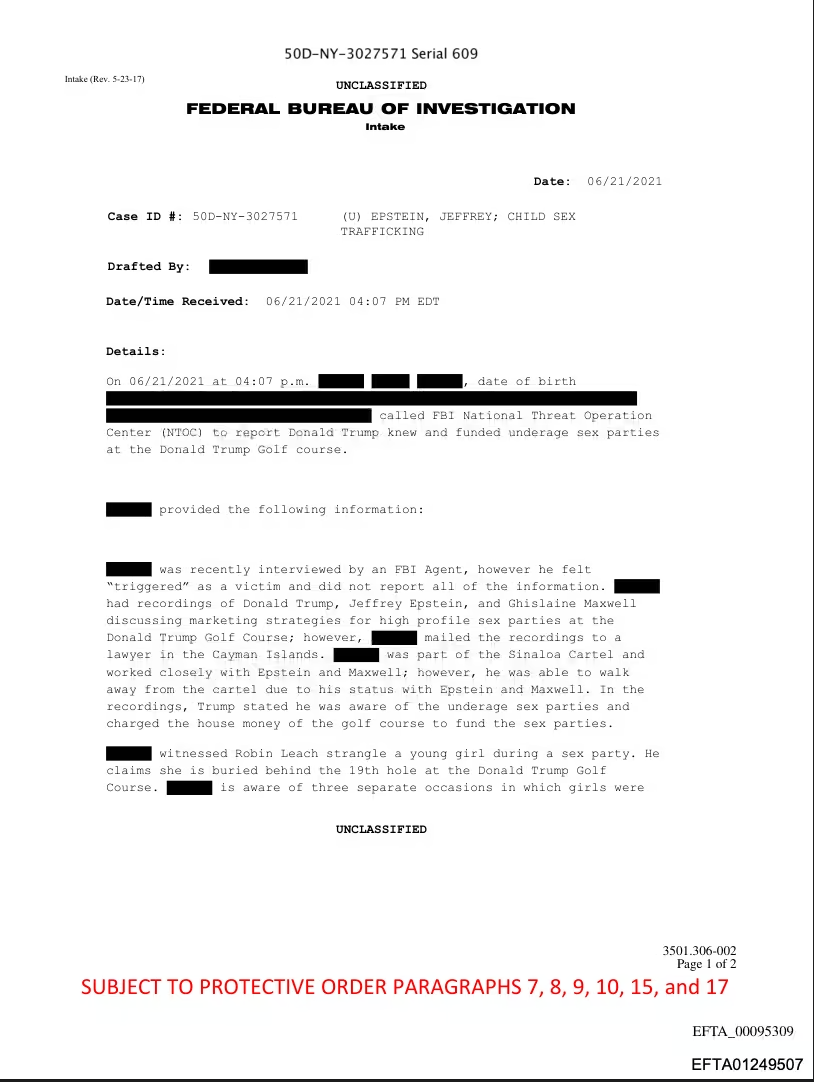
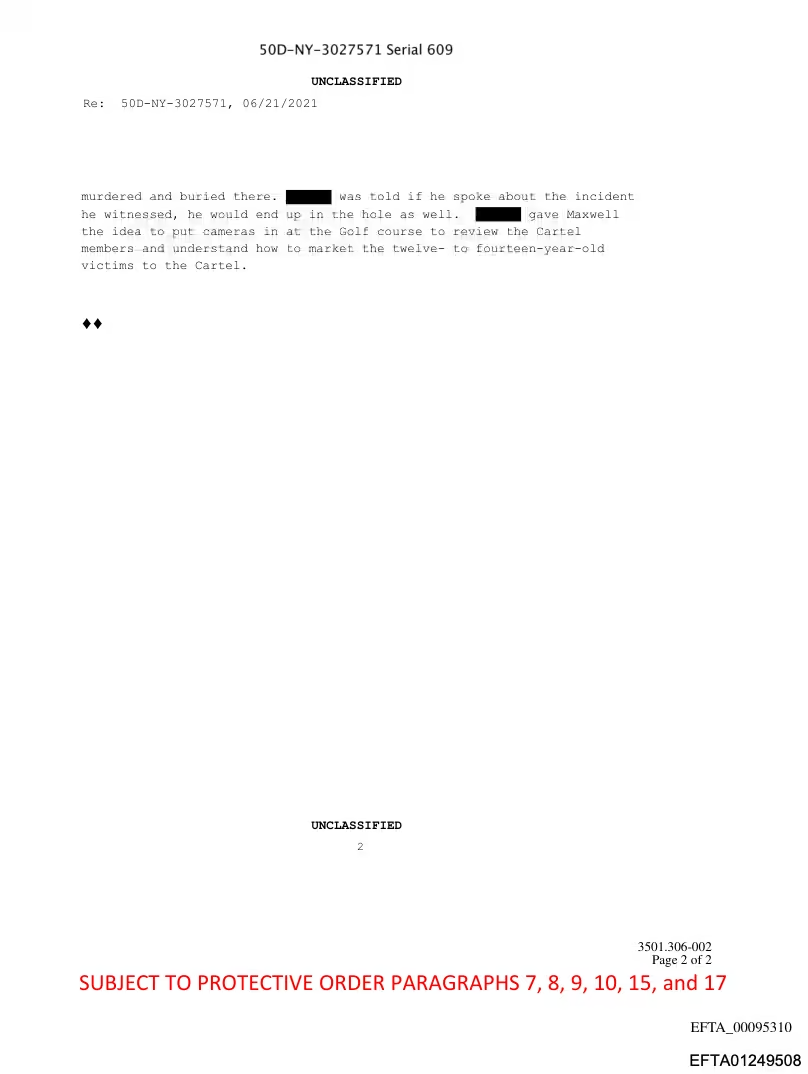
His name appears frequently in the newly released files — sometimes in emails, sometimes in references to social events, sometimes in FBI intake reports cataloguing allegations. Critics say the volume alone is damning. Supporters say the volume proves nothing. The truth, as usual in sprawling federal investigations, is more complicated.
The Weight of Association
There is no dispute that Trump and Epstein knew each other socially in the 1990s and early 2000s. They were photographed together. They attended events. Epstein moved within elite social circles that overlapped with Trump’s Palm Beach and New York orbit.
The new documents reinforce that social overlap. Emails referencing Mar-a-Lago events. Administrative records indexing Trump’s name in investigative materials. Mentions in correspondence between Epstein and Ghislaine Maxwell.
But association, even unsavory association, is not the same as criminal implication. That distinction matters — even if it doesn’t trend on social media.
The Anonymous Allegations
Among the most explosive elements in the files are anonymous tips logged by the FBI. One intake report records a 2021 caller alleging that Trump was aware of or financed underage sex parties. Another claim alleges recordings involving Epstein, Maxwell, and Trump.
Another NTOC report (document No. EFTA01249502, pdf), reveals that a female called the NTOC on July 8, 2020, to report she was also an Epstein victim and witnessed a sex trafficking ring operating out of the Trump Golf course in Rancho Palos Verdes, California, during the years of 1995-1996.
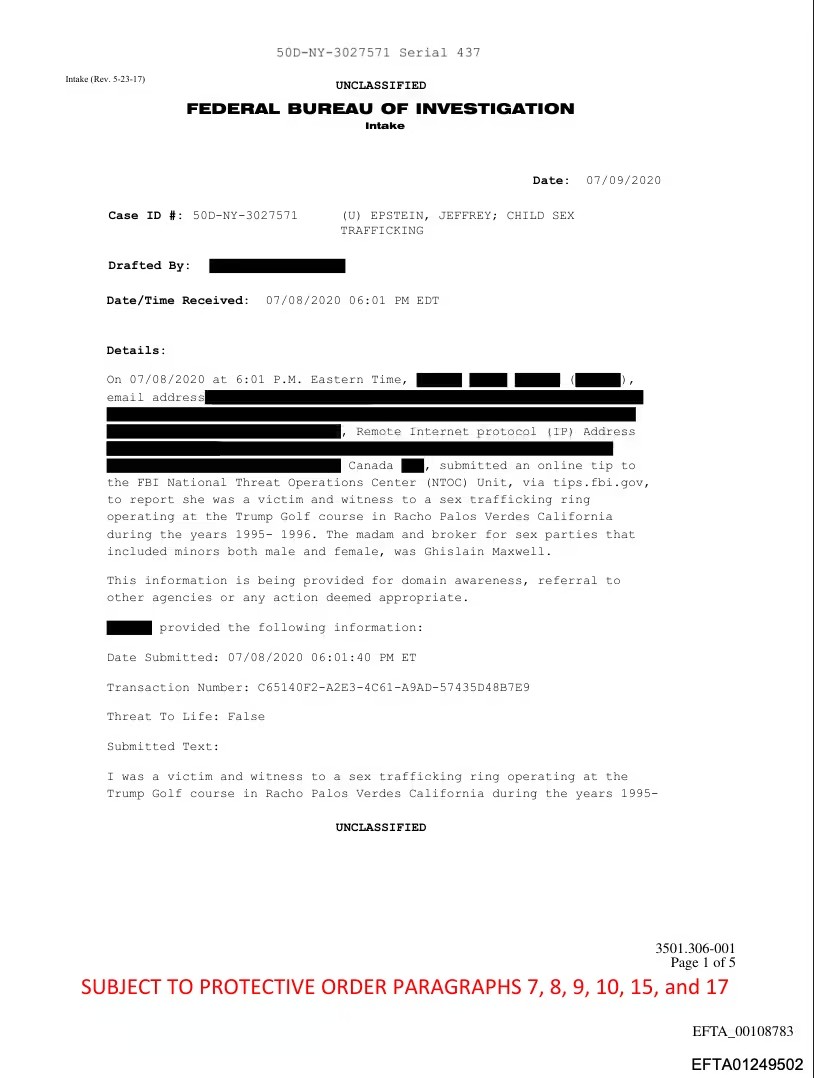
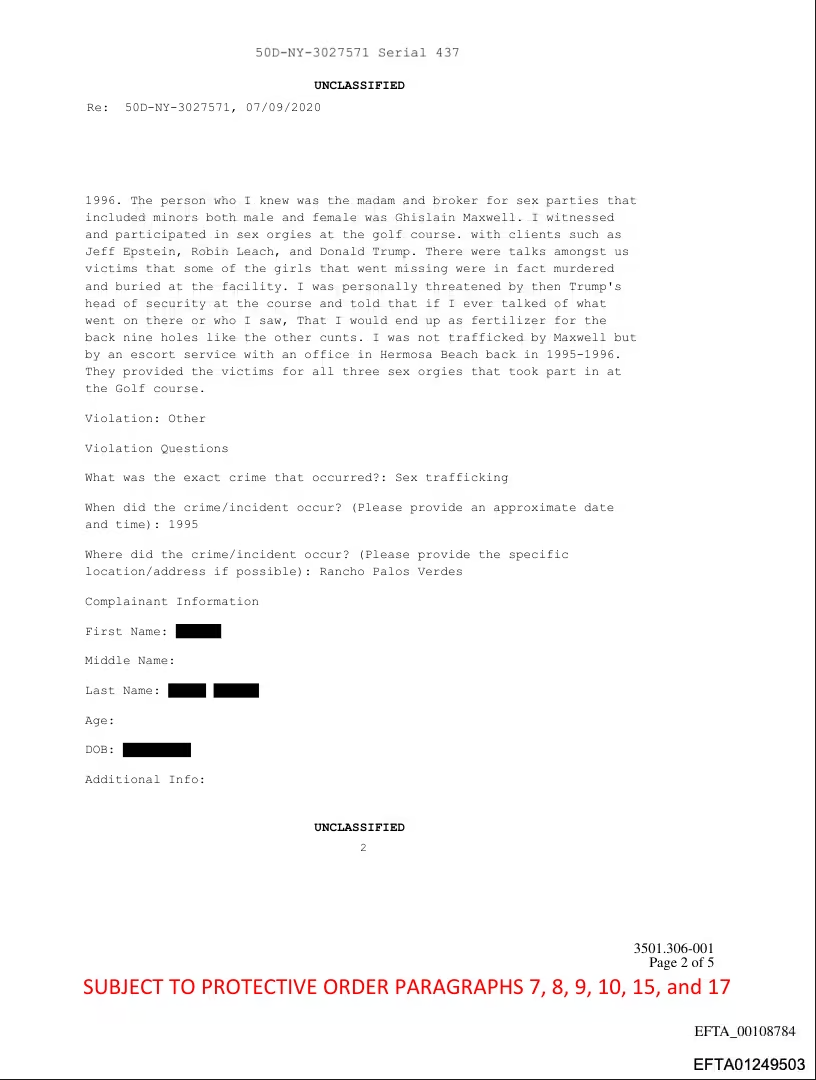
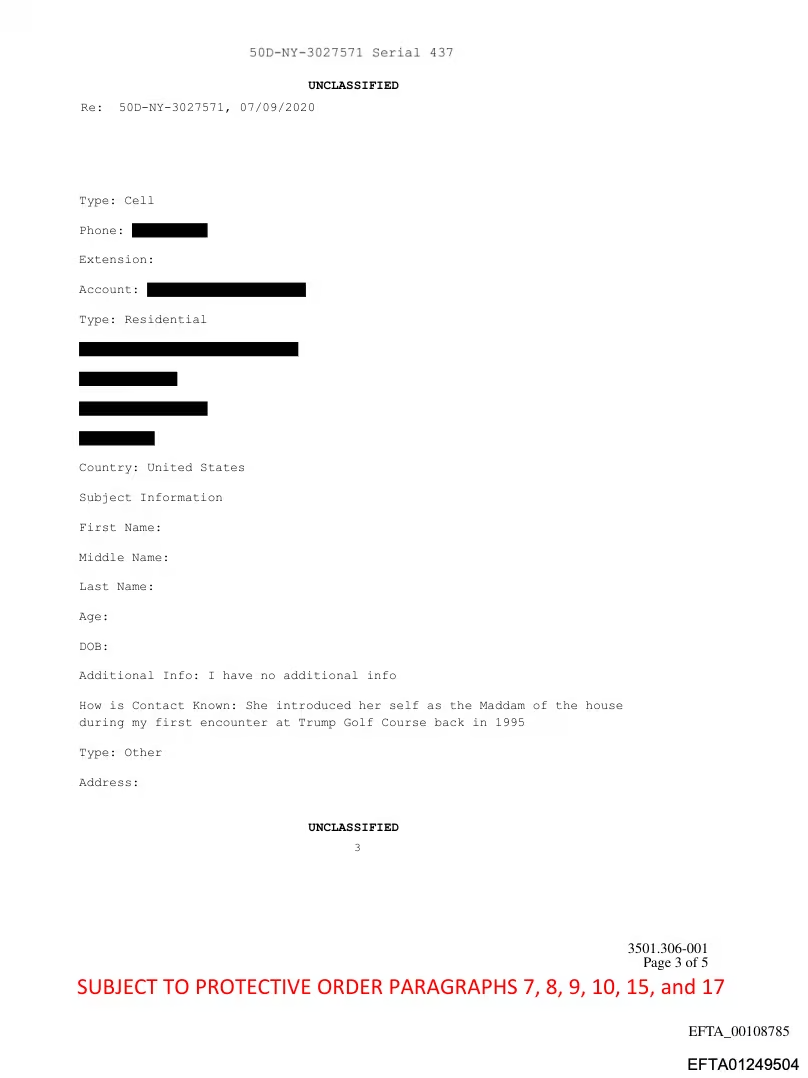
These are allegations recorded in law enforcement intake systems — not verified findings. Federal agencies document tips as they receive them, whether credible or not. The presence of an allegation in a file does not equal proof, nor does it mean investigators substantiated it.
That nuance rarely survives the headline cycle.
What Law Enforcement Is Actually Saying
Justice Department officials have repeatedly emphasized that many of the sensational claims in the release were unverified. They state that while the files include raw submissions, statements, and tips, none of the released material establishes criminal charges against Trump related to Epstein’s trafficking crimes.
This doesn’t eliminate public suspicion. But it does clarify the current legal standing.
If credible prosecutable evidence existed within these releases, it would represent a different legal reality than what has been publicly stated.
The Politics of Volume
Much of the current debate hinges not on a single smoking gun, but on frequency. Trump’s name appears many times in the archive. Lawmakers who have viewed unredacted files say the number is significant.
But large federal investigations routinely capture peripheral names — especially when dealing with someone like Epstein, whose network intersected with politicians, business executives, academics, and celebrities.
The presence of a name in investigative material can mean:
- A witness mentioned it.
- A tip referenced it.
- A newspaper clipping included it.
- An event guest list contained it.
- Or investigators reviewed a prior association.
Volume without context can be misleading.
The Broader Question
The real issue may not be whether Trump’s name appears in the files — it clearly does — but whether the system is capable of convincing a divided public of any conclusion.
For critics, any association with Epstein is morally disqualifying.
For supporters, absence of charges equals exoneration.
The gulf between those positions may be too wide for documents alone to bridge.
The Line Between Suspicion and Proof
Epstein’s crimes were horrific and far-reaching. Many powerful people passed through his orbit. It is reasonable to scrutinize anyone connected to him.
But scrutiny requires discipline. Allegations are not convictions. Intake logs are not indictments. Social proximity is not necessarily complicity.
At the same time, transparency is not meaningless. Public trust demands clarity, especially when the names involved belong to those at the highest levels of power.
Where This Leaves Us
The new files reinforce that Trump once moved within Epstein’s social sphere. They document unverified allegations submitted to federal authorities. They do not, according to the Justice Department’s public position, contain substantiated evidence of criminal wrongdoing by Trump in connection with Epstein’s trafficking case.
Whether that settles the matter depends less on the documents and more on what the public chooses to believe.
In an era defined by mistrust, even millions of pages may not be enough.
—Barrington Williams, B1Daily



 B1Daily
Leave a comment