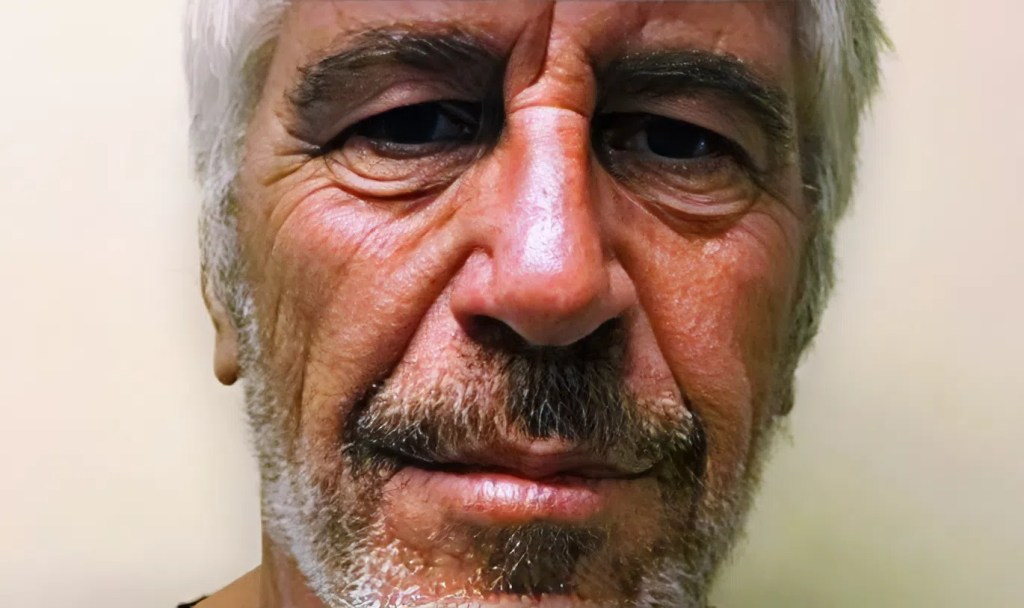
—Barrington Williams, B1Daily
More than six years after his death in federal custody, renewed online discussion has revived one of the most persistent conspiracy theories of the modern era: the claim that Jeffrey Epstein may still be alive.
Epstein, the disgraced financier facing federal sex trafficking charges, was found unresponsive in his cell at the Metropolitan Correctional Center in New York on August 10, 2019. The official ruling by New York City’s chief medical examiner determined the cause of death to be suicide by hanging. The U.S. Department of Justice and the Bureau of Prisons conducted investigations into procedural failures at the jail but did not overturn that conclusion.
Yet skepticism has never fully faded.
Why the Doubt Persists
Questions surrounding Epstein’s death began almost immediately. At the time, reports revealed that surveillance cameras near his cell malfunctioned, guards failed to conduct required checks, and his cellmate had been transferred before his death. These lapses — combined with Epstein’s powerful social and political connections — fueled widespread suspicion.
In recent months, renewed online analysis of archival footage, official statements, and public records has led some commentators to argue that inconsistencies remain unresolved. They point to alleged gaps in documentation, questions about video timelines, and perceived irregularities in official communications as reasons to doubt the finality of the case.
For critics of the official narrative, the circumstances surrounding Epstein’s detention — including his previous placement on suicide watch and subsequent removal from it — are cited as evidence that something does not add up.
The Official Record
Despite these ongoing suspicions, there is no verified evidence that Epstein survived or escaped custody. Multiple federal investigations concluded that negligence and systemic failures, not homicide or escape, led to the breakdown in monitoring that preceded his death. Two correctional officers were later charged with falsifying records related to required cell checks, further reinforcing findings of misconduct rather than a coordinated disappearance.
Independent fact-checking organizations and law enforcement agencies have repeatedly stated that there is no credible proof Epstein is alive. Alleged “sightings,” digitally altered images, and recycled footage have been examined and debunked.
The Power of Conspiracy in the Digital Age
The Epstein case sits at the intersection of elite power, sexual exploitation, political influence, and institutional mistrust — a combination that almost guarantees enduring speculation. His associations with wealthy financiers, politicians, academics, and royalty created a narrative ecosystem where many believe too much was at stake for the truth to be simple.
In the age of social media, fragmented clips, unexplained details, and unanswered questions can quickly evolve into viral theories. Even minor ambiguities in official reporting are amplified into larger claims of cover-ups.
Separating Suspicion from Evidence
Public skepticism toward institutions is not new, nor is it inherently unreasonable. However, skepticism alone does not constitute proof. As of today, the documented and legally recognized conclusion remains unchanged: Jeffrey Epstein died in federal custody in 2019.
The enduring fascination with the possibility that he is still alive reflects less about new evidence and more about unresolved distrust — distrust in government transparency, in elite accountability, and in whether all associated parties were ever fully investigated.
Until verifiable new evidence emerges, claims that Epstein survived remain speculative. But as long as questions about power and accountability linger, so too will the rumors.
—Barrington Williams, B1Daily



 B1Daily
Leave a comment