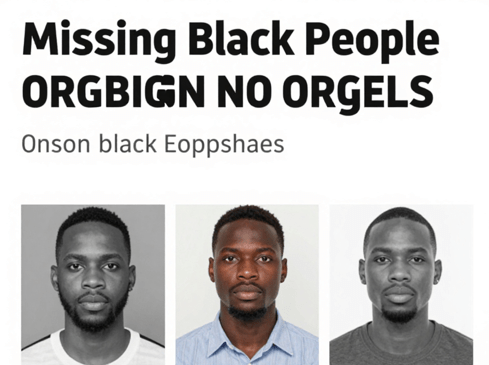
—Barrington Williams, B1Daily
In recent years, a troubling pattern has emerged: Black individuals reported missing are increasingly being found deceased—and alarmingly, without their vital organs. While authorities often dismiss these cases as gang violence, drug-related incidents, or accidents, families and activists are raising urgent questions about a far darker possibility: systemic organ trafficking targeting marginalized communities.
The Disappearances
Names like Jelani Day, Kenneka Jenkins, and countless others have become symbols of this unsettling phenomenon. Autopsy reports frequently list “undetermined” causes of death, despite clear signs of surgical precision in organ removal. In some cases, bodies are discovered in remote areas—drained of blood, missing kidneys, livers, or even hearts—with no explanation for how they got there.
Organ Trafficking: A Global Black Market
The World Health Organization estimates that 10% of transplanted organs worldwide are illegally obtained. Trafficking networks prey on the vulnerable—homeless populations, sex workers, and, disproportionately, Black Americans. With organs fetching hundreds of thousands on the black market, the financial incentive is staggering.
Why Black Communities?
Activists argue that systemic neglect makes Black disappearances less likely to trigger urgent investigations. Media underreporting, police apathy, and racial bias create the perfect conditions for predators to operate unnoticed. Additionally, poverty-stricken areas see higher rates of disappearances, fueling speculation that some victims are lured with false promises of quick money—only to vanish permanently.
The Cover-Up
Families report being stonewalled by officials when demanding answers. Autopsy reports are delayed or altered, and key details vanish from public records. Coroners often refuse to comment on missing organs, citing “animals” or “decomposition” as explanations—even when evidence suggests surgical removal.
What Can Be Done?
Community-led organizations are now stepping in where law enforcement fails, documenting cases and pressuring officials for transparency. Legislation to track missing persons more aggressively, particularly in marginalized communities, is gaining traction. But until systemic change occurs, the disappearances—and organless bodies—will continue.
The question remains: **How many more must vanish before the world pays attention?**
(If you or someone you know has information on missing persons cases, contact local advocacy groups or the Black & Missing Foundation.)
—Barrington Williams, B1Daily



 B1Daily
Leave a comment