—Vanessa Edwards, B1Daily
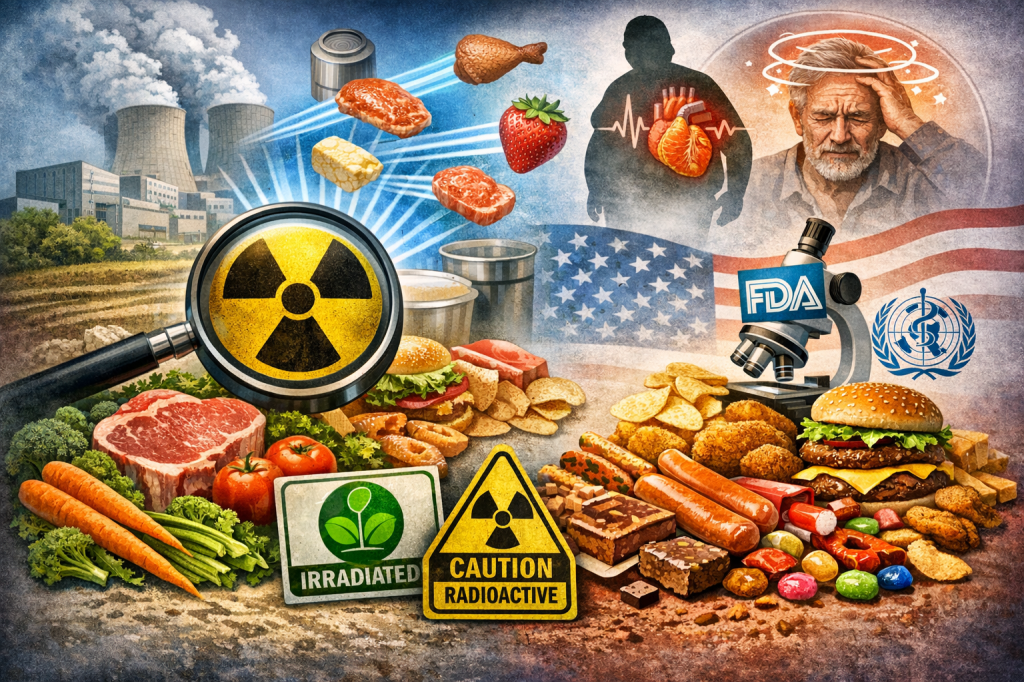
Concerns about “radiation in food” have become increasingly common in conversations about processed products and public health. Much of this anxiety stems from confusion between food irradiation—a regulated safety practice—and radioactive contamination, which is a hazard associated with nuclear accidents or environmental fallout. These are not the same thing, yet they are often treated as if they were interchangeable.
Food irradiation is a technology approved and regulated by agencies such as the U.S. Food and Drug Administration and supported internationally by the World Health Organization. The process involves exposing food to controlled doses of ionizing radiation—typically gamma rays, X-rays, or electron beams—to eliminate harmful bacteria, parasites, and insects. The radiation source passes through the food and is removed; the food itself does not become radioactive. It does not retain radiation in the way materials exposed to nuclear fallout would.
Get your aboriginal health evalutations done today!
In the United States, certain irradiated foods must carry the Radura symbol to indicate they were treated for safety purposes. The primary goal of irradiation is to reduce pathogens such as Salmonella and E. coli, lower the risk of foodborne illness, and extend shelf life. It is used on some spices, meats, poultry, fruits, and vegetables.
Where confusion often arises is in the belief that processed foods contain “traces” of radiation that linger and cause harm. Scientifically, that is not how irradiation works. Once the process is complete, there is no residual radiation left in the food. The technology does not embed radioactive particles into the product.
However, while fears of radioactive residue are largely unfounded within approved regulatory limits, there is a legitimate and serious public health crisis linked to modern dietary patterns. The larger issue is not radiation exposure—it is the dominance of ultra-processed foods in everyday consumption. These products are often high in refined sugars, industrial seed oils, sodium, artificial additives, and low in fiber and micronutrients.
According to the Centers for Disease Control and Prevention, diet-related illnesses are among the leading drivers of preventable disease in the United States. Obesity, type 2 diabetes, cardiovascular disease, and chronic inflammation are strongly associated with long-term consumption of highly processed foods. These metabolic disruptions can, over time, impact brain health, vascular function, and overall cognitive performance.
Some critics of irradiation argue that the process may slightly reduce certain vitamins, such as thiamine, and that it could enable large producers to rely on post-processing sterilization instead of improving sanitation earlier in production. These concerns are part of ongoing food policy debates. However, mainstream scientific consensus does not link irradiated food to delirium, radiation poisoning, or neurological collapse.
When people report cognitive disturbances, confusion, or delirium, the causes are typically linked to severe infections, metabolic imbalances, medication effects, dehydration, or advanced chronic disease—not to legally irradiated food. That said, diets dominated by ultra-processed products can contribute to chronic inflammation, blood sugar instability, and vascular stress, which over years may influence brain function. The mechanism is metabolic, not radiological
—Vanessa Edwards, B1Daily



 B1Daily
Leave a comment