—Matt Gwinta, B1Daily
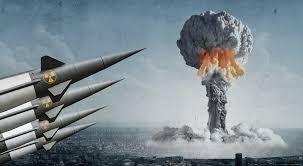
For centuries, the African continent has been treated less like a sovereign region of nations and more like a prize to be divided, exploited, and controlled by outside powers. From the horrors of the transatlantic slave trade to the colonial carve-up of the continent, Africa has endured repeated indignities at the hands of foreign empires. In today’s geopolitical climate, a difficult but increasingly discussed question emerges: should African nations possess nuclear weapons as a deterrent for self-protection?
History provides the context for why the question is even being asked. During the Transatlantic Slave Trade, millions of Africans were forcibly removed from their homelands and sold into slavery across the Americas. The devastation did not come from a single source. European colonial powers orchestrated and profited massively from the system, but slave trading networks also stretched through the Arab Slave Trade, which trafficked Africans across North Africa and the Middle East for centuries.
The 19th century brought another humiliation: the Scramble for Africa. European powers met at the Berlin Conference of 1884–1885 and divided the African continent among themselves with little regard for the people who lived there. Borders were drawn arbitrarily, resources were extracted, and entire societies were reorganized to serve foreign economic interests.
Even after formal colonialism ended, Africa often remained vulnerable to external interference. During the Cold War, many African countries became proxy battlegrounds for global powers competing for influence. Coups, foreign interventions, and economic manipulation frequently destabilized governments trying to assert genuine independence.
Given this long history, some observers argue that Africa’s lack of strategic deterrence leaves it exposed in a world where military power still shapes global politics. Nuclear weapons—however controversial—have historically served as a powerful deterrent. Countries such as North Korea, India, and Pakistan maintain nuclear arsenals largely to prevent external aggression. Their possession of nuclear weapons has forced more powerful nations to approach them with caution.
Africa, by contrast, is notable for moving in the opposite direction. In 1996, the continent created the African Nuclear-Weapon-Free Zone Treaty, also known as the Treaty of Pelindaba, committing most African nations to remaining free of nuclear weapons. Ironically, the only country on the continent that ever developed nuclear weapons—South Africa—voluntarily dismantled its arsenal in the early 1990s before joining the treaty.
Supporters of nuclear deterrence argue that this decision, while noble, may also reflect an uneven global system. The world’s most powerful nations—including United States, Russia, China, France, and United Kingdom—maintain vast nuclear arsenals while urging others to remain disarmed. To critics, this dynamic reinforces a hierarchy where the most powerful states keep ultimate weapons while expecting historically exploited regions to trust in international norms for protection.
However, there are powerful counterarguments. Nuclear weapons carry catastrophic humanitarian risks and enormous economic costs. Many African nations are still focusing on development, infrastructure, and poverty reduction. Building and maintaining nuclear arsenals could divert resources from critical social needs.
There is also the moral argument that Africa, having suffered so deeply from the violence of global power struggles, could instead lead the world toward a different path. By maintaining a nuclear-free continent, African nations might demonstrate that security does not have to rely on weapons capable of destroying civilization.
Ultimately, the question of whether Africa should possess nuclear weapons reflects a deeper issue: global inequality in power and security. The historical indignities endured by African people—from slavery to colonial exploitation—help explain why the desire for true sovereignty and self-defense remains so strong.
Whether that sovereignty should include nuclear deterrence is a debate that will likely grow louder as the international order continues to shift. For many Africans and observers around the world, the real goal is not nuclear weapons themselves, but a future in which the continent’s security, dignity, and independence are no longer dependent on the goodwill of others.
—Matt Gwinta, B1Daily



 B1Daily
Leave a comment