—Sylvester Loving, B1Daily
British politics is entering an unpredictable phase, and growing signs suggest that the governing Labour Party could face serious parliamentary setbacks before the end of the decade. While the next general election is not legally required until 2029, mounting by-election losses, declining poll numbers, and rising challengers are raising the possibility of a major political upset by 2028.
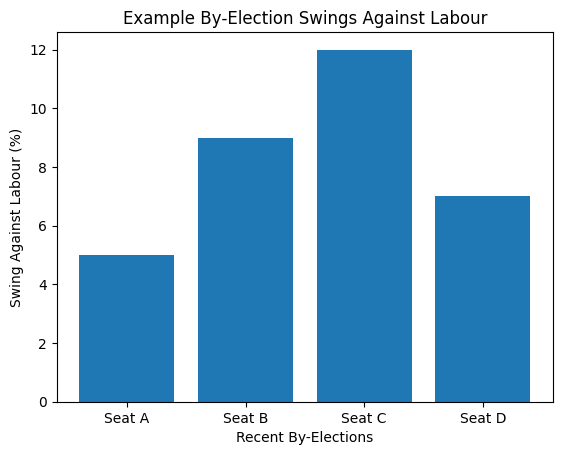
Since coming to power under Prime Minister Keir Starmer, Labour has faced increasing political pressure. Several by-election defeats have shaken the party’s aura of dominance. In one notable case, the party lost the Runcorn and Helsby seat to Reform UK, overturning a massive Labour majority and delivering one of the closest by-election results in modern British history.
Another political shock came when the Green Party of England and Wales captured the Gorton and Denton by-election, overturning a long-standing Labour stronghold and pushing Labour into third place in the contest. Analysts described the result as historic and a potential sign of fragmentation on the political left.
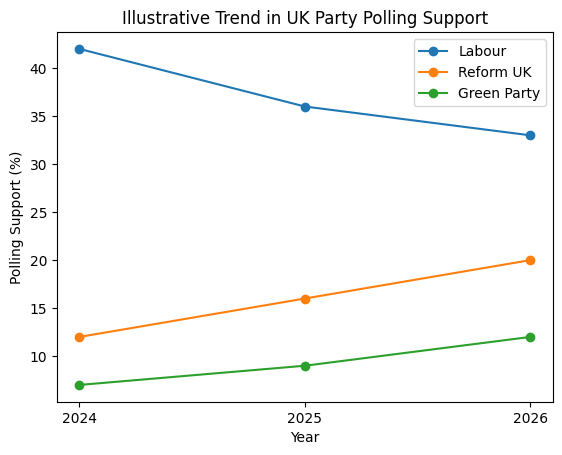
Polls have also painted a troubling picture for the governing party. Some surveys show Labour slipping behind rival parties in voting intention, with support dipping significantly in certain polling averages. Political analysts warn that if these trends persist, Labour could face a dramatic erosion of its parliamentary majority in future elections.
Meanwhile, new challengers are reshaping the political landscape. Reform UK has surged by appealing to voters frustrated with immigration and economic policy, while the Greens are gaining support among progressive voters who feel Labour has moved too far toward the political center.
Internal tensions within Labour have also surfaced. Prominent figures have criticized the party’s campaign strategy and warned that the leadership risks becoming disconnected from working-class voters. These disputes have fueled speculation about future leadership battles and strategic shifts inside the party.
Economic uncertainty could further complicate Labour’s political outlook. Concerns over inflation, energy prices, and global instability could weigh on the British economy, potentially weakening public support for the government.
Despite these challenges, it is still far too early to determine whether Labour will truly face a parliamentary collapse by 2028. Polls often fluctuate between election cycles, and governments frequently recover politically as elections approach. History shows that mid-term dissatisfaction does not always translate into electoral defeat.
What is clear, however, is that the era of two-party dominance in British politics may be weakening. With insurgent parties gaining momentum and voter loyalty becoming more fluid, the political map of the United Kingdom could look very different by the time the next general election arrives.
If current trends continue, the years leading up to 2028 may determine whether Labour consolidates its power—or whether a new political realignment reshapes Parliament altogether.
—Sylvester Loving, B1Daily


 B1Daily
Leave a comment