—Jermichael Evers, B1Daily
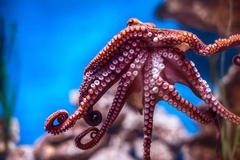
For those of us in the environmental movement, the decision by Mexico to pursue legislation banning the farming of the Octopus is a rare and encouraging moment. At a time when industrial agriculture continues expanding into nearly every corner of the natural world, Mexico’s proposal draws an important line: not every animal should be turned into a factory product.
This effort to prohibit octopus farming is not simply about animal welfare. It is about protecting fragile marine ecosystems, respecting the biology of an extraordinary species, and rejecting yet another unsustainable industry before it becomes entrenched.
Industrial Farming and the Ocean Don’t Mix
From an environmentalist perspective, the expansion of aquaculture has been a double-edged sword. While some forms of fish farming can reduce pressure on wild fisheries, others simply shift environmental damage into new forms.
Octopus farming falls firmly into the latter category.
Octopuses are carnivores that require a diet of wild-caught fish and crustaceans. That means farming them would actually increase demand for ocean resources rather than relieve pressure on marine ecosystems. Instead of conserving fish populations, industrial octopus farms would intensify the depletion of already stressed fisheries.
In other words, it would be another system where the ocean is stripped of life simply to feed a luxury seafood market.
The Biology of Octopuses Makes Farming Inherently Cruel
Environmentalists have also long warned that octopus farming ignores the basic biology of these animals.
Octopuses are solitary, territorial, and extremely intelligent. When confined together in dense aquaculture tanks, they become stressed and aggressive. Research experiments have already shown high mortality rates and widespread cannibalism among captive populations.
These results should not surprise anyone who understands the species. Octopuses evolved to live alone in complex ocean environments, not crowded industrial tanks.
Trying to force them into factory farming conditions is not just inefficient—it is fundamentally incompatible with how these animals live in nature.
Preventing the Next Environmental Disaster
The environmental movement has seen this story before. Industries often emerge promising economic benefits and food security, only for their environmental costs to appear years later.
Pollution from aquaculture facilities, chemical runoff, antibiotic use, and ecosystem disruption have already plagued parts of the global fish farming industry.
Octopus farming threatens to repeat those same mistakes on a new front.
By moving to ban the practice before it becomes widespread, Mexico is doing something environmentalists rarely see from governments: acting proactively instead of reacting after environmental damage has already occurred.
A Growing Global Awareness
Mexico’s legislation reflects a broader shift happening around the world. Governments, scientists, and environmental advocates are increasingly questioning whether humanity should industrialize every species it can.
In the United States, multiple states have already banned octopus farming outright. Across Latin America and Europe, lawmakers and environmental organizations are pushing for similar restrictions.
This is what progress in environmental ethics looks like. It is the recognition that intelligence, ecological balance, and biodiversity deserve protection from unchecked commercial exploitation.
The Ocean Needs Boundaries
For too long, humanity has treated the ocean as an endless resource waiting to be extracted. From overfishing to plastic pollution, that mindset has pushed marine ecosystems to the brink.
Environmentalists have spent decades fighting to establish limits—to say that certain species, habitats, and ecological processes must remain protected.
Mexico’s effort to ban octopus farming is part of that long struggle. It represents a growing understanding that the oceans are not factories and marine life is not simply raw material for global markets.
Sometimes the most responsible decision is the one that prevents a destructive industry from ever beginning.
If Mexico follows through on this legislation, it will send a powerful message to the rest of the world: protecting the ocean means knowing when to say no.
—Jermichael Evers, B1Daily



 B1Daily
Leave a comment