—Terrence Dorner, B1Daily
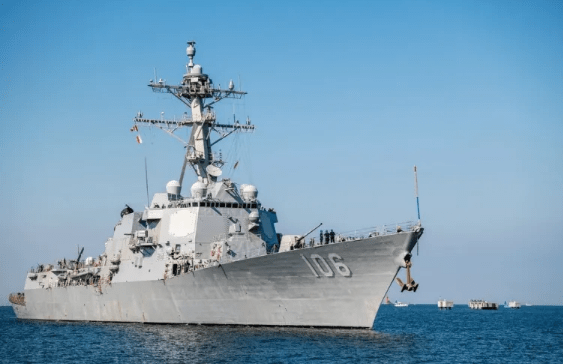
Reports that U.S. warships have been docked or positioned just off the coast of Haiti have sparked widespread discussion about Washington’s next move in the Caribbean nation. As Haiti continues to grapple with severe political instability, gang violence, and humanitarian collapse, the presence of American naval vessels near Haitian waters has fueled speculation about possible military involvement, evacuation planning, or strategic regional positioning.
Haiti has been in a prolonged state of crisis since the assassination of President Jovenel Moïse in 2021. Since then, armed gangs have seized control of large sections of the capital, Port-au-Prince, and surrounding regions. Basic infrastructure has deteriorated, food shortages have intensified, and millions of Haitians are facing extreme poverty and insecurity. Against this backdrop, the arrival of U.S. warships near Haiti has raised questions about whether Washington is preparing for a more direct role in the country’s unfolding crisis.
U.S. officials have historically framed naval deployments in the Caribbean as precautionary measures designed to protect American citizens, secure embassies, and provide humanitarian response capabilities. Warships stationed near Haiti could support evacuation operations, provide logistics for aid distribution, or serve as a deterrent against further escalation of violence. Naval assets also give the United States the ability to respond quickly if conditions deteriorate further.
However, the optics of U.S. warships outside Haiti also revive long-standing concerns about foreign intervention in the nation’s affairs. Haiti has a complicated history with outside powers, particularly the United States, whose military occupied the country from 1915 to 1934. Many Haitians and observers remain wary of any move that could lead to another foreign military presence on Haitian soil.
The strategic location of U.S. naval forces in the region also reflects broader geopolitical calculations. The Caribbean remains a vital zone for migration routes, regional security, and international shipping lanes. With instability in Haiti driving potential migration waves toward the United States and neighboring countries, Washington may be positioning naval forces to manage maritime security and humanitarian contingencies.
Another factor fueling discussion is the ongoing international debate about how to stabilize Haiti. Several proposals have called for multinational security missions to help restore order and support Haitian authorities in regaining control of gang-dominated areas. The presence of U.S. warships near Haiti could indicate preparation for supporting such an international effort, even if American ground troops are not deployed.
At the same time, humanitarian organizations warn that Haiti’s crisis cannot be solved solely through military or security measures. They argue that long-term stability requires economic investment, political reform, and support for Haitian-led solutions. Without addressing the root causes of poverty, corruption, and governance failure, any security intervention could provide only temporary relief.
For many observers, the sight of U.S. warships stationed near Haiti highlights the fragile state of the nation and the uncertainty surrounding its future. Whether the deployment signals a humanitarian standby mission, a security precaution, or the early stages of a broader international response remains to be seen.
What is clear is that Haiti’s crisis has reached a level where global attention—and potentially global intervention—is once again focused on the troubled Caribbean nation.
—Terrence Dorner, B1Daily


 B1Daily
Leave a comment