—Terrence Dorner, B1Daily
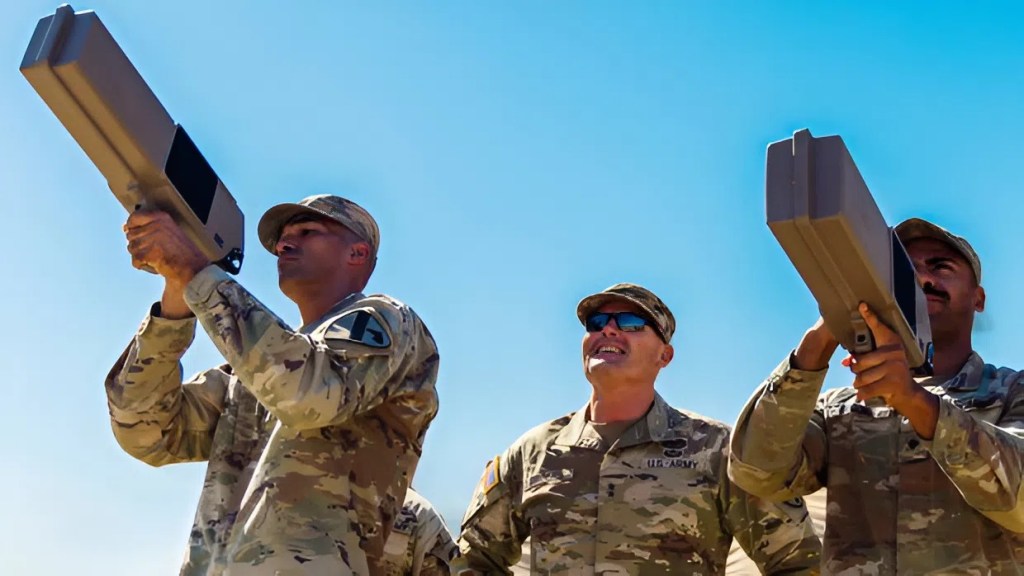
The U.S. military is entering a new era of battlefield preparation as the Pentagon expands training programs focused on unmanned aerial systems. A recent initiative informally known as the “Top Drone” school represents a significant shift in how the U.S. prepares its forces for modern conflicts increasingly dominated by drone technology.
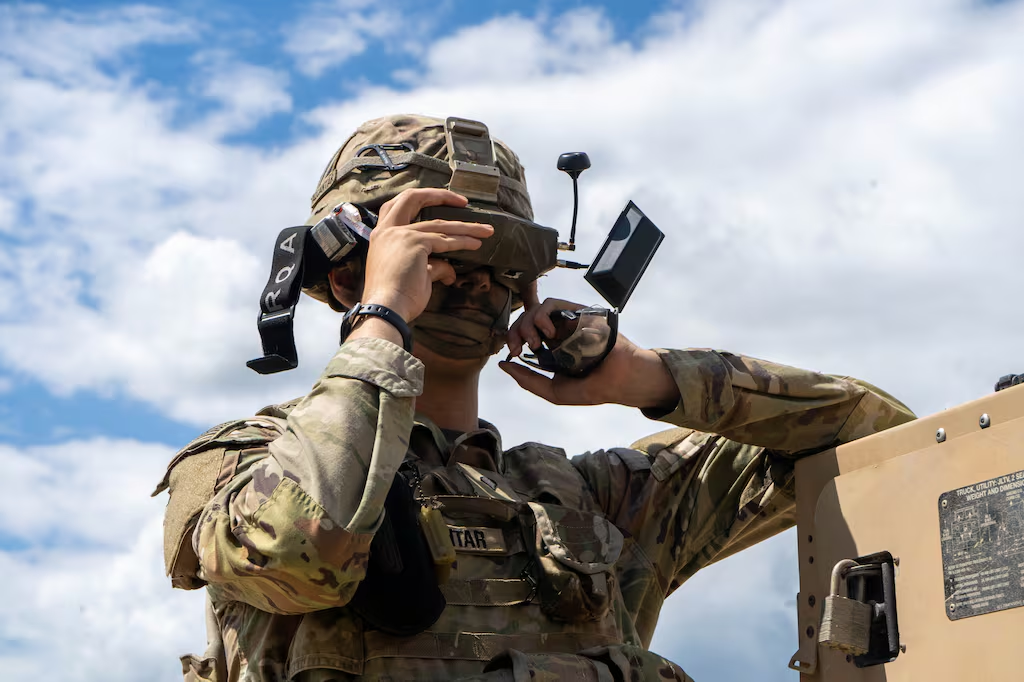
The program was created to give drone operators the opportunity to test their skills in environments designed to mirror real-world combat conditions. Military personnel, industry experts, and technology developers participated in exercises that evaluated how drone pilots operate under pressure while navigating obstacles, electronic interference, and complex terrain.
Unlike traditional aviation training programs centered on fighter jets or helicopters, the Top Drone school focuses on smaller unmanned aircraft systems and first-person view drones similar to those seen in modern conflicts. These systems are often lightweight, relatively inexpensive, and capable of performing reconnaissance, targeting, and even strike missions.
The training event was held during a larger technology experimentation exercise designed to test emerging military capabilities. Participants flew both tethered and untethered drones through demanding courses intended to measure endurance, maneuverability, and tactical decision-making under simulated battlefield conditions.
The Rise of Drone Warfare
The Pentagon’s emphasis on drone operator training reflects a broader transformation occurring across global military strategy. In recent years, conflicts in regions such as Eastern Europe and the Middle East have demonstrated the enormous tactical value of unmanned aerial systems.
Drones have become essential tools for surveillance, artillery spotting, precision strikes, and battlefield intelligence. Their relatively low cost compared to traditional aircraft allows militaries to deploy them in large numbers, creating new forms of warfare where swarms of small drones can overwhelm conventional defenses.
This shift has forced militaries to rethink how soldiers are trained. Instead of focusing solely on pilots flying high-performance aircraft, training programs now include operators controlling drones remotely from ground stations or mobile command centers.
Training the Next Generation of Operators
The Top Drone school is designed not only to test current capabilities but also to help the Pentagon refine tactics and operational procedures for future conflicts. Officials involved in the program say the training environment allows participants to experiment with new technologies and develop strategies that could be applied in real-world combat situations.
The Pentagon plans to host the program multiple times each year, gradually increasing its complexity and scale. Future exercises may introduce additional challenges such as electronic warfare interference, dense urban environments, and more sophisticated threat scenarios.
These training events also serve as a bridge between the military and the private sector. Drone manufacturers, software developers, and defense contractors can observe how their systems perform in simulated combat environments, allowing them to refine their designs and improve reliability.
A New Era of Military Competition
The emergence of a “Top Drone” school reflects the growing importance of unmanned technology in military competition between major powers. Nations around the world are investing heavily in drone fleets, artificial intelligence guidance systems, and autonomous strike capabilities.
For the United States, maintaining an advantage in drone warfare requires not only technological innovation but also skilled operators capable of adapting to rapidly evolving threats.
Programs like the Top Drone school demonstrate that the Pentagon recognizes this reality. The future battlefield will likely feature swarms of autonomous aircraft, remote pilots coordinating strikes from thousands of miles away, and digital warfare environments where electronic signals are as important as physical weapons.
In that environment, the most effective militaries will not just have the best drones—they will have the best-trained operators.
The Pentagon’s new training initiative suggests that the United States is preparing for exactly that future.
—Terrence Dorner, B1Daily



 B1Daily
Leave a comment