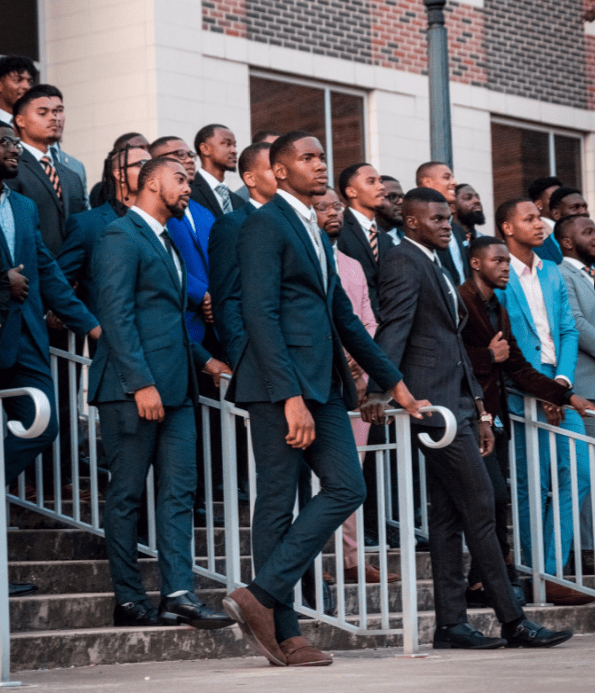
—Barrington Williams, B1Daily
There’s a hard truth this country still refuses to confront: the work of Reconstruction was never finished. The original Freedmen’s Bureau was meant to serve as the bridge between slavery and full citizenship for Black Americans, but that bridge collapsed before most could cross it. What was supposed to be a foundation for stability became yet another broken promise, and the consequences are still visible today in the persistent Black wealth gap, declining Black homeownership rates, and the continued economic instability facing many Black communities.

After the Civil War, Black Americans were promised a real chance at independence, land, protection, and a foothold in the American economy. Instead, the Bureau was underfunded, politically undermined, and ultimately dismantled before it could create lasting change. What followed was not progress, but regression, sharecropping, systemic exclusion, and generations of blocked economic mobility. This is not distant history; it is a policy failure that continues to shape present-day disparities in Black economic empowerment, wealth building, and access to opportunity.
The idea of a new Freedmen’s Bureau is often framed as radical, but in reality, it is a direct response to an unresolved problem. A modern version would not simply mirror the past, it would address current conditions with targeted strategies focused on Black economic justice, reparations policy, and community investment. This means creating real pathways for Black entrepreneurship, expanding access to capital, strengthening Black-owned businesses, and ensuring that economic growth is not just experienced but retained within the community.
Black America commands nearly $1.3 trillion in spending power, yet much of that wealth leaves the community almost as quickly as it enters. The issue is not a lack of economic activity, but a lack of infrastructure to sustain it. Without strong systems such as Black-owned financial institutions, cooperative economic networks, and intentional reinvestment strategies, money does not circulate, it exits. A new Freedmen’s Bureau could play a critical role in building that infrastructure, supporting buy Black initiatives, and encouraging economic circulation that leads to long-term stability rather than temporary consumption.
Critics often argue for universal policies that treat all Americans the same, but that argument ignores the reality of targeted harm. Black Americans were uniquely impacted by slavery, segregation, redlining, and discriminatory federal policies, all of which systematically limited wealth accumulation and opportunity. Addressing these issues requires targeted solutions, not generalized approaches that fail to account for historical context. The United States has implemented focused policies for other groups in the past; applying that same level of intention to Black Americans is not unprecedented, it is consistent.
If no action is taken, the outcome is predictable. The racial wealth gap will continue to widen, Black communities will face ongoing displacement, and economic power will remain concentrated outside of the communities that generate it. These are not abstract concerns, they are measurable realities that persist year after year without structural intervention.
A new Freedmen’s Bureau represents more than policy, it represents a commitment to repair. Not symbolic gestures or temporary programs, but a sustained effort to address the root causes of inequality. It would focus on closing the Black wealth gap, strengthening Black economic independence, enforcing civil rights protections, and investing in the long-term stability of Black communities.
America does not lack awareness of the problem; it lacks the will to solve it. Until there is a targeted, institutional effort to address the specific needs of Black Americans, the disparities created by past policies will continue to define the future.
—Barrington Williams, B1Daily



 B1Daily
Leave a comment