—Travis Luyindama, B1Daily
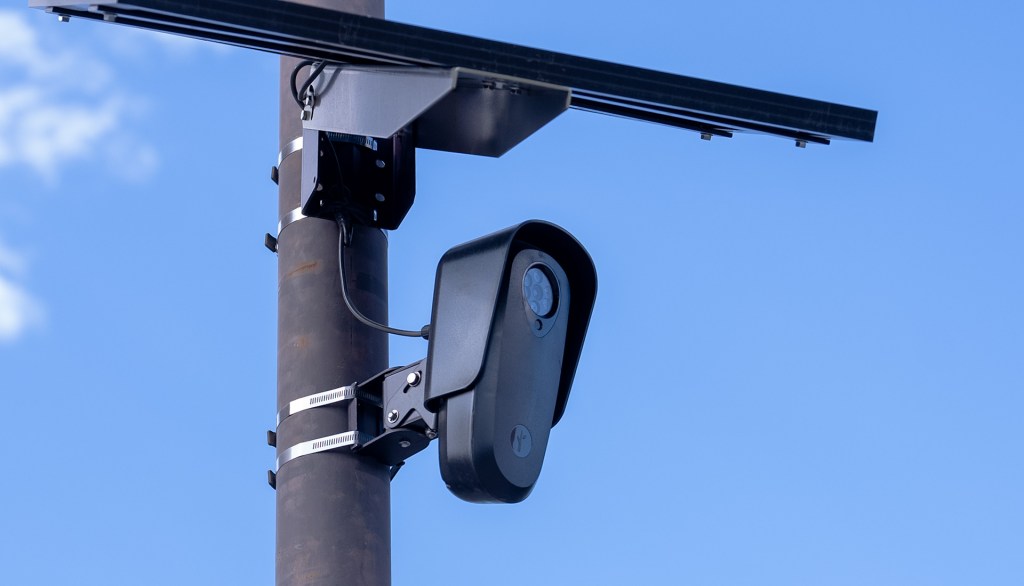
“They know every car that passes through here,” murmured the activist, eyeing the unassuming white device bolted to a telephone pole. “And they share it with whoever they want.”
Flock Safety, a company hawking automated license plate recognition (ALPR) cameras to neighborhoods and police departments, has installed over 40,000 devices across the U.S. Their pitch? “Solve crime.” Their reality? A distributed dragnet that turns every suburban cul-de-sac into a node in a privatized surveillance grid—one increasingly weaponized by white supremacist networks and law enforcement with documented ties to extremist groups.
The Architecture of Racialized Surveillance
Flock’s cameras, often funded by homeowners’ associations or local police grants, record every passing vehicle’s plate, location, and timestamp, storing data for 30 days. But the real danger lies in who accesses this data. A 2022 Georgetown Law report revealed that Flock shares information with over 1,200 police agencies,including departments with officers linked to the Oath Keepers and Proud Boys.
In Georgia, Flock cameras were used to track activists protesting against a police training facility dubbed “Cop City,” with data shared with agencies accused of suppressing Black-led movements.
From Neighborhood Watch to Digital Posse
The technology’s rapid adoption mirrors historical patterns of racial control. ALPR systems were first tested in the 1970s to monitor Black neighborhoods under the guise of “crime prevention.” Today, Flock’s marketing materials feature overwhelmingly white communities, promising safety while tacitly endorsing racial profiling. In one chilling case, a Mississippi sheriff used Flock data to target a Latino driver for a “random” stop—only to admit later he was “checking for illegals.”
The Data Pipeline to Extremists
Flock insists its system is secure, but breaches are inevitable. In 2023, a hacker leaked ALPR data from a neo-Nazi-linked sheriff’s office in Idaho, revealing how plate histories were cross-referenced with antifa protest routes. Meanwhile, far-right groups like the “American Identity Movement” have openly urged members to “adopt a camera” in their towns, framing surveillance as civic duty.
Resisting the Algorithmic Lynch Mob
Efforts to regulate Flock have stalled, thanks to lobbying and police unions branding critics as “anti-safety.” But communities are fighting back:
In Atlanta, activists disabled cameras near Cop City with spray paint and angle grinders.
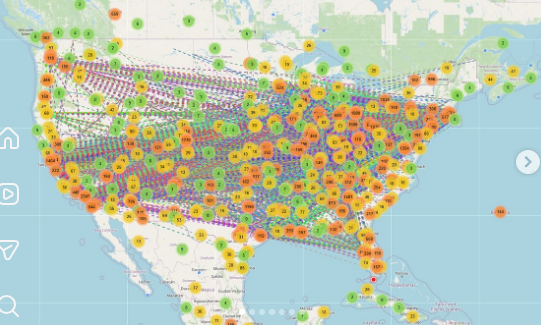
In Oakland, City council members passed a moratorium on ALPRs after evidence of disproportionate tracking in Black neighborhoods.
Hacktivists released maps, and toolkits to jam or spoof plate recognition.
The battle isn’t just about privacy—it’s about dismantling a system where every parked car is a potential target, and every camera feeds a pipeline built on white supremacy. As one organizer put it: *”They want us to think Big Brother’s in D.C. But he’s actually your HOA president.”*
Welcome to the new Jim Code.
—Travis Luyindama, B1Daily


 B1Daily
Leave a comment