—Barrington Williams, B1Daily
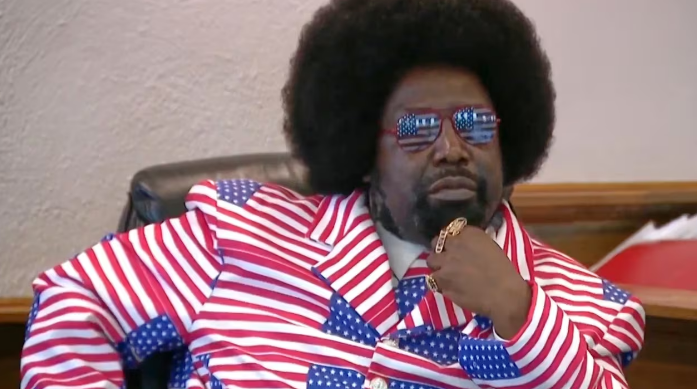
In the long chess match between citizens and the state, evidence is usually gathered by law enforcement, curated by prosecutors, and unveiled in court. But in a rare inversion of that script, rapper Afroman turned the state’s own intrusion into his strongest defense, using home surveillance footage to dismantle allegations and expose the fragility of the case against him.
The Raid That Sparked It All
The saga began with a search warrant executed at Afroman’s Ohio residence in 2022. Deputies entered his home under suspicion of drug trafficking and kidnapping. These are not minor allegations; they carry the weight of serious felony exposure and the reputational damage that follows even an unproven charge.
Yet the search yielded no meaningful evidence supporting those claims. No drugs of consequence, no victims, no corroborating proof. In legal terms, the state came up empty-handed. The absence of evidence did more than weaken the case; it undercut the very foundation of probable cause that justified the raid.
Surveillance Footage Becomes a Legal Sword
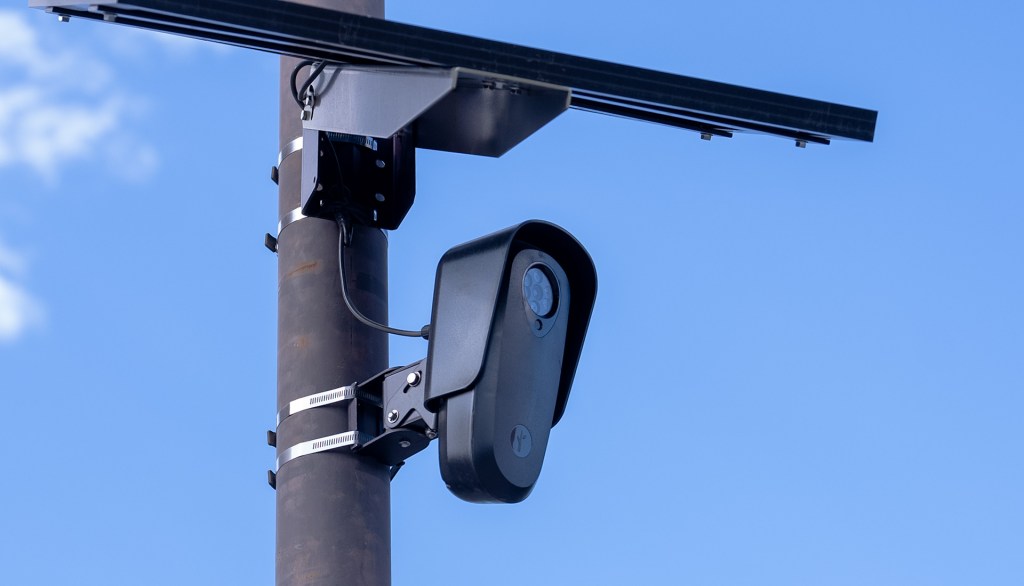
What authorities did not anticipate was that Afroman’s home was equipped with security cameras. Those cameras recorded the officers’ conduct during the search, capturing moments that would later become central to both public perception and legal argument.
Instead of remaining buried in discovery files, the footage resurfaced in an unconventional venue: Afroman’s music and social media content. Clips showed officers moving through his home, with behavior that critics argued appeared unprofessional or excessive. What might have been routine police activity was suddenly reframed under public scrutiny.
This move was more than artistic expression; it was strategic narrative control. By releasing the footage, Afroman effectively challenged the state’s version of events before any courtroom proceeding could define it.
The Legal Backlash and Civil Claims
In response, several officers filed a lawsuit against Afroman, alleging invasion of privacy, emotional distress, and improper commercial use of their likenesses. Their argument rested on the idea that even as public officials, they retained certain rights against being exploited for profit without consent.
Afroman’s defense leaned on well-established constitutional principles:
- First Amendment Protections: The use of the footage in music and commentary could be framed as expressive speech on a matter of public concern, namely police conduct.
- Expectation of Privacy: Courts have consistently held that law enforcement officers performing official duties, especially inside a residence under warrant, have a significantly reduced expectation of privacy.
- Public Interest Doctrine: When content documents potential government overreach, courts often give wider latitude to its dissemination.
Prosecutorial Weakness and the Collapse of Allegations
Crucially, the underlying criminal allegations never matured into a sustainable prosecution. Without evidence to support the initial claims, the state’s case dissolved before it could meaningfully proceed. In legal terms, this is where the phrase “beating the charges” finds its substance: not in a dramatic jury acquittal, but in the quiet collapse of a case that cannot meet its burden.
The state carries the obligation to prove guilt beyond a reasonable doubt. When its own investigation fails to produce credible evidence, that burden becomes insurmountable.
A Modern Case Study in Power and Pushback
What makes this case notable is not just the outcome, but the mechanism. Afroman did not rely solely on traditional legal defense strategies. He leveraged technology, public visibility, and constitutional protections to reshape the battlefield.
It raises broader legal questions:
- Can citizens weaponize surveillance in defense against state overreach?
- Where is the line between artistic expression and commercial exploitation of real events?
- How should courts balance officer privacy with public accountability?
In the end, the case serves as a reminder that the justice system is not a one-way mirror. While the state wields immense power, that power is bounded by evidence, procedure, and constitutional rights. When those boundaries are tested, even an unconventional defense, delivered through beats and video clips, can carry real legal force.
Afroman’s victory was not just personal. It was procedural. It showed that when the state’s narrative falters under scrutiny, the law still has room for reversal, even if it arrives with a soundtrack.
—Barrington Williams, B1Daily


 B1Daily
Leave a comment