—Kel McKnight, B1Daily
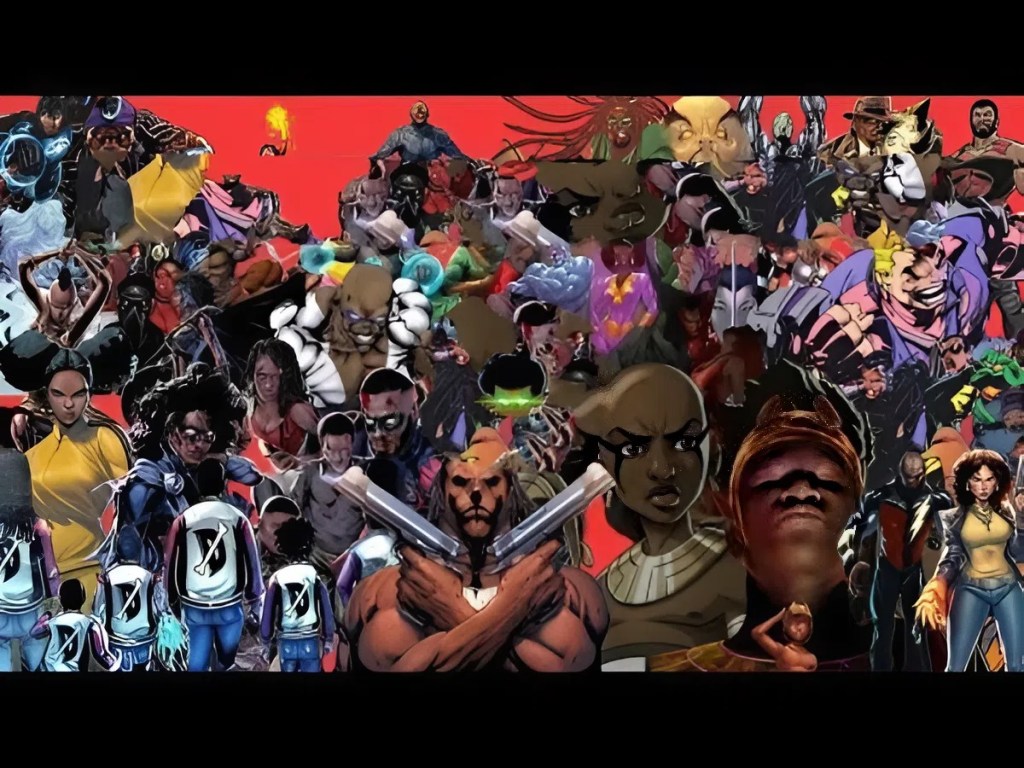
There’s a quiet revolution happening between stapled pages, digital panels, and crowdfunded dreams. No corporate gatekeeper announced it. No press conference declared it official. But make no mistake, this moment belongs to Black indie comic creators.
This is a golden age.
Not the polished, top-down kind stamped by legacy publishers, but a grassroots surge built from tablets, hustle, and community. The kind that grows in group chats, explodes on timelines, and gets funded overnight by readers who are tired of waiting to be seen.
For decades, Black creators in comics had to squeeze themselves into narrow lanes. Major publishers offered visibility, but often at the cost of control. Stories were filtered, characters softened or stereotyped, and entire worlds left unexplored. If you wanted to tell something raw, something culturally specific, something weird in the best way, you had to fight for it.
Now? The doors didn’t open. People built new houses.
Platforms like crowdfunding sites, digital storefronts, and social media have turned what used to be barriers into speed bumps. A creator with an idea, an iPad, and a few hundred dedicated supporters can now do what once required an entire publishing machine. Printing is accessible. Distribution is decentralized. Marketing is direct. The middleman is no longer king.
And what’s being created is electric.
Black indie comics today are not confined to one genre, tone, or aesthetic. They stretch from sci-fi epics rooted in African futurism to slice-of-life dramas grounded in everyday Black experiences. Horror, fantasy, satire, romance, superhero deconstructions, all of it is on the table. There’s a refusal to be boxed in, and that creative freedom is producing work that feels alive in a way mainstream comics often don’t.
More importantly, ownership has become the centerpiece. Creators are not just telling stories, they’re building intellectual property. That matters. In an era where a single concept can evolve into films, animation, games, and merchandise, holding onto your creation is the difference between participation and power.
This shift is economic as much as it is artistic. Black creators are learning to monetize directly, building loyal fanbases that support them issue after issue. Instead of chasing approval from institutions that historically overlooked them, they are cultivating ecosystems that sustain themselves. It’s not just about making comics. It’s about building something that lasts.
And the audience is ready.
Readers are actively seeking new voices. They want authenticity, not recycled archetypes. They want stories that feel like they come from lived experience, not corporate strategy meetings. The success of indie campaigns and the virality of certain titles prove that demand is no longer a question. The audience exists, and it is growing.
Technology has also flattened the learning curve. Tools for illustration, lettering, and publishing have never been more powerful or more accessible. What once took years to master and thousands of dollars to produce can now be done with far fewer resources. The barrier is no longer access. It’s execution.
Of course, this golden age is not without its challenges. Discoverability remains a constant battle. Algorithms can bury as easily as they can boost. Financial sustainability is not guaranteed. And the absence of gatekeepers means creators must wear multiple hats: artist, writer, marketer, entrepreneur.
But even these challenges underscore the central truth of this moment. The power has shifted.
There has never been a time when a Black creator could move from concept to audience with this level of speed, autonomy, and ownership. Never a time when the tools were this accessible, the audience this engaged, and the cultural appetite this strong.
This is not a waiting room era. It’s a building era.
For anyone sitting on an idea, sketching characters in notebooks, or imagining worlds that don’t yet exist, the message is simple: there has never been a better time to create than right now.
The page is open. The ink is yours.
—Kel McKnight, B1Daily
 B1Daily
Leave a comment