—Sylvester Loving, B1Daily
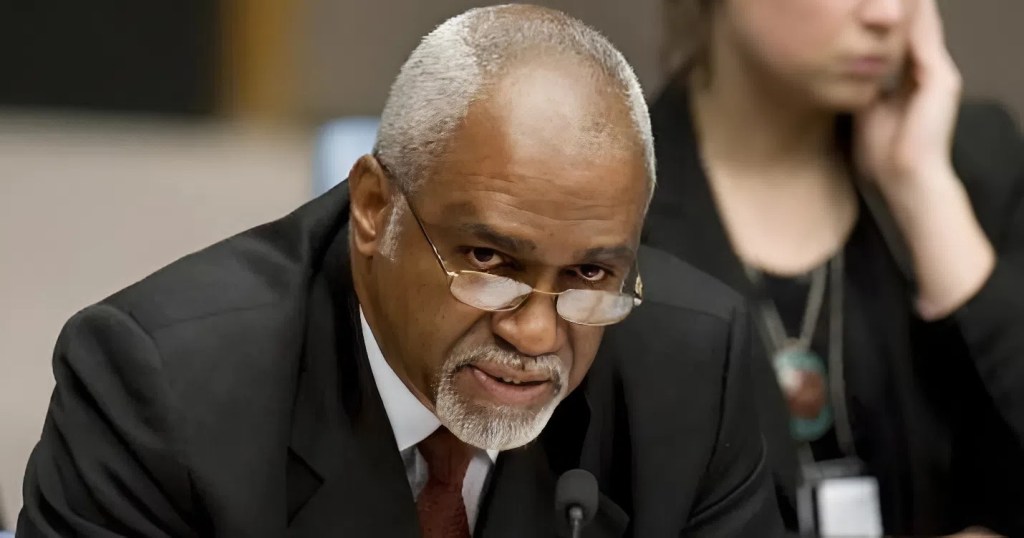
A quiet but explosive statement from a judge at the International Court of Justice has reignited one of the most uncomfortable debates in modern global politics: reparations for slavery. According to analysis tied to that judge’s work, the United Kingdom could owe as much as $24 trillion to countries impacted by the transatlantic slave trade.
That number is staggering. It is meant to be.
The figure comes from a comprehensive economic assessment examining the scale, duration, and profitability of Britain’s involvement in slavery. It attempts to quantify not just the immediate exploitation of enslaved people, but the centuries-long accumulation of wealth that followed—wealth that helped build modern Britain while leaving lasting economic scars across the Caribbean and beyond.
The Scale of the Claim
The $24 trillion estimate is not a symbolic number pulled from thin air. It reflects the compounded value of unpaid labor, extracted resources, and lost economic development across multiple nations over hundreds of years.
According to the findings, 14 countries are owed reparations, with places like Jamaica accounting for a significant portion of that total.
The logic is straightforward, even if the math is complex:
If slavery generated immense wealth for Britain, then the absence of that wealth in formerly colonized nations is not accidental. It is structural.
And structures create obligations.
A Crime Without Settlement
What makes this debate particularly sharp is the absence of any meaningful financial reckoning.
While other historical injustices have seen compensation, apologies, or restitution, transatlantic slavery remains largely unresolved in material terms. There have been statements of regret, acknowledgments of wrongdoing, and symbolic gestures, but little in the way of direct economic repair.
The judge behind the $24 trillion estimate has argued that this cannot continue, framing reparations as both a legal necessity and a historical obligation.
In that framing, slavery is not just a moral failing of the past. It is an unpaid debt still sitting on the books.
Britain’s Response: Silence and Deflection
The United Kingdom has largely resisted calls for reparations.
Successive governments have expressed regret over slavery but stopped short of formal apologies tied to compensation. More recently, political leaders have signaled a desire to “move forward” rather than engage in prolonged debates about the past.
Critics see this as avoidance.
Because the issue is not just about history. It is about continuity. The economic advantages built during the height of empire did not disappear. They were reinvested, institutionalized, and passed down through generations.
Meanwhile, many of the nations impacted by slavery continue to grapple with underdevelopment, debt, and structural inequality, conditions that activists argue are directly linked to that same history.
Reparations Beyond a Check
Even among advocates, reparations are not always framed as a single payment.
The broader conversation includes debt cancellation, investment in education and infrastructure, healthcare support, and systemic economic partnerships designed to address long-term disparities.
In other words, reparations are not just about money. They are about recalibration.
They are about shifting a global imbalance that was created intentionally and sustained over centuries.
A Debate That Isn’t Going Away
The significance of the $24 trillion figure is not just its size. It is what it represents.
It signals that the reparations movement has moved beyond abstract moral arguments into quantified economic claims. It is no longer simply asking whether reparations should happen. It is calculating what they might look like.
International pressure is growing. Caribbean nations, African states, and global advocacy groups are increasingly coordinated in their demands. The issue is appearing in diplomatic forums, academic research, and political discourse with a frequency that would have been unthinkable decades ago.
The question is no longer if the debate will continue.
It is how long it can be ignored.
The statement tied to a judge at the International Court of Justice has done something powerful: it has turned history into a ledger.
$24 trillion is not just a number. It is a challenge.
A challenge to Britain, to the international community, and to the idea that the consequences of slavery can remain confined to the past. Because if the wealth was real, if the extraction was real, then the debt, many argue, must be real too.
And debts, eventually, come due.
—Sylvester Loving, B1Daily




 B1Daily
Leave a comment