—Barrington Williams, B1Daily
There are moments in diplomacy when a country reveals itself not through what it says, but through what it refuses to acknowledge. A vote at the United Nations can be wrapped in procedure, softened by language, buried in bureaucracy. But sometimes, it cuts straight to the bone.
The United States, a nation that built enormous wealth on enslaved labor, has chosen to oppose or resist efforts to formally recognize slavery as a crime against humanity in an international forum. Not in the distant past, not as a historical footnote, but here, now, in a world still grappling with the consequences of that system.
Let that settle for a moment.
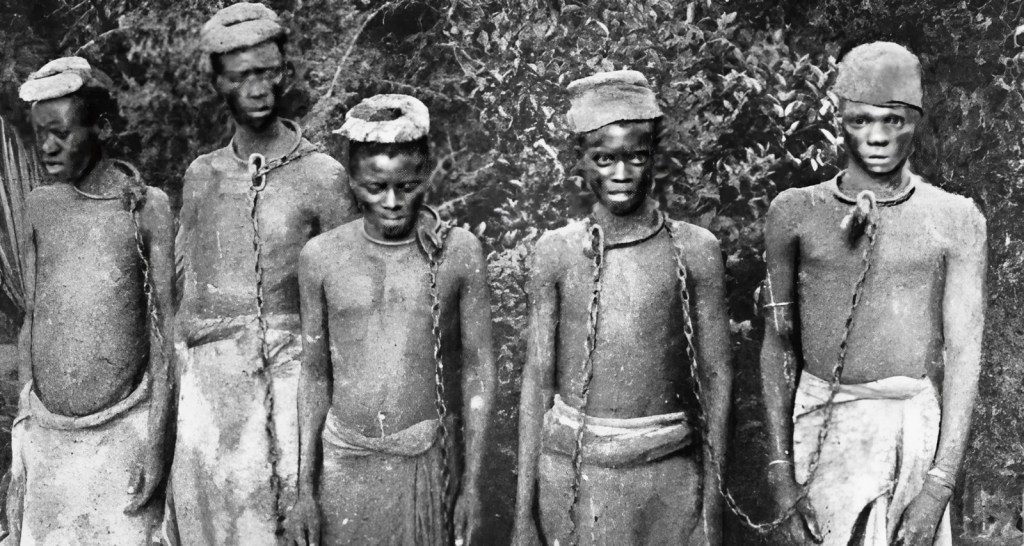
This is not a semantic disagreement. It is not a minor diplomatic quibble over phrasing. It is a refusal to fully align with a moral consensus that should have been settled generations ago. Slavery was not just a tragedy. It was not just an unfortunate chapter. It was a system of organized, legalised, intergenerational brutality. If that does not meet the threshold of a crime against humanity, then the term itself begins to lose meaning.
So why resist naming it?
Because naming carries weight. Recognition is not symbolic when it opens doors. To formally declare slavery a crime against humanity at the international level is to strengthen the legal and moral foundation for reparations, for accountability, for a deeper reckoning with the afterlives of slavery that still shape economic and social realities today.
And that is where the discomfort begins.
The United States has long positioned itself as a global advocate for human rights. It speaks loudly, often rightly, about injustice abroad. Yet when the conversation turns inward, when the spotlight lands on its own historical ledger, the language becomes cautious, measured, restrained. Principles suddenly come with qualifiers.
This contradiction is not subtle. It is structural.
The legacy of slavery in America is not confined to textbooks. It lives in wealth disparities, in housing patterns, in education gaps, in the very architecture of opportunity. To resist recognizing slavery as a crime against humanity is to resist fully acknowledging the scale of harm that produced those outcomes.
And that resistance sends a message.
Not just to the descendants of the enslaved within the United States, but to the world. It suggests that some crimes are easier to condemn when they belong to others. That moral clarity is, at times, negotiable.
There is also a deeper irony at play. The concept of “crimes against humanity” was developed in the aftermath of global atrocities, meant to establish a universal standard, a line that could not be crossed without consequence. Slavery, particularly in its transatlantic form, fits squarely within that definition. It was systematic. It was racialized. It was enforced by law and violence over centuries.
To hesitate in naming it as such is not caution. It is avoidance.
Supporters of the U.S. position may argue that legal classifications are complex, that retroactive designations carry implications that extend far beyond symbolism. They may point to diplomatic strategy, to concerns about precedent, to the intricacies of international law.
But at some point, complexity becomes a shield.
Because the core issue is not complicated. It is moral. And morality, when it is clear, does not require hedging.
What makes this moment particularly striking is not just the vote itself, but what it represents in a broader context. Around the world, there is a growing movement to confront historical injustices with greater honesty. Museums are being challenged. Statues are being reconsidered. Narratives are being rewritten to include voices that were long excluded.
In that environment, refusing to name slavery as a crime against humanity feels less like a neutral stance and more like a step backward.
History does not change based on how it is labeled. But the willingness to name it accurately reveals how seriously a nation takes its own past.
The United States had an opportunity to stand in alignment with a global understanding of one of history’s greatest crimes. Instead, it chose hesitation.
And in that hesitation, something important was exposed.
Not ignorance. Not confusion.
Reluctance.
—Barrington Williams, B1Daily


 B1Daily
Leave a comment