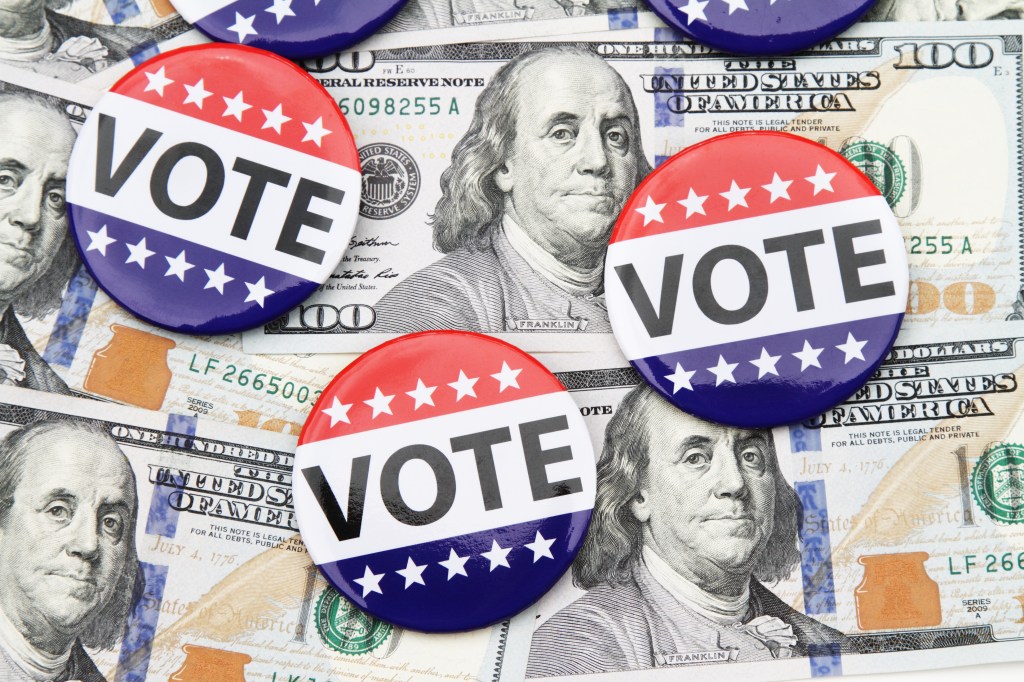
There’s a quiet arithmetic reshaping American politics, and it isn’t waiting for anyone to catch up. As the electorate evolves, Black voters remain one of the most politically reliable voting blocs in the country. Yet reliability without infrastructure is like showing up to a high-stakes game with passion but no playbook.
And right now, the gap is showing.
The Money Problem No One Wants to Say Out Loud
In modern politics, influence doesn’t just come from votes. It comes from organization, from messaging, and above all, from money. Super PACs and large donor networks shape narratives, fund candidates, and build long-term strategy.
Compared to other major voting blocs, Black America has relatively few large-scale, well-funded political action ecosystems operating at a national level with sustained influence. That doesn’t mean there are no organizations or advocacy groups. There are many. But fragmentation and underfunding often limit their reach and consistency.
Meanwhile, other groups have invested heavily in political infrastructure, building pipelines that extend from local school boards to federal offices. These aren’t last-minute efforts. They are long-term machines.
Politics rewards preparation. And preparation costs money.
A Demographic Shift That Changes the Game
At the same time, the numbers are shifting.
Hispanic and Latino Americans now represent a larger share of the U.S. population than Black Americans, and that gap is expected to widen over time. This is not just a census detail. It is a political reality with consequences.
As population size increases, so does electoral leverage, especially in key states where margins are tight. Campaigns allocate resources based on where they see growth, turnout potential, and strategic advantage. That means outreach, messaging, and policy priorities inevitably adjust.
This is not a zero-sum game in theory. But in practice, attention is finite.
And attention follows power.
Loyalty Without Leverage
For decades, Black voters have demonstrated high levels of political participation and loyalty, particularly within one party. That consistency has made Black America a cornerstone of electoral coalitions.
But consistency can become expectation.
When a voting bloc is seen as reliably “locked in,” the incentive to compete aggressively for its support can diminish. Not disappear, but soften. Meanwhile, groups perceived as more fluid or growing rapidly often become the focus of targeted outreach and policy concessions.
In political terms, unpredictability can be power. Certainty can sometimes be taken for granted.
The Infrastructure Gap
The issue is not simply about numbers. It is about systems.
Political influence is built through layered infrastructure: think tanks, donor networks, media platforms, candidate pipelines, legal advocacy groups, and data operations. These systems don’t just react to elections. They shape them.
Black America has produced influential leaders, organizers, and movements. But building permanent, scalable institutions that can rival those of other major blocs remains an ongoing challenge.
Without that infrastructure, even a significant voting population can find itself reacting rather than directing.
The Risk of Falling Behind
As demographic and political landscapes evolve, the risk is not immediate disappearance from relevance. It is gradual erosion of influence.
Policy priorities may shift. Resource allocation may change. Representation may plateau or decline relative to population share. None of this happens overnight. It happens incrementally, often unnoticed until the gap becomes difficult to close.
And by then, the cost of catching up is far higher.
What Preparedness Would Look Like
Preparedness is not just about building Super PACs, though that is part of it. It is about developing a comprehensive political ecosystem.
That includes cultivating donors at scale, investing in local and national candidate pipelines, strengthening independent media voices, and building policy institutions that can produce and promote agendas tailored to Black American interests.
It also means diversifying political strategy. Engaging across multiple levels of government. Creating leverage rather than relying solely on loyalty.
Preparation is not reactive. It is deliberate.
A Turning Point, Not a Conclusion
The current moment is not a verdict. It is a warning.
Black America remains a powerful force in U.S. politics. The question is not whether that power exists. It is how it is structured, sustained, and expanded in a landscape that is becoming more competitive and more complex.
Demographics are shifting. Political machines are evolving. Influence is being built in real time.
The only question is who is building fast enough to keep up.


 B1Daily
Leave a comment