—Barrington Williams, B1Daily
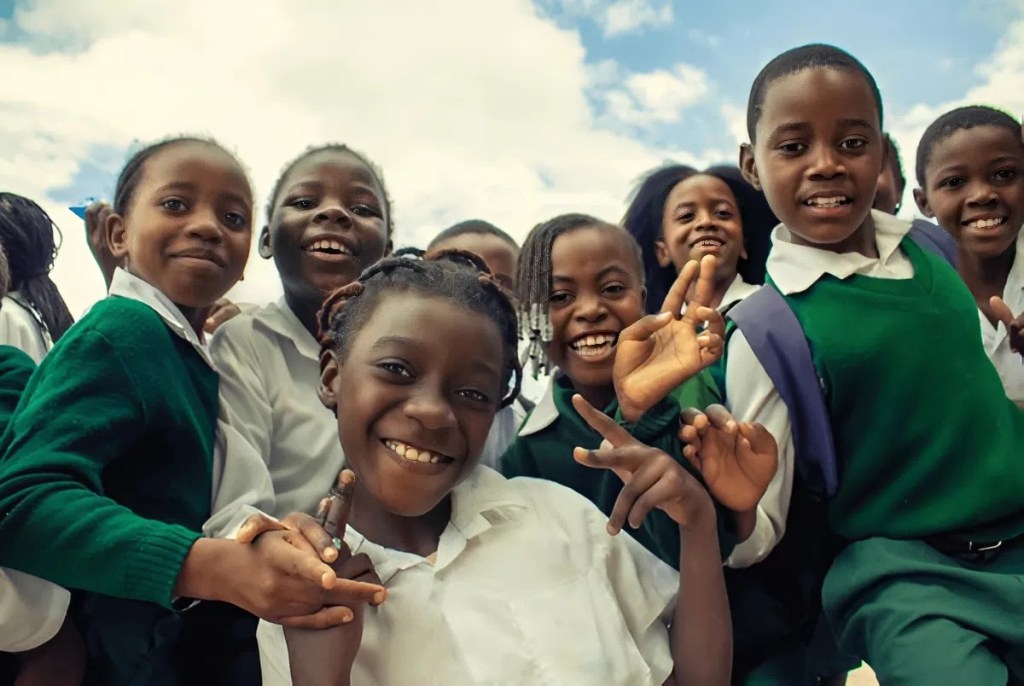
The classroom is never just a room with desks and a whiteboard. It’s a factory of identity, a quiet architect shaping how children see themselves and their place in the world. For many Black American families, that factory has too often produced something distorted: a version of history where Black life begins in chains and rarely escapes them.
That’s not just incomplete. It’s dangerous.
Too many public school curricula still orbit around a narrow, Eurocentric storyline where Black people are introduced primarily through slavery, then shuffled quickly into the margins. The result is a psychological blueprint that quietly tells Black children their story started with suffering and that their contributions are footnotes instead of foundations. When that narrative is repeated year after year, it doesn’t just miseducate, it conditions.
This is why more Black parents are beginning to ask a sharper question: What exactly is my child being taught about who they are?
Private schools, independent academies, and culturally grounded institutions have become one answer. Not because they are inherently perfect, but because they offer something many public systems still struggle to provide: control. Control over curriculum. Control over cultural framing. Control over whether a child learns about ancient African civilizations, Black inventors, global empires, resistance movements, and intellectual traditions alongside the reality of oppression, not beneath it.
In these environments, Black history is not a seasonal add-on confined to February. It is woven into the fabric of learning, treated as a continuous, complex, and dignified narrative. A child who understands that their ancestors built, ruled, discovered, and created long before slavery is far less likely to internalize inferiority later.
But private school is not the only path, and for many families, it’s not financially realistic. That doesn’t mean surrendering to a broken narrative.
It means becoming vigilant about public education.
Parents have more leverage than they’re often led to believe. School boards, curriculum reviews, parent-teacher organizations, and classroom transparency all provide entry points. Asking direct questions about what books are used, how history is framed, and whether lessons include African civilizations, Reconstruction realities, Black economic achievements, and modern contributions is not radical. It’s responsible.
A proper curriculum should challenge the idea that Black existence is synonymous with oppression. It should dismantle the myth that Black people were merely passive recipients of history rather than active shapers of it. It should highlight intellectual traditions, scientific contributions, political movements, and cultural innovations that stretch across centuries and continents.
Because when education tells a child, implicitly or explicitly, “your people were only slaves,” it plants a ceiling in their mind.
And ceilings, once internalized, are hard to break.
On the flip side, when a child learns about kingdoms like Mali and Songhai, about innovators, revolutionaries, scholars, and builders, something shifts. Confidence is no longer borrowed, it is inherited. Identity becomes a source of strength rather than something to defend.
This is not about rejecting the truth of slavery. It is about rejecting the lie that slavery is the totality of Black history.
Education should be a mirror and a window. For Black children, it has too often been a distorted mirror and a closed window. Parents who push for better, whether by choosing private education or transforming public school experiences, are doing more than advocating for academics. They are protecting their children’s sense of self.
And that might be the most important lesson any child ever learns.
—Barrington Williams, B1Daily

 B1Daily
Leave a comment