—Kerry Hill, B1Daily
In politics, some figures fade quietly. Others return like a drumbeat you can’t ignore. Cori Bush is clearly the latter.
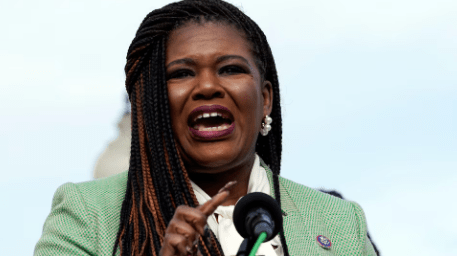
After losing her Missouri seat in 2024, the former congresswoman has officially launched a 2026 comeback campaign, aiming to reclaim her place in Congress and reignite the movement that first carried her from Ferguson protests to Capitol Hill.
Bush’s political identity has always been rooted in the ground, not the marble halls. A nurse, pastor, and activist shaped by the aftermath of Michael Brown’s killing in Ferguson, she built her career as a voice for the overlooked, the working class, and specifically Black communities facing systemic neglect. That foundation hasn’t changed. If anything, her campaign leans harder into it now, framing her return as unfinished business for those she says are still “unseen, unheard, and left out.”
Her renewed bid also comes with a sense of defiance. Bush has pointed to heavy outside spending and political opposition as factors in her previous loss, casting her campaign as a fight not just against a single opponent, but against entrenched power structures trying to silence grassroots movements.
And to be fair, that grassroots commitment is real. Whether organizing on the streets or pushing policies in Congress, Bush has consistently centered issues affecting Black Americans: policing, housing instability, healthcare inequities, and economic justice. Even critics who take issue with her broader ideology often acknowledge that her advocacy is not manufactured in a think tank. It’s lived, raw, and deeply tied to community-level struggle.
That said, her politics are not without friction. Bush’s alignment with progressive feminist frameworks and broader left-wing ideology has drawn both praise and criticism, especially among those who feel some of those positions drift away from the specific material needs of Black communities. It’s a tension that follows her like a shadow at noon, impossible to ignore but not necessarily defining her entire political identity.
Still, Bush’s campaign is less about ideological purity and more about persistence. In a political era where many candidates are polished to the point of sterility, she remains something else entirely: a political figure powered by protest energy, moral urgency, and a refusal to fully assimilate into establishment norms.
The question now isn’t who Cori Bush is. That part is settled.
The real question is whether the same grassroots flame that once lifted her into Congress can burn hot enough to carry her back.
—Kerry Hill, B1Daily




 B1Daily
Leave a comment