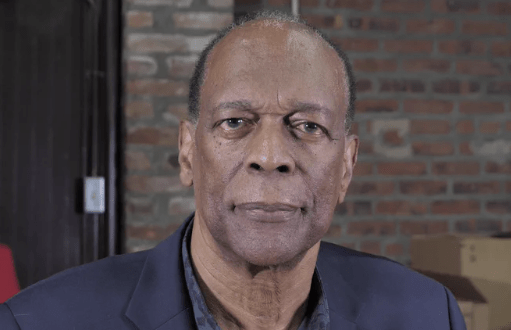
—Marcus Davis, B1Daily
When a giant falls, the ground doesn’t just shake, it reveals how much weight they were quietly carrying all along. The passing of Bob Law is one of those moments.
Law wasn’t just a radio host. He was a frequency. A signal. A living archive of Black thought, struggle, and political consciousness transmitted through the airwaves for decades. As the longtime voice behind Night Talk on WBAI, he transformed radio into something far more potent than entertainment. It became a town square, a classroom, and at times, a courtroom for Black America.
At a time when mainstream media either ignored or distorted Black realities, Law created a space where those realities could breathe unfiltered. Activists, scholars, everyday people, all found their way onto his platform. He didn’t just report on Black issues. He interrogated them. He challenged power, questioned narratives, and forced listeners to think deeper than headlines allowed.
His death marks more than the loss of a legendary broadcaster. It signals a shrinking of a particular kind of Black media ecosystem, one rooted in independence, political rigor, and community accountability. Law belonged to a generation of voices that didn’t need corporate approval to speak truth. They built their own microphones.
Today’s media landscape moves faster, louder, and often shallower. Algorithms reward outrage over insight. Corporate consolidation narrows what can be said and who gets to say it. In that environment, figures like Bob Law feel almost mythical, like elders from a time when words were sharpened carefully and used with purpose.
But his legacy isn’t just nostalgia. It’s instruction.
Law showed that Black media could be fearless without being reckless, critical without being detached, and deeply rooted in the people it served. He proved that the microphone, when used correctly, isn’t just a tool. It’s a weapon, a shield, and sometimes, a bridge.
For younger generations of Black journalists, podcasters, and commentators, his life poses a quiet question: Are you building platforms, or just chasing attention?
Because Bob Law didn’t chase relevance. He defined it.
And now that his voice has gone silent, the responsibility shifts. Not to replace him, because voices like his don’t come in duplicates, but to carry forward the spirit of what he represented: media that speaks with the people, not at them.
The airwaves feel a little quieter now.
But if you listen closely, his echo is still there.
—Marcus Davis, B1Daily



 B1Daily
Leave a comment