—Kerry Hill, B1Daily
In a troubling incident that has drawn national attention, an 8th‑grade student at Gainesville Middle School in Prince William County, Virginia, says he endured repeated racial harassment and bullying from classmates, only to feel ignored by school administrators and disciplined when he fought back.
A Student’s Pain Goes Public
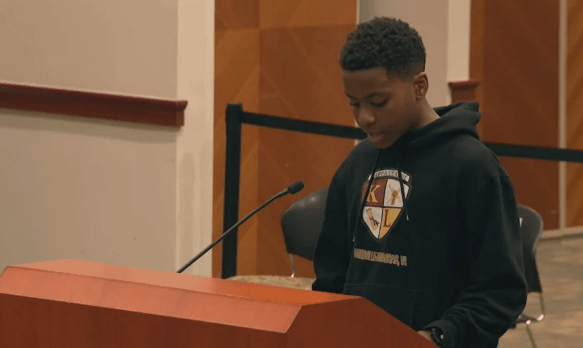
Jefferson McClellan, an 8th grader at Gainesville Middle, recounted how he has been the target of racial slurs, including being called the “N‑word” and other derogatory names by peers during his time at the school. Rather than receiving meaningful protection from staff, Jefferson says he was later suspended for three days (later reduced) after a confrontation with the students who were harassing him.
The emotional toll was clear in his remarks at a Prince William County School Board meeting, where Jefferson said he wanted to speak out so that no other student would have to endure similar treatment.
School’s Response and Community Reaction
Prince William County Public Schools (PWCS) released a statement saying it does not tolerate bullying or harassment of any kind and that administrators have met with Jefferson and his family to provide support. They said they are working with the district’s Office of Diversity, Equity, and Inclusion to develop a comprehensive plan to address discrimination and harassment in schools.
Despite those assurances, critics—including local NAACP leaders and community advocates—argue that the school’s response has been too slow and insufficient, especially in the face of racial bullying that left a young student feeling unprotected.
Broader Concerns About Racism in Schools
Jefferson’s experience is not an isolated concern in American public education. Across the country, families and civil‑rights advocates have raised alarms about racial harassment in schools—from racist graffiti on walls to students being targeted with racial slurs or stereotypical attacks. In some cases, parents have pursued legal action when districts failed to act effectively.
The issue extends beyond individual classrooms, touching on debates over how schools handle reporting, discipline, and anti‑racism education, and whether existing policies sufficiently protect students of color.
Why This Matters
For students like Jefferson McClellan, school should feel like a place of safety and learning—not a space where racial hostility is overlooked. When young people are subjected to racial harassment without clear and consistent consequences for the perpetrators, it raises deep questions about equal protection and the lived reality of diversity and inclusion in American schools.
Parents, educators, and policymakers alike say schools must do more: enforce anti‑bullying policies, educate students and staff about racism, and ensure that victims have safe avenues to report harassment without fearing retaliation or unfair punishment.
The Path Forward
Community leaders, including members of the NAACP, have called for:
- stronger anti‑racism training for staff and students
- transparent disciplinary protocols that treat racial harassment seriously
- ongoing support for students who experience discrimination
Advocates say that until schools truly confront and dismantle systemic patterns of racial mistreatment, incidents like what Jefferson described will continue to occur, leaving families hurt and communities divided.
—Kerry Hill, B1Daily
 B1Daily
Leave a comment