—Barrington Williams, B1Daily
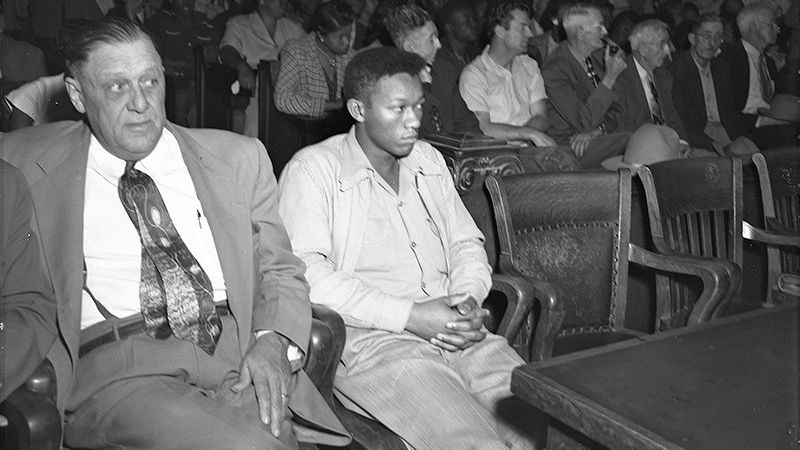
In 1956, a 21-year-old Black man named Tommy Lee Walker was strapped into an electric chair in Texas, maintaining his innocence until his final breath. Seventy years later, the state that took his life finally admitted what his family had always known: he never committed the crime.
A Life Taken by Injustice
Walker was just 19 when he was arrested for the 1953 rape and murder of a white woman in Dallas. Despite multiple witnesses confirming his alibi, he was convicted by an all-white jury and executed within two years.
Decades later, a reinvestigation uncovered what many suspected all along. His confession had been coerced, extracted under pressure rather than freely given. There was no physical evidence tying him to the crime, and key testimony used to secure his conviction was either misleading or outright false. Prosecutors built their case in an environment saturated with racial bias, where the outcome often felt predetermined long before the trial began.
Dallas County ultimately declared his conviction a “profound miscarriage of justice,” acknowledging that racism and misconduct were central to the case. Justice, in this instance, arrived far too late to matter for the man whose life had been taken.
A Pattern, Not an Exception
Walker’s story is not an isolated tragedy. It reflects a broader, deeply rooted pattern in American history where Black citizens have been disproportionately targeted, wrongly convicted, and in some cases, executed.
During the Jim Crow era, cases like Walker’s were often driven by racial hysteria and systemic exclusion. Law enforcement reportedly swept through Black communities, questioning hundreds of Black men simply because of their race. Trials were frequently conducted before all-white juries, and the presumption of innocence was often overshadowed by racial prejudice.
Even in modern times, echoes of this pattern persist. Wrongful convictions continue to emerge, with individuals spending decades behind bars before being exonerated. These cases reveal a consistent set of failures: confessions obtained under duress, unreliable or manipulated evidence, prosecutorial misconduct, and juries that do not reflect the communities they judge.
The Generational Cost
Wrongful convictions do not end with the individual. They ripple outward, reshaping families and communities for generations. Walker’s son grew up without a father, carrying the weight of a crime that never happened. That absence is not just emotional, it is economic and social, affecting stability, opportunity, and identity.
Across decades, the cumulative effect becomes staggering. Each wrongful conviction removes not just a person, but their potential contributions, their labor, their presence within a family structure. The damage compounds, leaving entire communities grappling with losses that cannot be easily measured.
Reparations and the Question of Accountability
Cases like Walker’s raise an unavoidable question: what does justice look like when it arrives decades too late? For many advocates, acknowledgment without material accountability is insufficient.
The argument for reparations is grounded in tangible harm. Lives have been wrongfully taken by the state. Years—sometimes entire lifetimes—have been lost to unjust imprisonment. Families have been destabilized, and economic opportunities permanently erased. These are not abstract grievances but measurable consequences of systemic failure.
If the state can formally recognize that it executed an innocent man, the question becomes whether it also bears responsibility for repairing the damage left behind. For proponents of reparations, Walker’s case is not just a historical tragedy, it is evidence of an ongoing moral and economic debt.
The exoneration of Tommy Lee Walker stands as both a long-overdue acknowledgment of innocence and a stark reminder of a justice system that has too often failed Black Americans. It underscores a persistent pattern of wrongful convictions and adds urgency to calls for accountability, reform, and reparative justice.
—Barrington Williams, B1Daily

 B1Daily
Leave a comment