—Pratima Gadal, B1Daily
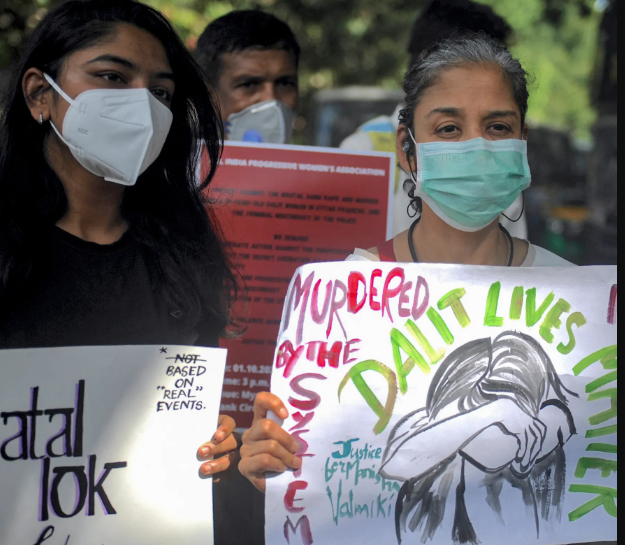
This isn’t a tragedy you read and shake your head at. This is horror masquerading as “routine” and a glaring indictment of how caste, power, and indifference still intersect in parts of India. In a quiet village in Farrukhabad two Dalit girls, barely older than children, were found hanging from a tree last August, and the official response has been anything but straightforward.
The victims, aged 15 and 18, were close friends from the same community. They had left home one evening to celebrate a festival and never came back. Their bodies were discovered in a mango orchard in Bhagautipur village, draped in the same cloth, suspended from a tree. The first reports were clinical: a suicide, according to the police narrative and a hastily cited post-mortem.
But nothing about this reads like a quiet personal despair. Families, villagers, and activists exploded with disbelief. How do two young girls—friends—commit suicide together? Why were they found in a secluded orchard far from home? Why was a conclusion drawn before investigations were complete? Grief turned into simmering anger, and many locals accused the authorities of writing off the deaths prematurely while ignoring deeper, darker layers of violence that still haunt caste margins.
Relatives rejected the official narrative and demanded a wider inquiry, insisting their daughters were not troubled or suicidal. They were vibrant, hopeful, a future stolen. The police did eventually register charges of abetment of suicide against two local men after a formal complaint, but questions remain. In villages like Bhagautipur, where caste dynamics shape daily life and Dalit bodies have historically been rendered invisible, the official framing of this as a suicide feels like a rerun of too many stories that go unexplained, unprosecuted, unresolved.
The trauma isn’t isolated. It echoes past atrocities, like the shocking 2014 Badaun case, when two Dalit sisters’ bodies were found hanging from a tree in a nearby district, thrusting caste violence into global headlines and spotlighting systemic failure. That horror galvanized outrage precisely because it wasn’t an anomaly but part of a pattern—of violence against Dalit women, of cases dismissed or diluted, of casteist violence that often escapes real justice.
Here in Farrukhabad, the anger is raw because official responses didn’t just seem glacial—they invoked the same automatisms that have left Dalit families without faith in law enforcement. The state’s quick rush to classify the deaths as suicide, the minimal transparency around evidence, and the lack of an independent investigation are exactly the cruelties that make grieving families suspect something deeper than despair. They demand answers. They demand accountability. They demand a probe with teeth, not obfuscation.
This is not a story about two isolated deaths. This is a story about a caste system that still shapes whose lives are fully seen and whose deaths can be dismissed with a cursory report. It’s a story about justice deferred and justice denied. It’s about families left to mourn in the shadow of a system that all too often refuses to look hard at its own complicity. And until there is transparency, and until every allegation of violence is met with serious investigation, this kind of tragedy will keep happening, unchallenged.
—Pratima Gadal, B1Daily


 B1Daily
Leave a comment