—Jaheim Rockwell
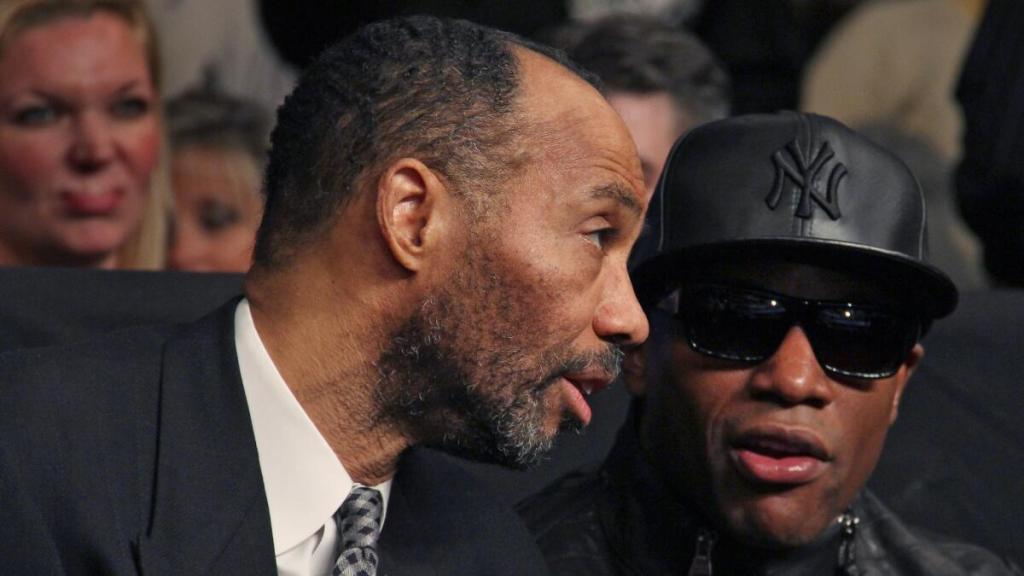
In boxing, the punches you don’t see are usually the ones that do the most damage. And when it comes to the long-rumored tension between Al Haymon and Floyd Mayweather Jr., the blows haven’t been thrown in a ring. They’ve been whispered through contracts, balance sheets, and a whole lot of silence.
For years, their partnership looked untouchable. Haymon, the famously elusive adviser, operated like a ghost in the machine, rarely speaking publicly but orchestrating one of the most profitable runs in boxing history. Mayweather, the undefeated showman, became a financial phenomenon, turning fights into spectacles and pay-per-view events into money geysers. Together, they didn’t just play the game. They bent it.
But beneath the glittering surface, murmurs started to build.
At the center of the controversy are persistent allegations about financial transparency and control. Critics within the boxing world have long questioned how revenue was structured within Haymon’s orbit, particularly through his Premier Boxing Champions venture. The model disrupted traditional promoters, placing Haymon in a hybrid role as adviser, de facto promoter, and financial architect. That kind of power consolidation raised eyebrows and, in some corners, alarms.
Some insiders have speculated that fighters, even those at the very top, weren’t always given a full window into the financial mechanics behind their bouts. In Mayweather’s case, whispers have circulated about disputes over how earnings, investments, and deal structures were handled behind the scenes. No definitive public accounting has confirmed these claims, but the absence of clarity has kept the rumor mill spinning like a roulette wheel that never quite stops.
What makes this situation particularly combustible is the contrast in personas. Floyd Mayweather Jr. built his brand on hyper-visibility, flaunting wealth with theatrical precision, turning financial success into part of his in-ring identity. Al Haymon, by contrast, is almost mythological in his silence, rarely granting interviews, rarely stepping into the spotlight. It’s a dynamic that worked, until it didn’t.
From a business standpoint, the alleged tension highlights a deeper issue within boxing: the opacity of its financial ecosystem. Unlike more centralized sports leagues, boxing operates through a maze of promoters, advisers, networks, and sanctioning bodies. Money flows through multiple channels, and transparency often gets lost in the shuffle. When disputes arise, they don’t always explode publicly. They simmer.
There’s also the question of leverage. At his peak, Mayweather was arguably the most powerful individual draw in the sport. If there were disagreements over money or control, it would take a significant breakdown in trust for that partnership to fracture. The fact that speculation about a feud persists suggests that something, at minimum, shifted behind closed doors.
To be clear, many of the financial allegations remain just that, allegations. Neither side has laid out a detailed public case confirming a definitive break rooted in financial misconduct. But in boxing, perception carries its own weight. If enough people believe the system lacks transparency, it starts to erode confidence, regardless of what’s on paper.
The Haymon-Mayweather era changed boxing’s financial landscape. It proved that fighters could command massive paydays and reshape traditional promotional structures. But it also exposed the risks of concentrating too much control in too few hands, especially in a sport already notorious for blurred lines and backroom dealings.
In the end, the story isn’t just about a potential feud. It’s about the fragile architecture of trust in a sport where money talks loudly, but not always clearly. And when that trust cracks, even the most dominant partnerships can start to sound like echoes of what they used to be.
—Jaheim Rockwell is an Atlanta based music producer, activist, and proud contributor to B1Daily News



 B1Daily
Leave a comment