—Barrington Williams, B1Daily
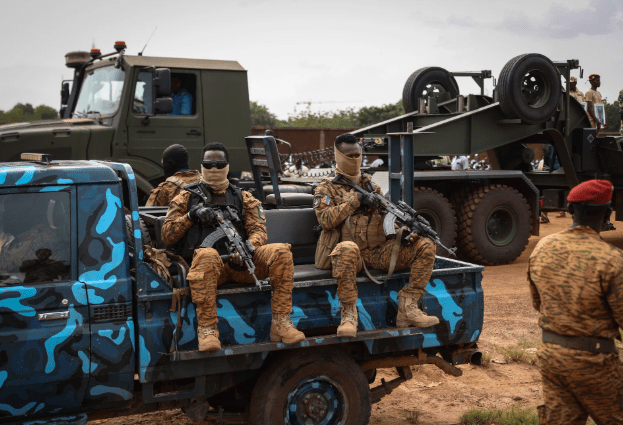
There’s no polite way to dress this up. What’s unfolding in Burkina Faso is not a struggling democracy under pressure. It’s a military regime tightening its grip while the bodies pile up, and increasingly, those bodies belong to civilians caught in the crosshairs of the very state claiming to protect them.
Since seizing power in 2022, Ibrahim Traoré has traded ballots for bullets. Promises of democratic transition have quietly evaporated, replaced by blunt declarations that the people should “forget about democracy” altogether. Political parties have been dissolved, dissent has been suffocated, and the state now speaks with one voice, its own.
That’s not a transition. That’s consolidation.
And the cost of that consolidation is now quantifiable in blood.
A damning report from Human Rights Watch found that between 2023 and 2025, Burkina Faso’s military and its allied militias killed more than twice as many civilians as jihadist groups. Out of roughly 1,800 documented civilian deaths, over 1,200 were attributed to state forces, compared to a fraction caused by insurgents. Let that sink in. The government’s war on terror is claiming more civilian lives than the terror it claims to fight.
This isn’t collateral damage. It’s a pattern.
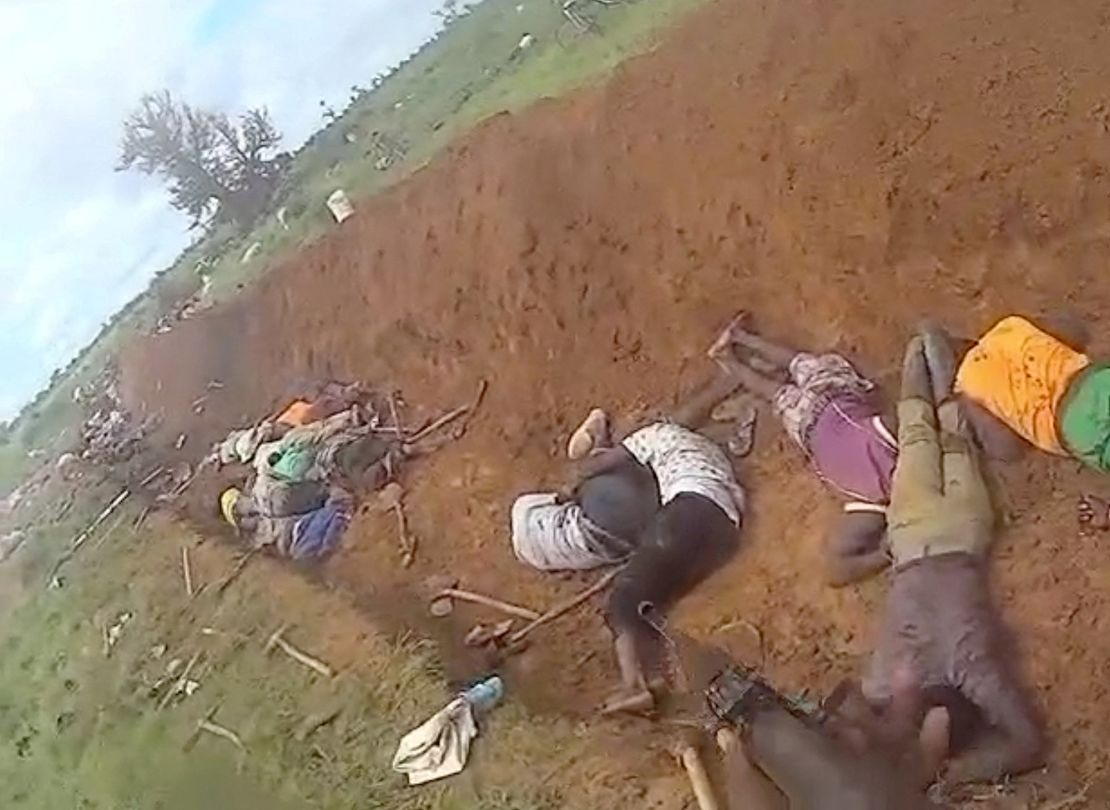
Massacres have become grim punctuation marks in the country’s recent history. In February 2024, soldiers reportedly executed around 223 civilians, including dozens of children, in the villages of Nondin and Soro. Days later, additional operations left up to 150 more civilians dead in nearby مناطق. Entire communities, particularly from the Fulani ethnic group, have been targeted under suspicion of jihadist collaboration, blurring the line between counterterrorism and collective punishment.
Even more chilling, some operations appear less like combat and more like sweeps of annihilation. In eastern Burkina Faso, military convoys moved through villages firing indiscriminately, killing hundreds, including women and infants. No battlefield. No distinction. Just devastation.
Meanwhile, the insurgency itself, part of the broader Islamist insurgency in Burkina Faso, continues to expand, feeding off the very abuses meant to suppress it. Jihadist groups exploit these state-led atrocities as recruitment fuel, presenting themselves as defenders against a government many civilians now fear as much as, if not more than, the militants.
It’s a vicious loop, and the junta is accelerating it.
Nearly 60% of the country is now outside government control, and millions have been displaced. Instead of stabilizing the nation, the military regime has deepened the chaos, trading long-term security for short-term dominance. Critics aren’t just being ignored. They’re being silenced.
This is what dictatorship looks like in real time. Not just the absence of elections, but the presence of fear. Not just centralized power, but unaccountable violence. A government that no longer answers to its people, yet still acts upon them with lethal force.
Burkina Faso’s tragedy isn’t just that it faces a brutal insurgency. It’s that the cure being administered by its rulers is proving just as deadly as the disease.
And when a state kills more of its own citizens than the enemy it claims to fight, the question stops being whether it’s failing.
The question becomes whether it’s something far worse.
—Barrington Williams, B1Daily
 B1Daily
Leave a comment