—Barrington Williams, B1Daily
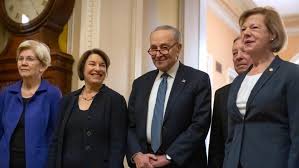
The strategy isn’t whispered in back rooms so much as it’s performed in plain sight, like a stage play where everyone pretends not to see the props being moved. As Donald Trump barrels through another cycle of chaos politics, a curious stillness has settled over Democratic Party leadership. Not silence exactly, but something thinner, more calculated. A kind of political aikido, where instead of blocking the blow, you let your opponent exhaust themselves swinging.
The emerging accusation is as cynical as it is uncomfortable: that Democrats, rather than aggressively countering Trump’s disruptions, are content to let the damage accumulate, betting that public frustration will boomerang in their favor during the midterms. It’s less resistance, more rope-a-dope. The logic, stripped of its polish, is brutally simple. Why expend political capital crafting bold, risky policy promises when your opponent is already busy setting the house on fire?
Historically, opposition parties sharpen their knives in moments like these. They flood the zone with alternatives, present a governing vision, and dare voters to imagine something better. But today’s Democratic posture often feels more like strategic minimalism. Let Trump dominate the headlines. Let the outrage cycle spin itself dizzy. Then step in, not as architects of a new system, but as the only adults left in the room.
For voters, especially those hanging on by their fingernails in an economy that feels increasingly indifferent, this approach lands with a thud. It transforms politics into a waiting game where suffering becomes a campaign asset. Rising costs, institutional dysfunction, and policy whiplash are no longer just crises to solve. They become, in this framing, useful backdrops. The worse things look, the easier it is to campaign on restoration without specifying what restoration actually entails.
That is where the moral rot sets in.
Because if this strategy is even partially true, it represents a chilling calculus. It means millions of Americans are effectively being asked to endure instability not as an unfortunate byproduct of political conflict, but as a quiet prerequisite for electoral success. It recasts governance as theater, where real consequences are tolerated so long as they produce the right polling conditions.
Defenders of Democratic leadership would argue this is an unfair reading. They’ll point to legislative efforts, court battles, and incremental policy wins. They’ll say obstruction and gridlock limit what can realistically be done, especially in a polarized system. And to a degree, that’s true. American governance is a machine designed to stall itself at the worst possible moments.
But perception matters. And right now, the perception among many voters is that urgency is missing. That the response to Trump’s volatility lacks the kind of full-throated, risk-embracing counterpunch that signals genuine alarm. Instead, there’s a sense of political patience that borders on passivity.
Midterm elections, of course, are historically referendums. They punish the party in power or the figure dominating the national mood. Democrats may well be betting that Trump’s presence alone is enough to tip that scale. No sweeping promises required. No ideological overreach. Just contrast.
If that bet pays off, it will validate one of the coldest strategies in modern American politics: win not by inspiring hope, but by allowing fear and frustration to ripen on their own.
And if it fails, the consequences won’t just be electoral. It will deepen a growing suspicion among voters that neither party is truly invested in alleviating their struggles, only in managing them for political gain.
Either way, the ethical question lingers like smoke that won’t clear. What does it say about a political system when letting things get worse starts to look like a viable path to victory?
—Barrington Williams, B1Daily

 B1Daily
Leave a comment