—Sylvester Loving, B1Daily
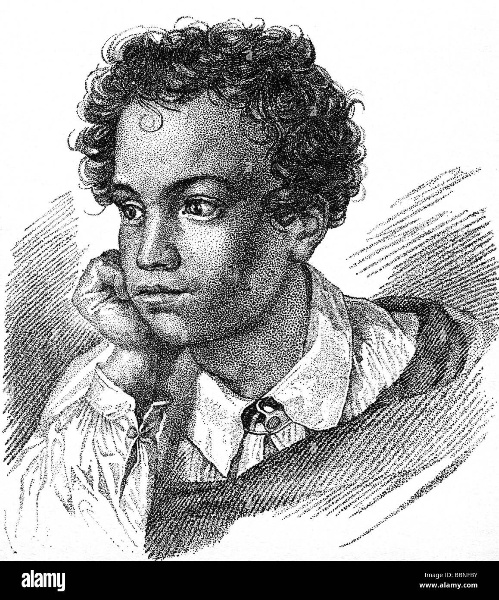
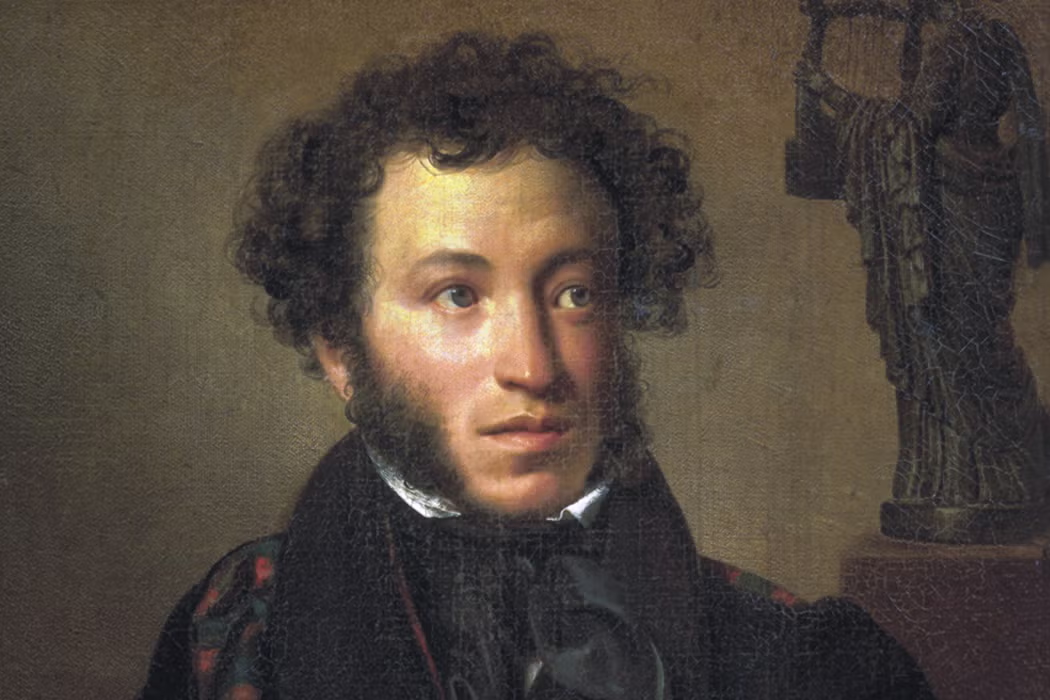
There are figures in world literature who write within a language, and then there are those rare, almost alchemical minds who seem to rebuild the language itself from the inside out. Alexander Pushkin belongs emphatically to the latter category, a man whose pen did not merely dance across Russian prose and verse but fundamentally re-engineered the very rhythm and accessibility of the language. Yet to discuss Pushkin solely as a literary architect is to miss a deeply compelling dimension of his identity, his African heritage, inherited through his great-grandfather Abram Petrovich Gannibal, a figure whose own life reads like an improbable epic.
Gannibal, widely believed to have been born in the Horn of Africa, possibly in present-day Ethiopia or Eritrea, was abducted as a child and transported across the Ottoman world before arriving in the court of Peter the Great. In an extraordinary twist of fate, he was adopted by the Tsar, educated in Europe, and rose to become a military engineer and nobleman within the Russian Empire. His ascent was not merely unusual, it was nearly without precedent in early modern Europe, and it embedded within Pushkin’s lineage a narrative of displacement, resilience, and intellectual ascent that would later echo, subtly yet persistently, through his descendant’s work.
Pushkin was acutely aware of this inheritance. Far from concealing it, he explored it with a mixture of pride and curiosity, most notably in his unfinished historical novel The Moor of Peter the Great, which sought to dramatise Gannibal’s journey. In Pushkin’s hands, African ancestry was not reduced to a footnote but elevated into a lens through which questions of identity, belonging, and status in Russian society could be examined. One might even argue that his sensitivity to marginality, his attunement to the outsider’s gaze, enriched the psychological depth that would become a hallmark of his writing.
And what writing it was. Prior to Pushkin, Russian literary language was an awkward chimera, weighed down by archaic Church Slavonic forms on one side and colloquial speech on the other, neither fully reconciled. Pushkin achieved what had long eluded his predecessors: he synthesised these competing registers into a supple, elegant, and remarkably modern idiom. In works such as Eugene Onegin, he demonstrated that Russian could be at once refined and conversational, capable of philosophical reflection without sacrificing immediacy. It is no exaggeration to say that nearly every major Russian writer who followed, from Fyodor Dostoevsky to Leo Tolstoy, operated within a linguistic landscape that Pushkin himself had charted.
His influence extended beyond mere style. Pushkin effectively inaugurated Russia’s great literary tradition, establishing themes, archetypes, and narrative techniques that would reverberate through the 19th century and beyond. The brooding introspection of the “superfluous man,” the tension between individual desire and societal constraint, and the delicate interplay of irony and sincerity all find early, definitive expression in his work. To read Pushkin, then, is not simply to encounter a gifted poet, but to witness the birth of a national literature in real time.
Historically, his significance is difficult to overstate. Pushkin occupies a position in Russian culture not unlike that of William Shakespeare in England, a foundational figure whose language and imagery have seeped into the national consciousness. Yet unlike Shakespeare, Pushkin carried within him a lineage that complicated the very notion of Russian identity. His African heritage, though often minimised in traditional accounts, stands as a quiet but potent reminder that the roots of cultural greatness are seldom as homogeneous as later narratives might prefer.
In the end, Pushkin’s legacy is twofold. He gave Russia its modern literary voice, clear, flexible, and enduring, and he embodied, in his very person, a more expansive understanding of what it meant to be Russian. It is this dual inheritance, linguistic and cultural, that ensures his place not merely in the annals of Russian history, but in the broader, ever-evolving story of world literature.
—Sylvester Loving, B1Daily



 B1Daily
Leave a comment