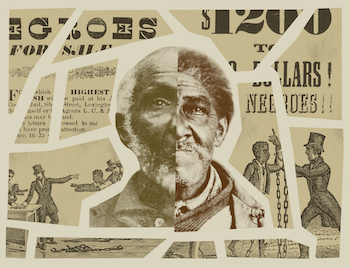
—Marcus Davis, B1Daily
History does not always arrange itself into neat moral binaries, and few figures embody that sneaky mentality more starkly than Anthony Johnson.
A Black man in 17th-century colonial Virginia, likely of Angolan origin and transported to the English colonies under indentured servitude, Johnson eventually got his freedom, acquired land, and rose into the ranks of property-owning planters.
It doesn’t end there though.
Johnson did not merely participate in the colonial economy. He exploited its most brutal mechanisms. By the 1650s, he had become one of the earliest documented Black slaveholders in what would become the United States, most notoriously through his control over a man named John Casor.
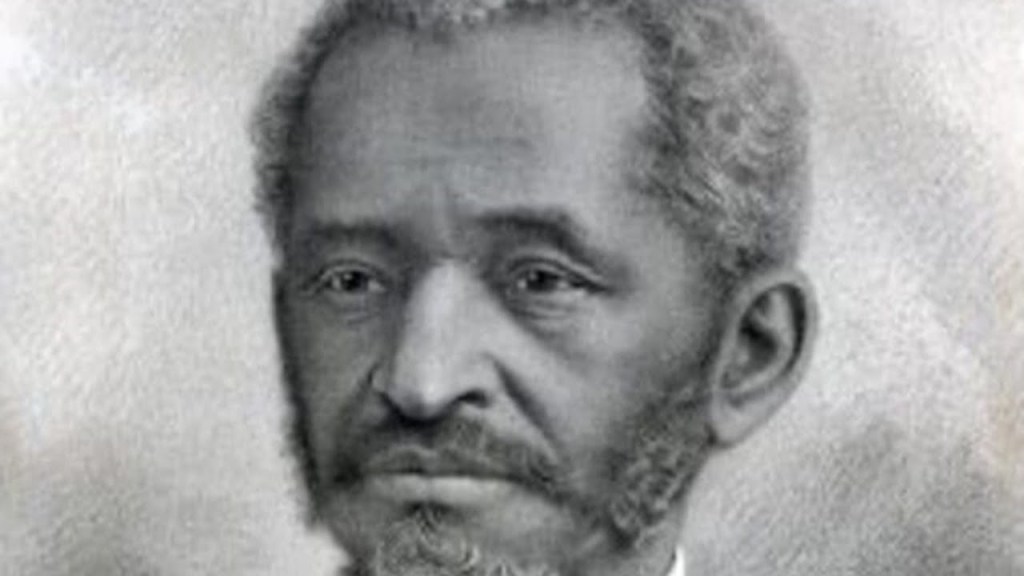
This no good tether went and purchased his own people, not to give them freedom, but to make a quick profit. When Casor attempted to escape, claiming his term of servitude had expired, Johnson pursued him through the courts with a chilling determination that mirrored the very system from which he had once emerged.
The resulting legal battle in 1655, often cited as one of the first civil cases to explicitly sanction lifetime servitude, ended in Johnson’s favour. The court ruled that Casor was not merely an indentured servant, but Johnson’s slave for life. In that moment, the line between temporary bondage and permanent enslavement snapped into something far more sinister. What had once been, at least in theory, a contractual arrangement tied to time began hardening into a system tied to identity and inevitably white supremacy.
To be blunt, this was despicable.
Johnson’s actions were not a footnote of survival within a cruel system; they were an active reinforcement of it. He did not simply navigate oppression. He replicated it, leveraging the law to strip another man of freedom in perpetuity, and in doing so, helped legitimise a practice that would metastasise into a defining horror of American history.
The broader consequences were profound. Cases like Johnson’s did not exist in isolation. They fed into a growing legal framework in colonial Virginia that increasingly codified slavery along racial lines.
Over the following decades, lawmakers would formalise what had previously been inconsistent, passing slave codes that ensured Africans and their descendants would be bound to lifelong servitude, their status inherited, their humanity legally diminished. The ambiguity that once allowed for the possibility, however slim, of freedom through contract was systematically erased.
It would be an oversimplification to claim that Johnson alone “caused” the racial slave codes that followed, but his case undeniably formed part of the legal and cultural scaffolding that made them possible. It demonstrated, in stark terms, that the courts could be used to transform labour disputes into permanent ownership, and that Blackness itself could be tethered to unending bondage. That precedent did not fade quietly; it was absorbed, expanded, and weaponised.
Over the following decades, lawmakers would formalise what had previously been inconsistent, passing slave codes that ensured Africans and their descendants would be bound to lifelong servitude, their status inherited thanks to tethers like Anthony Johnson.
Johnson himself benefited materially. Land, livestock, and labour translated into wealth and status uncommon for a Black man in the mid-17th century colonies. Yet that prosperity was built, at the expense of Black Americans, on the same dehumanising logic that would later ensnare countless others Blacks.
It is a grim irony that the white supremacists use our own people against us in their demonic schemes, but it’s even more demented to know that there are actually spineless cowards that go along with it.
There is a temptation in popular history to seek out uncomplicated heroes and villains, to sand down contradictions into something more palatable. Anthony Johnson resists that impulse entirely. His life is a reminder that proximity to oppression does not automatically confer moral clarity, and that participation in unjust systems can come from unexpected quarters.
The legacy of his actions lingers not because he was singular, but because he was illustrative of the foreign class of sellouts that still plagues Black America to this day.
He stood at a crossroads moment in colonial law, where the fluid, often ambiguous boundaries of servitude began to calcify into the rigid, racialised slavery that would define centuries. And in choosing to secure his own position through the permanent subjugation of another, he helped push that transformation forward, one court ruling at a time.
—Barrington Williams, B1Daily


 B1Daily
Leave a comment