—Barrington Williams, B1Daily
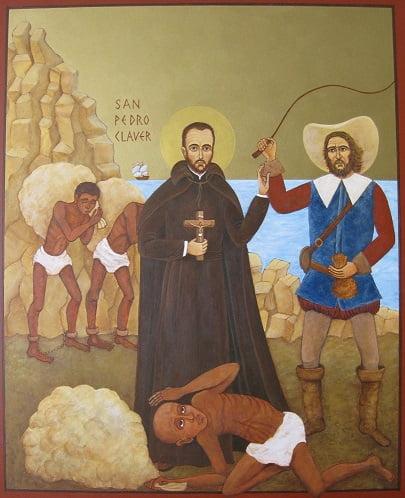
For an institution that drapes itself in the language of salvation, the Catholic Church has a remarkably earthly record when it comes to power, profit, and the careful sanctification of brutality. Long before modern empires industrialised human suffering, the Church had already begun refining the moral paperwork that would make slavery not merely permissible, but divinely convenient. This was not a reluctant concession to the times. It was doctrine dressed in robes, inked with authority, and dispatched across continents with missionary zeal.
The historical record is neither vague nor charitable. Papal decrees in the 15th century did not stumble into ambiguity; they marched with clarity. Documents like Dum Diversas and Romanus Pontifex effectively granted Christian rulers the right to conquer, subjugate, and enslave non-Christian peoples, particularly across Africa. This was not a side note in ecclesiastical policy. It was a theological green light, a holy endorsement stamped onto the machinery of conquest. In one sweeping gesture, entire populations were recast from human beings into permissible property, their bondage reframed as part of a civilising mission.
And who stood at the centre of this grim rebranding? Africans, painted not as sovereign peoples with rich civilisations, but as raw material for spiritual and economic extraction. The Church’s portrayal of Africans was not merely dismissive; it was structurally dehumanising. They were depicted as pagans in need of salvation, their cultures flattened into caricature, their humanity reduced to a precondition for servitude. Conversion, in this framework, became less an act of faith and more a bureaucratic upgrade, a way to slightly adjust one’s status within a system that had already decided your place at the bottom.
What makes this particularly damning is not just the endorsement of slavery, but its institutionalisation. The Church did not merely tolerate the trade; it helped normalise it, embedding it within the moral architecture of European expansion. Monarchs could wage campaigns of enslavement with a clear conscience, merchants could traffic in human lives with ecclesiastical cover, and missionaries could preach salvation while standing atop the very systems that crushed the people they claimed to uplift. It was a seamless fusion of altar and empire, where scripture and sword moved in unsettling harmony.
Defenders often attempt a retroactive softening, pointing to later condemnations of slavery by Church figures as evidence of moral evolution. Yet this argument lands with a hollow thud. Condemnation after centuries of complicity is not moral leadership; it is damage control. The initial scaffolding, the theological justifications, the racial hierarchies cloaked in religious language, had already done their work. They did not vanish when later statements were issued. They lingered, mutating into the ideological residue that would continue to shape global attitudes toward Blackness and African identity.
The Church’s global portrayal of Africans left a long shadow. By casting them as spiritually deficient and culturally inferior, it helped cement a worldview that outlived the formal structures of slavery. This was not simply about labour; it was about narrative control. Once a people are defined as lesser in the eyes of God, it becomes disturbingly easy to rationalise their suffering in the eyes of man. The echoes of this framing can still be detected in modern disparities, in lingering stereotypes, and in the quiet assumptions that continue to distort how African histories and contributions are perceived.
None of this erases the complexity of the Church or the existence of dissenting voices within it. But complexity is not absolution. The uncomfortable truth is that one of the most influential religious institutions in human history did not merely witness the rise of slavery; it helped script its moral justification. And in doing so, it did more than sanction a system of exploitation. It authored a worldview that would take centuries to unravel, and whose consequences are still very much alive.
—Barrington Williams, B1Daily
 B1Daily
Leave a comment