—Barrington Williams, B1Daily
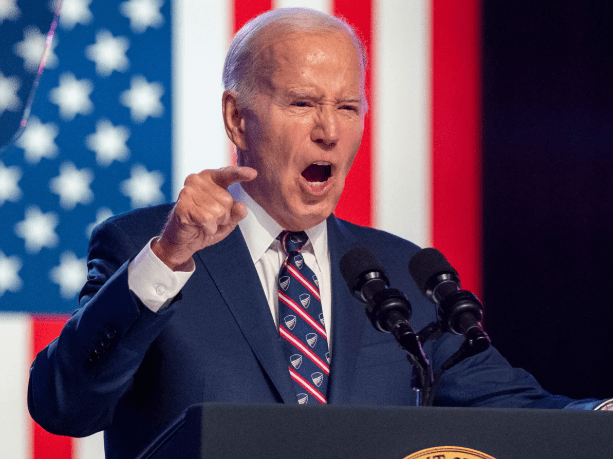
In the long, chaotic theatre of the pandemic, few policies sparked as much fury, confusion, and legal trench warfare as the vaccine mandates pushed under Joe Biden. Framed as a public health necessity, the administration’s approach to vaccination, particularly through workplace requirements tied to federal authority, quickly ignited a national debate that cut straight through the fault lines of personal liberty, government power, and collective responsibility.
The most controversial pillar came via the Occupational Safety and Health Administration, better known as Occupational Safety and Health Administration, which issued a rule requiring large employers to ensure workers were vaccinated or regularly tested. For supporters, it was a pragmatic response to a once-in-a-century crisis, an attempt to stabilise a workforce and reduce transmission in crowded environments. For critics, it felt like a federal overreach dressed in bureaucratic language, a backdoor mandate that leaned on employers to enforce what the government could not directly compel.
The legal backlash was swift and thunderous. The policy collided head-on with the courts, culminating in a decisive moment when the Supreme Court of the United States blocked the OSHA mandate, arguing that the agency had overstepped its authority. That ruling didn’t just halt a policy; it drew a bright constitutional line around the limits of federal power in public health enforcement, a line that will likely echo in future crises.
Still, to call it simply a “forced vaccination policy” flattens a more complicated reality. The mandates were often conditional, offering alternatives like testing, and varied significantly depending on sector, with stricter rules applied to federal workers and healthcare settings. Yet perception has its own gravitational pull, and for millions of Americans, the distinction between “required” and “coerced” felt academic at best.
What made the moment particularly combustible was the cultural context. Trust in institutions was already fraying, social media turned every policy into a battlefield, and the vaccine itself, a scientific breakthrough by most medical accounts, became a political symbol almost overnight. In that environment, even measured policies could feel like ultimatums, and public health messaging often struggled to keep pace with the speed of outrage.
Historically, the episode will likely be remembered less as a clean success or failure and more as a stress test, one that revealed just how difficult it is to balance individual autonomy with collective safety in a deeply polarised society. It exposed the limits of federal authority, the volatility of public trust, and the challenge of implementing nationwide health measures in a system built on layered governance.
The legacy of those mandates is still unfolding. They boosted vaccination rates in some sectors, hardened opposition in others, and left behind a legal and cultural blueprint that will shape how future administrations approach similar crises. Whether viewed as necessary intervention or governmental overreach, the Biden-era vaccine push remains a defining flashpoint, one where science, law, and politics collided with unmistakable force.
—Barrington Williams, B1Daily


 B1Daily
Leave a comment