—Jaheim Rockwell
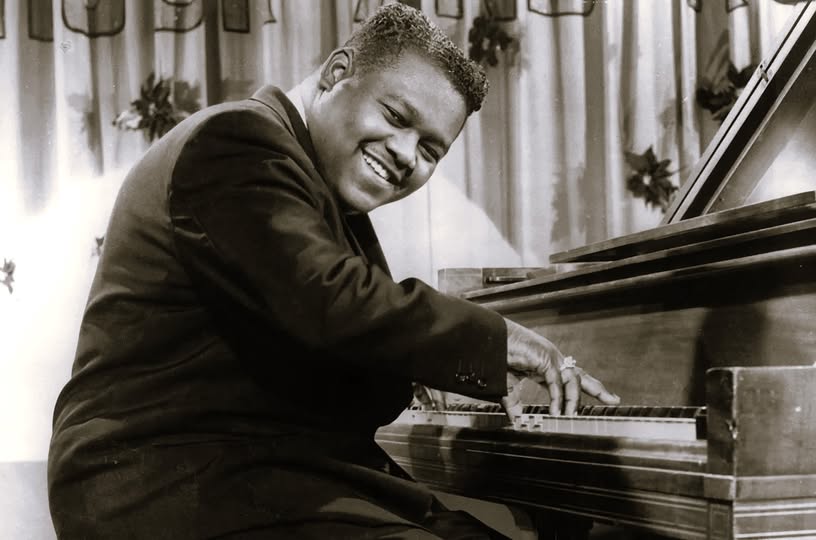
By the time mainstream America realized rock ’n’ roll had kicked the door off its hinges, Fats Domino had already been inside, rearranging the furniture with a grin and a rolling left hand that sounded like a train refusing to stop. This wasn’t just music. This was cultural jailbreak.
Born in New Orleans, Domino carried the DNA of rhythm and blues in his bones, the kind that sweats through piano keys and turns simple melodies into neighborhood anthems. When he dropped “The Fat Man” in 1949, it didn’t politely ask for attention. It demanded it. Many historians point to that record as one of the first true rock ’n’ roll tracks, not because it checked some academic box, but because it moved people. Feet first. Hips second. Society third.
Let’s cut through the revisionist fog: Black artists didn’t just contribute to rock ’n’ roll, they built the engine, paved the road, and drove the thing at full speed while others later tried to repaint it. Domino’s success was a battering ram against segregation-era radio, slipping through genre labels like a jazz cat dodging bad lighting. His crossover hits like “Ain’t That a Shame” didn’t just chart, they infiltrated. White audiences bought the records, danced to the rhythms, and unknowingly stepped into a Black sonic universe that had been locked out of their living rooms.
And here’s where the story catches fire.
Enter Little Richard, a human lightning bolt in pompadour form. If Domino was the smooth river carving new terrain, Little Richard was the volcanic eruption that made the sky itself nervous. But even eruptions need pressure building beneath the surface. Domino helped create that pressure. His mainstream breakthroughs proved that a Black artist could dominate charts that were never designed for him. He cracked the door so Little Richard could kick it off the hinges with “Tutti Frutti,” turning shock into spectacle.
Domino’s genius wasn’t loud in the way people often celebrate. He didn’t need to scream to be heard. His piano talked in rolling sentences, his voice carried the warmth of a front porch on a humid night, and his grooves felt like gravity had decided to swing. Yet make no mistake, that softness masked something radical. In an America obsessed with racial lines, Domino blurred them with every note.
This is the part history sometimes tries to sand down. Rock ’n’ roll didn’t just appear out of thin air, and it certainly didn’t start in the sanitized studios that later profited most from it. It rose from Black communities, from gospel choirs, blues bars, and backroom jam sessions where innovation wasn’t a luxury, it was survival. Domino stood at that crossroads, translating the language without diluting its soul.
Without Fats Domino, the road for Little Richard looks a lot narrower, a lot steeper, maybe even blocked. Domino proved the audience was there, even if the industry pretended otherwise. He turned possibility into proof.
So when people talk about the “birth” of rock ’n’ roll, they should picture more than a moment. They should hear a rolling piano out of New Orleans, steady as a heartbeat, bold as a quiet revolution. That sound wasn’t just music. It was a signal flare, shot into the night, letting the world know something unstoppable had arrived.
—Jaheim Rockwell is an Atlanta based music producer, activist, and proud contributor to B1Daily News
 B1Daily
Leave a comment