—Michael Lyles, B1Daily
The story of Levittown is often packaged as a pastel dream: neat lawns, identical houses, a postwar promise that hard work could buy a slice of stability. But beneath that tidy surface sat a set of policies and practices that drew a hard, often brutal color line, one that helped lock Black Americans out of the very prosperity those suburbs advertised.
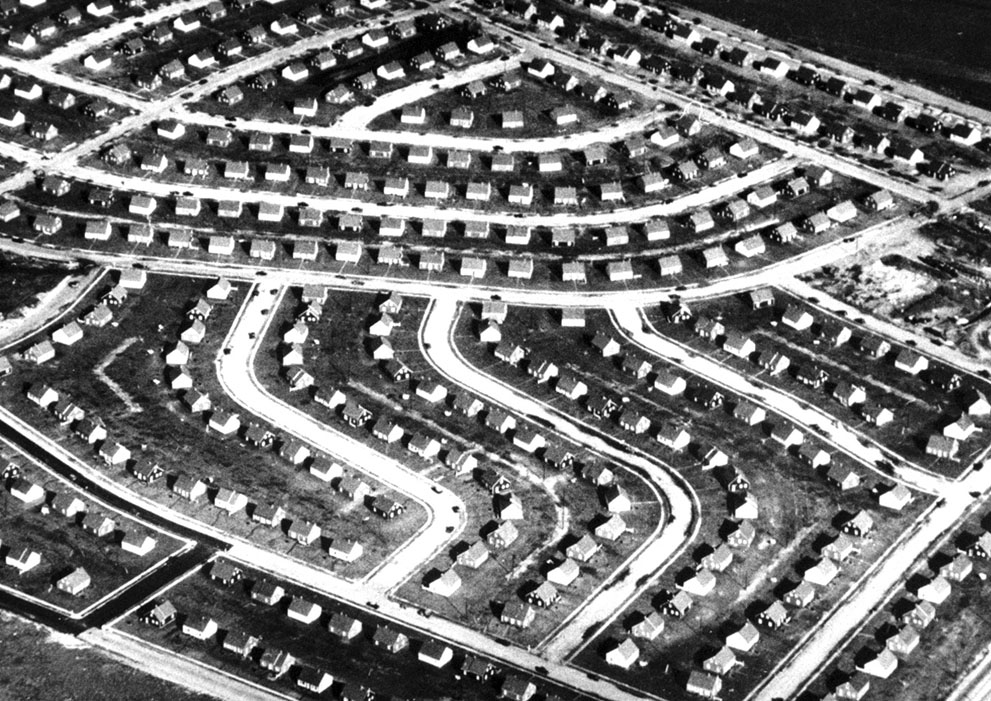
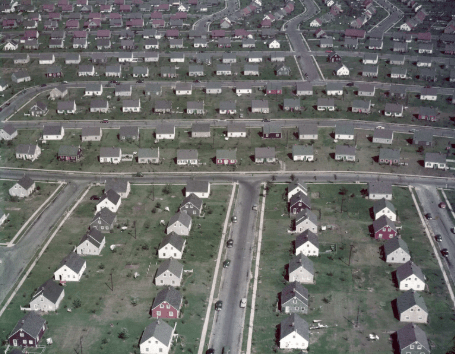
Built by William Levitt and his company Levitt & Sons, the Levittowns that rose in places like Levittown, New York and Levittown, Pennsylvania became the template for postwar suburbia. They were efficient, affordable, and by design, exclusive. Sales contracts and community rules barred Black families from buying homes, echoing a broader system of racially restrictive covenants that stretched across the country.
That exclusion wasn’t just local prejudice; it was wired into federal policy. Programs backed by the Federal Housing Administration and mortgage guarantees from the Department of Veterans Affairs made it dramatically easier for white families to secure low-cost loans in new suburbs. At the same time, Black families were routinely denied those same opportunities through discriminatory lending practices commonly known as redlining, where neighborhoods were graded and Black communities were marked as high-risk and undeserving of investment.
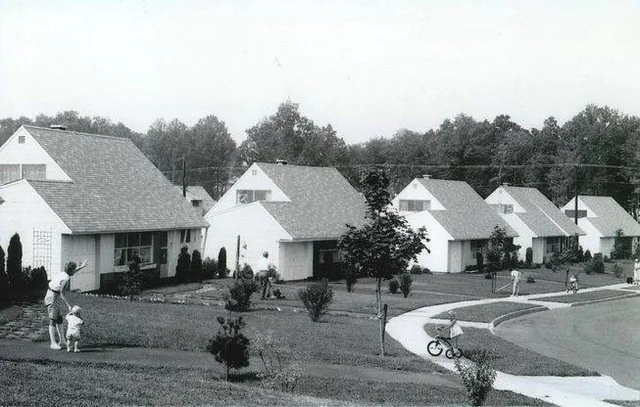
Banks and lenders followed those maps like gospel. Credit flowed outward to white suburbs, while Black neighborhoods were starved of capital. The result was a forced funnel: white families were incentivized to leave cities for subsidized suburban life, while Black families were often confined to under-resourced urban areas, cut off from the same wealth-building engine that homeownership provided.
The human consequences were immediate and generational. Home equity became the cornerstone of middle-class wealth for millions of white Americans, while Black families were systematically denied access to that same ladder. When Black families did attempt to move into these spaces, they often faced intimidation, hostility, and, at times, outright violence.

It’s important to be precise about responsibility. The architecture of segregation in housing was constructed by developers, enforced by government policy, and financed by banks. Individuals and communities participated in different ways, sometimes supporting, sometimes resisting, but the system itself was broad, coordinated, and deeply entrenched.

The legacy of Levittown is still visible today, not just in demographics but in the wealth gap that continues to shape American life. Suburbs that once advertised uniformity still reflect patterns set decades ago, while cities continue to grapple with the consequences of disinvestment and overcrowding.
History doesn’t sit quietly; it hums beneath the present. The lawns may be green and the houses freshly painted, but the blueprint that built them tells a more complicated story, one where opportunity was carefully distributed, and where the lines drawn then continue to echo now.
—Michael Lyles, B1Daily



 B1Daily
Leave a comment