
—Kel McKnight, B1Daily
PSION follows the lives of John Lewis and the students of Gibbs-Green College, a Historically Black College (“HBCU”) in Jackson, Mississippi. In an effort to expand outreach at minority-serving institutions, the corporate philanthropy group, M.E.D.I.C.I., began offering charity programs on campus. Students rave about their results, but when has a hand-out ever been above board? Follow John as he unravels the truth in this 48-page, full-color thriller.
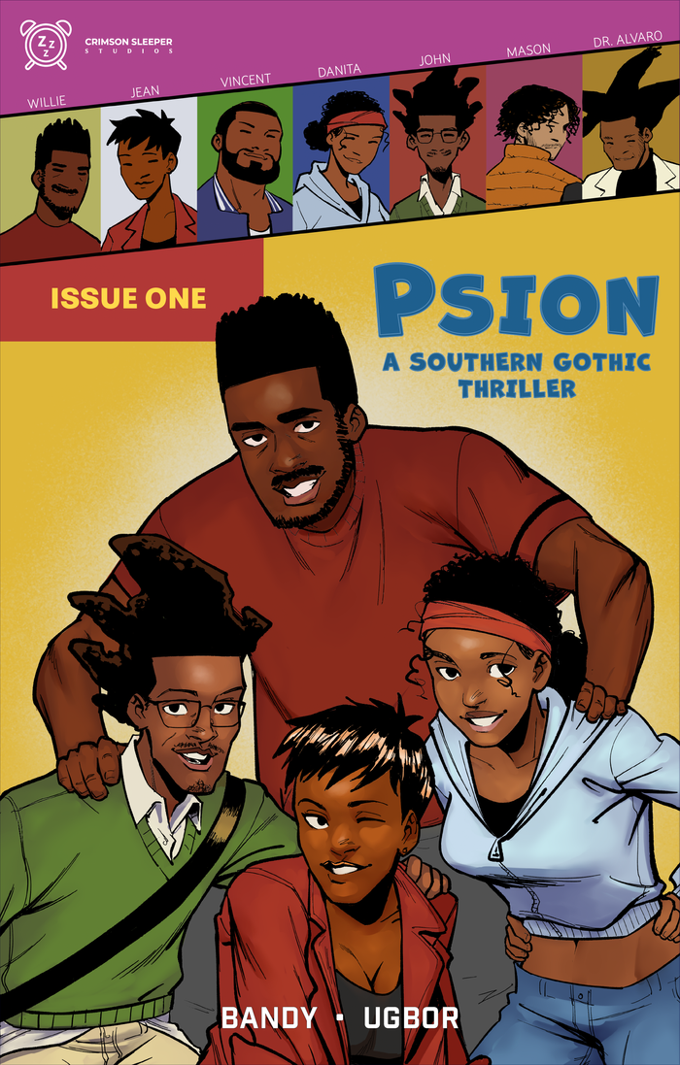
The main character is named John Lewis, a criminology major from Atlanta, Georgia.John dreams of becoming a Special Agent. No matter the mystery, you can always count on him to close the case, even to his detriment. Will he achieve his goals, or do his wants exist outside of his reality?
The antagonistic company M.E.D.I.C.I. is a organization of members sick of the social stagnation created by political bureaucracy, the CEOs of the six highest-grossing corporations founded the philanthropy group.
In a comic landscape overcrowded with capes, multiverses, and recycled origin stories, Psion #1: A Southern Gothic Thriller creeps in like humid night air through a cracked dorm window, quiet at first, then unmistakably heavy. Created by Mark Bandy and brought to life with art by Uchenna Ugbor, this indie project doesn’t just tell a story, it stalks you with it.
That’s where Psion sharpens its teeth.
This isn’t just a mystery, it’s Southern Gothic with a brain. The comic leans into themes of institutional power, hidden agendas, and the uneasy tension between trust and survival. That “charity” floating around campus? It smells less like goodwill and more like a velvet-gloved conspiracy. And John, equal parts Sherlock and skeptic, is the only one asking the right questions before things spiral.

What makes Psion hit different is its atmosphere. It doesn’t sprint, it simmers. Dialogue breathes, characters feel grounded, and the stakes creep up like ivy on brick. You’ll see students laughing, stressing, arguing… then suddenly, violence cuts through like a snapped violin string. It’s not constant, but when it shows up, it leaves marks.
Visually, the comic plays with contrast. Some panels are rich with detail, campus life rendered in full texture, while others strip things down to color and emotion, letting expressions carry the weight. It gives the book a rhythm, like a heartbeat that occasionally skips.
And let’s talk about what Psion represents. This is a Black-led narrative rooted in a setting that rarely gets this kind of genre treatment. An HBCU not as background decoration, but as the core stage for a thriller blending realism with supernatural hints. It’s culturally grounded without feeling boxed in, telling a story that feels both specific and wide open.
The Kickstarter itself proved there’s an audience hungry for this kind of storytelling. The project surpassed its funding goal, pulling in over $2,600 from backers who saw the vision early. That’s indie momentum, grassroots energy, the kind that builds cult favorites before the mainstream even notices.
Psion isn’t loud. It doesn’t need to be. It’s the kind of comic that leans in close and whispers something unsettling, then lets your imagination do the damage. And if this first issue is any indication, the deeper the story goes, the darker it’s going to get.
—Kel McKnight, B1Daily


 B1Daily
Leave a comment