—Barrington Williams, B1Daily
For nearly a decade, Republican politicians have wrapped themselves in the language of moral urgency when it comes to child trafficking, painting it as a defining crisis of the modern era. Speeches thunder, social media posts burn hot, and campaign ads lean heavily on the imagery of rescue and justice.
Yet when the spotlight shifts from rhetoric to results, the legislative trail looks thin, fragmented, and often performative.
The issue itself is deadly serious. Human trafficking, particularly involving minors, is a complex criminal enterprise that requires coordinated federal, state, and international responses. Experts across law enforcement and policy circles have consistently called for expanded victim services, better data sharing, stronger labor protections, and sustained funding for investigative units. These are not glamorous fixes. They require budgets, bureaucratic cooperation, and political patience, three things that don’t trend well in election cycles.
Instead, critics argue that Republican leadership has often leaned into symbolic gestures rather than durable policy. Bills are introduced with dramatic titles, press conferences are staged with solemn tones, but many of these proposals stall, fail to pass both chambers, or are stripped of substance during negotiations. In some cases, anti-trafficking language has been attached to broader partisan legislation, turning a bipartisan issue into another battlefield in Washington’s endless trench warfare.
Even during periods of unified Republican control, when the party held both Congress and the presidency, sweeping anti-trafficking reforms never fully materialized. While certain measures did pass, critics note they were often narrower in scope than the crisis demands, lacking the scale of funding or systemic overhaul that advocacy groups have long pushed for. The result is a patchwork response to a problem that operates as a highly organized network.
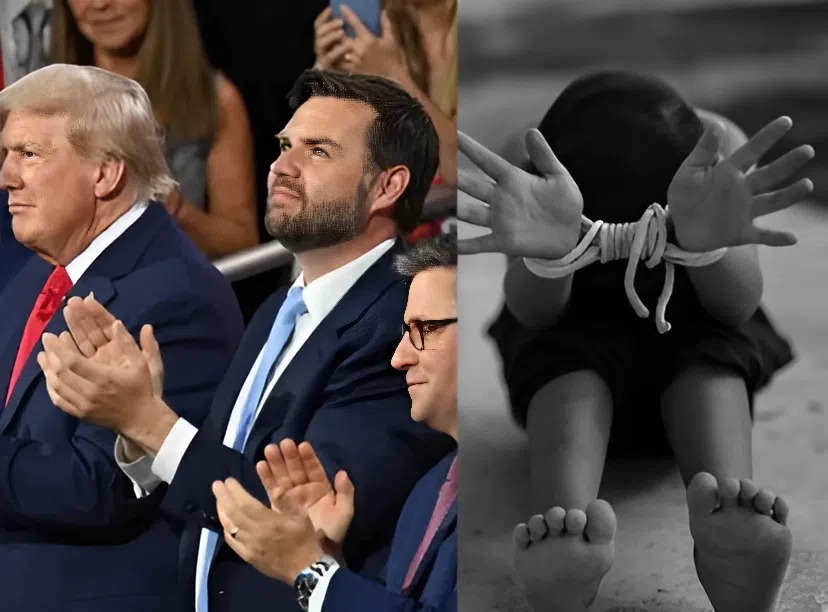
Hovering over this political theater is an uncomfortable contradiction tied to Donald Trump, the party’s dominant figure for much of this era. Trump has frequently spoken about trafficking in stark, emotional terms, positioning himself as a defender of vulnerable children. Yet his past associations and public allegations involving minors have drawn scrutiny and criticism, creating a dissonance between message and messenger that opponents have been quick to highlight.
Supporters dismiss these concerns as politically motivated attacks, arguing that Trump’s administration did take steps to address trafficking and that the broader issue has been unfairly weaponized. Critics counter that the gap between rhetoric and results, combined with unresolved questions about leadership, undermines the credibility of the party’s stance.
What emerges is a pattern that feels less like a coordinated campaign against trafficking and more like a recurring political motif. The issue rises during election seasons, dominates headlines, and then recedes without the kind of legislative follow-through that would suggest a sustained priority.
In the end, the fight against child trafficking is not a slogan, it is a grind. It demands resources, consistency, and a willingness to treat the issue as more than a talking point.
Until that shift happens, the disconnect between what is said and what is done will continue to define the conversation, leaving one of the most serious humanitarian crises of our time caught between outrage and inaction.
—Barrington Williams, B1Daily


 B1Daily
Leave a comment