—Barrington Williams, B1Daily
In modern American politics, presidential primaries are often marketed like open competitions, a political coliseum where candidates battle for the hearts of voters.
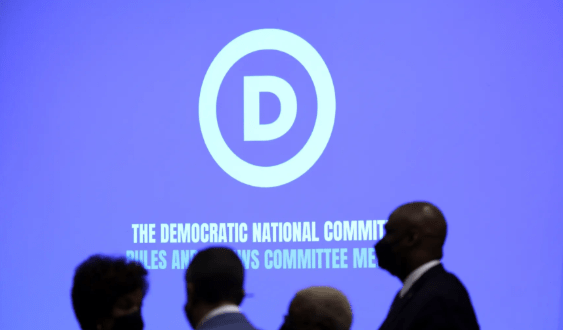
But critics argue that inside the machinery of the Democratic National Committee, the process can look less like a fair fight and more like a carefully curated casting call, where the lead actor is chosen long before the curtain rises.
The Incentive to Avoid Real Primaries
Political parties are not neutral referees, they are private organizations with branding, donors, and long-term strategic interests. For establishment leadership, a chaotic primary can be a liability: it risks elevating outsiders, dividing the base, and draining resources before the general election even begins. As a result, critics argue that party leadership has strong incentives to consolidate support early, discourage serious challengers, and rally around a preselected candidate.
This tendency becomes more visible when incumbents or favored candidates face minimal opposition. Rather than a wide-open contest, the field narrows quickly, debates shrink, and the outcome begins to feel predetermined rather than earned.
The Court Cases That Fueled Suspicion
The controversy reached a boiling point after the 2016 election, when supporters of Bernie Sanders filed a class-action lawsuit against the DNC, alleging that the primary had been unfairly tilted in favor of Hillary Clinton.
The case, known as Wilding v. DNC Services Corp., became a lightning rod. In court, attorneys for the DNC argued that party rules about neutrality were essentially internal guidelines, not legally enforceable obligations. According to reporting from the proceedings, DNC lawyers even stated that the party would be within its rights to select a candidate in private if it chose to do so.
The lawsuit was ultimately dismissed. A federal judge ruled that the plaintiffs lacked standing and that the claims failed on legal grounds, meaning the court did not proceed to determine whether the primary was actually “rigged.”
On appeal, the dismissal was upheld by the Eleventh Circuit, reinforcing that the case could not move forward due to both procedural and substantive issues.
For critics, the takeaway wasn’t just the dismissal, it was the argument itself: that a political party, as a private entity, has broad discretion over how it selects its nominee.
The 2016 Bernie Sanders Controversy
The 2016 primary between Sanders and Clinton remains one of the most contentious in modern Democratic politics. Sanders energized a massive grassroots movement, pulling in small-dollar donations and drawing huge crowds, while Clinton maintained deep institutional support from party leadership, donors, and so-called “superdelegates.”
Leaks from DNC emails and internal disputes further fueled the perception of bias. Some party officials appeared openly critical of Sanders during the campaign, reinforcing the belief among his supporters that the playing field was uneven.
Even within the party, there were acknowledgments of imbalance. Former interim DNC chair Donna Brazile later described internal arrangements that gave Clinton’s campaign significant influence over party operations before she officially secured the nomination, raising concerns about fairness and transparency.
At the same time, others argue that despite these controversies, Clinton still won the primary through votes and delegates, and that no official results were overturned.
The Bigger Picture
The clash between perception and legality sits at the heart of the issue. Legally, courts have treated political parties as private organizations with the freedom to structure their nomination processes. Politically, however, voters often expect those processes to function like democratic elections.
That tension creates a persistent question hovering over modern primaries: are they truly open competitions, or carefully managed processes designed to produce a preferred outcome?
For critics of the Democratic Party, the 2016 primary became a case study in how internal power structures, donor influence, and institutional loyalty can shape outcomes before voters fully weigh in. For defenders, it remains an example of a messy but ultimately legitimate political contest.
Either way, the debate didn’t end in 2016. It hardened into a long-running suspicion that, when it comes to presidential primaries, the real decisions may happen behind closed doors long before the ballots are cast.
—Barrington Williams, B1Daily
 B1Daily
Leave a comment