—Michael Lyles, B1Daily
India’s digital payments architecture, long optimized for real-time settlement and near-zero friction, is entering a recalibration phase as the Reserve Bank of India (RBI) evaluates the introduction of a mandatory one-hour latency window for transactions exceeding ₹10,000. Far from a superficial policy adjustment, the proposal represents a structural intervention aimed at mitigating a rapidly evolving fraud landscape dominated by authorized push payment (APP) scams.
At the core of the RBI’s rationale is a mismatch between system design and threat vectors. India’s Unified Payments Interface (UPI) and related digital rails were engineered for immediacy, minimizing settlement risk and maximizing liquidity velocity. However, fraud typologies have shifted away from system intrusion toward user manipulation. Social engineering attacks, including impersonation fraud, phishing, and real-time coercion, exploit behavioral vulnerabilities rather than technical loopholes. In these scenarios, transactions are authenticated, compliant, and irreversible within seconds, rendering post-facto remediation largely ineffective.
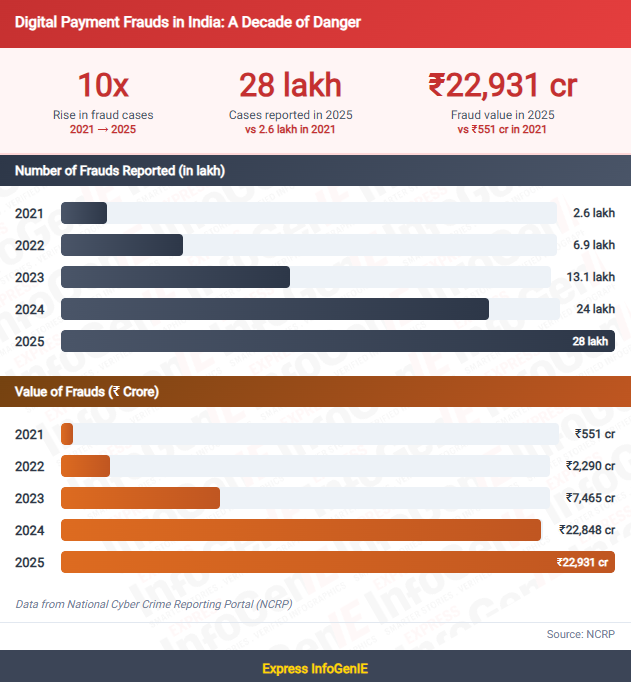
The proposed delay mechanism introduces a controlled settlement buffer, effectively transforming high-value transactions into deferred-settlement instruments. During this one-hour interval, funds would be debited but not fully settled to the beneficiary, creating an intervention window for both user-initiated reversals and institution-led fraud detection protocols. This aligns with the “golden hour” framework in fraud risk management, which emphasizes early-stage interception as the highest probability point for loss mitigation.
From a quantitative risk perspective, the policy is calibrated toward loss concentration rather than transaction volume. While high-value transfers represent a minority of total digital payment flows, they account for a disproportionately large share of aggregate fraud losses. By segmenting transactions above ₹10,000, the RBI is effectively applying a tiered risk control model, introducing friction only where the expected value of fraud exposure justifies it.
The policy also reflects principles from behavioral finance and decision theory. APP scams are highly dependent on temporal compression, forcing victims into rapid decision cycles under psychological stress. By imposing a mandatory delay, the RBI disrupts this time-sensitive attack vector, extending the decision horizon and increasing the probability of cognitive reassessment, external verification, or institutional intervention.
Operationally, implementation would likely require enhancements across payment service providers, including real-time risk scoring, transaction flagging systems, and user-facing cancellation interfaces within the delay window. Additional layers, such as beneficiary whitelisting, adaptive thresholds, and differential treatment for repeat counterparties, could further refine the balance between usability and security.
Critically, the proposal does not seek to undermine the real-time payments ecosystem at scale. Low-value and merchant transactions are expected to remain unaffected, preserving throughput efficiency for the majority of use cases. Instead, the RBI is introducing selective latency, a targeted insertion of friction designed to act as a circuit breaker within high-risk transaction bands.
From a systems perspective, this marks a transition from pure speed optimization toward resilience-oriented design. The first phase of digital payments innovation prioritized access, scalability, and immediacy. The emerging phase is increasingly defined by risk containment, user protection, and adaptive controls in response to adversarial behavior.
In effect, the RBI is reengineering time itself as a defensive variable within financial infrastructure, converting milliseconds of convenience into minutes of security where it matters most.
—Michael Lyles, B1Daily


 B1Daily
Leave a comment