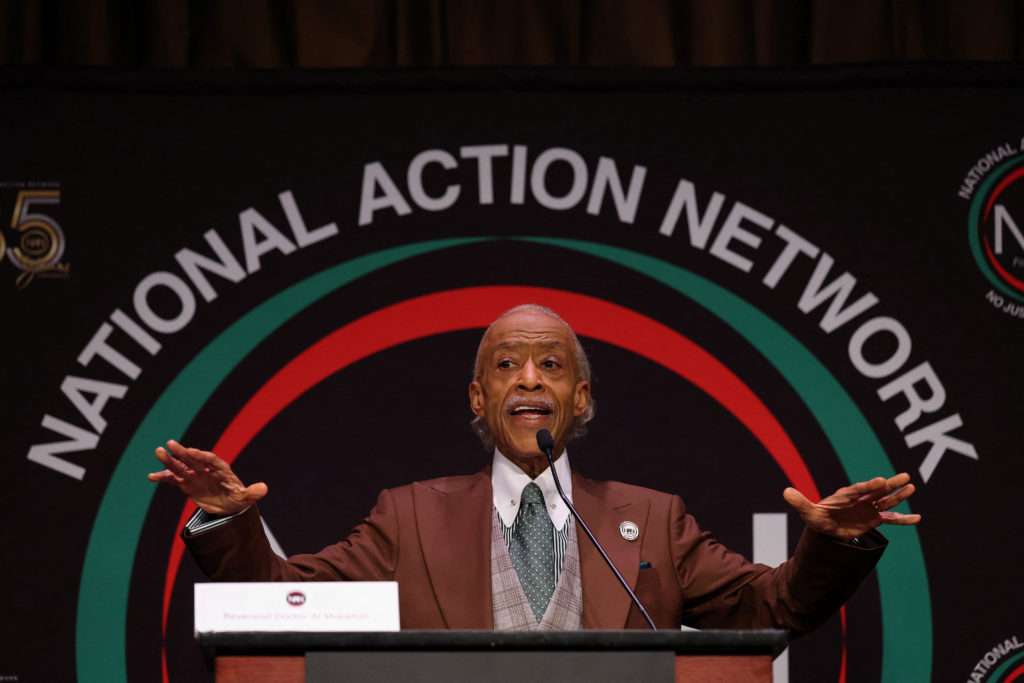
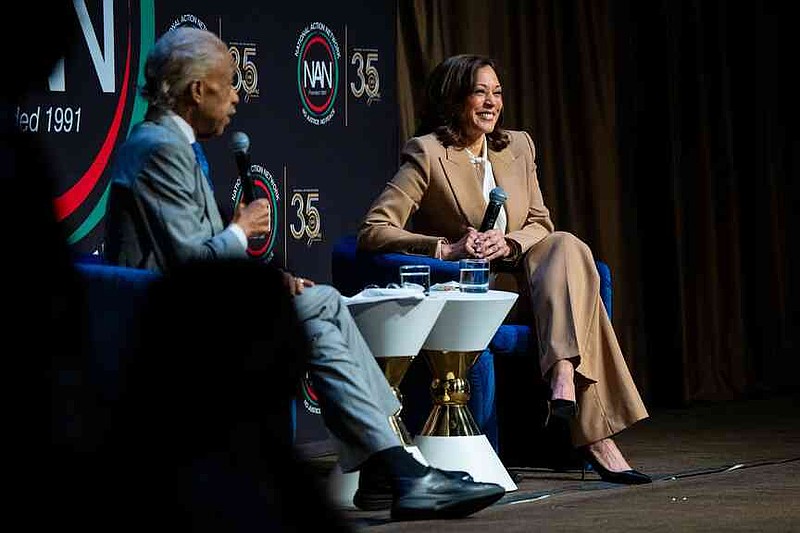
At the National Action Network Convention, what was supposed to be a controlled political showcase for Kamala Harris turned into something far messier, a live collision between an older political guard and a younger, increasingly restless Black voter base.
The convention, hosted by Al Sharpton, has long functioned as a proving ground for Democrats seeking credibility with Black voters. It’s not just a stage, it’s a gate. Candidates don’t just speak there, they audition. And in 2026, Harris stepped into that room carrying both history and baggage, a former vice president openly flirting with another presidential run after a bruising defeat in 2024.
But this time, the audience wasn’t fully playing along.
As Harris spoke, moments of tension broke through the carefully choreographed energy. Younger attendees, less invested in party loyalty and more skeptical of recycled leadership, began voicing disagreement. What followed wasn’t a polite exchange of ideas, it was a shutdown. Sharpton, acting less like a moderator and more like a gatekeeper, raised his voice and pushed back hard, effectively drowning out dissent in defense of Harris and the broader Democratic establishment.
That moment, brief but telling, exposed something deeper than a single disagreement. It revealed a generational fracture that Democrats have been trying, and often failing, to smooth over.
For decades, figures like Sharpton have operated as political translators between the Democratic Party and Black America, helping mobilize voters, shape narratives, and maintain alignment. His influence is rooted in a long career of activism and institutional power. But influence built in one era doesn’t always carry cleanly into the next.
Younger Black voters are increasingly less interested in political loyalty as a tradition and more interested in outcomes. Economic pressure, skepticism toward both parties, and frustration with what they see as symbolic representation without material change have created a sharper, more confrontational political tone. Respect is no longer automatic, it’s conditional.
And that’s where the clash happened.
Sharpton’s decision to shout down dissent didn’t just silence a few voices in a room, it reinforced a growing perception among critics that parts of the Democratic establishment are more comfortable managing Black voters than listening to them.
The optics were brutal: a veteran power broker defending a struggling political figure while younger voters tried, and failed, to be heard.
Younger Black voters are increasingly less interested in political loyalty as a tradition and more interested in outcomes.
For Harris, the moment lands at a delicate time. She remains a prominent figure within the party and continues to hint at another presidential run. But moments like this complicate that path. Enthusiasm from institutional figures doesn’t always translate to enthusiasm on the ground, especially among younger voters who are increasingly disengaged or outright disillusioned.
For Democrats, the implications stretch far beyond one convention.
The party has long relied on strong support from Black voters as a cornerstone of its electoral coalition. But that support has never been unconditional, and recent cycles have shown signs of erosion, particularly among younger demographics. Events like this don’t create that tension, they expose it.
Because what played out on that stage wasn’t just about Harris.
It was about control.
Who gets to speak. Who gets heard. And who decides when the conversation is over.
And if Democrats don’t figure that out soon, the next time those voices get shut down, they might not come back at all.

 B1Daily
Leave a comment