—Sylvester Loving, B1Daily
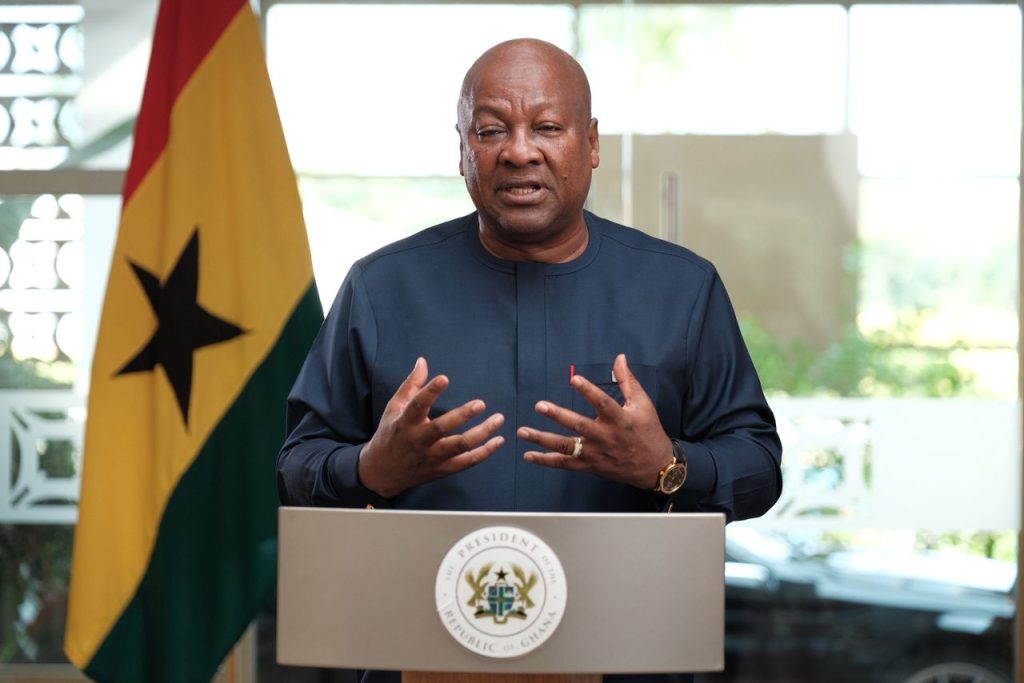
History doesn’t sit quietly, it lingers, it echoes, and when politicians reach for it, it has a way of reaching back. That tension is now swirling around John Dramani Mahama, as debates over reparations and historical accountability collide with the layered past of West Africa itself.
Mahama, like several African leaders before him, has spoken about the enduring harm caused by the Transatlantic Slave Trade, framing it as a global injustice whose consequences still ripple through economies, societies, and the African diaspora. It’s a position that resonates widely, especially among those calling for acknowledgment and material repair for centuries of exploitation.
But critics are pushing back, pointing to a more complicated historical backdrop, one that refuses to fit neatly into modern political messaging.
Mahama is associated with northern Ghana, a region historically tied to the Gonja Kingdom, one of several West African polities that participated in regional slave trading networks prior to and during the transatlantic era. Like others in the region, the Gonja were involved in systems of capture and exchange that ultimately fed into the larger Atlantic trade. That history is not unique, it spans multiple kingdoms and ethnic groups across West Africa, but it remains a documented part of how the system functioned on the ground.
For critics, this creates a rhetorical contradiction. They argue that invoking historical harm without acknowledging the role of African intermediaries risks presenting a one-sided narrative. In their view, it’s not just incomplete, it undermines the credibility of reparations arguments by ignoring the shared, if unequal, participation in the system.
Mahama is a descendant of the Gonja tribe, one of several West African polities that participated in regional slave trading networks prior to and during the transatlantic era.
That’s where the charge of hypocrisy comes in, sharp and unfiltered.
The criticism highlights a deeper fracture in the reparations debate itself.
One side demands precision, arguing that reparations should be tightly focused on direct descendants of enslaved people in the Americas, where the lineage of harm is continuous and traceable. The other side views the legacy of slavery and colonialism as a global system of exploitation, requiring a broader framework that includes both diaspora communities and African nations.
Mahama’s connection to the Gonja legacy doesn’t resolve that debate, it intensifies it.
Because the real issue isn’t just who suffered.
It’s how history is told, who tells it, and which parts are emphasized or omitted when the stakes shift from memory to money.
In the end, the reparations conversation isn’t being shaped only by the past.
It’s being shaped by how the present chooses to interpret it.
—Sylvester Loving, B1Daily


 B1Daily
Leave a comment