—Pratima Gadal, B1Daily
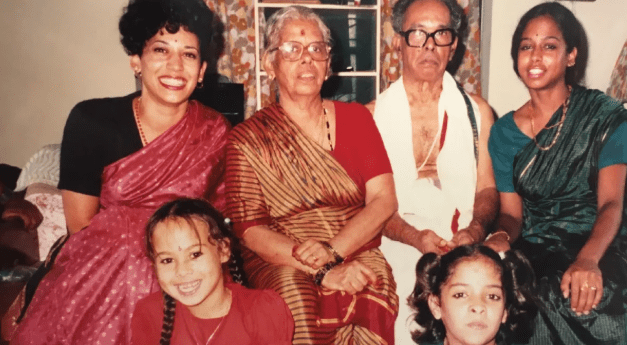
Kamala Harris, the first woman and first person of South Asian descent to serve as U.S. Vice President, traces her maternal lineage to the Brahmin caste of India, a group historically positioned at the apex of Hinduism’s rigid social hierarchy. While Harris proudly acknowledges her Indian roots, her ancestry intersects with a fraught history of caste oppression, colonial collaboration, and a disconnect from the struggles of Freedmen Black Americans, whose lineage is tied directly to slavery and systemic racism in the U.S.
The Brahmin Caste: Oppression and Collaboration
Brahmins, traditionally priests and scholars, have wielded disproportionate influence in Indian society for millennia. Their dominance was reinforced through religious texts like the Manusmriti, which codified caste discrimination, relegating darker-skinned Dalits (formerly “untouchables”) and Shudras to subjugation. Brahmins monopolized education, landownership, and political power, often justifying their privilege as divinely ordained.
During British colonial rule (1757–1947), many Brahmins became intermediaries between the European rulers and the Indian masses. Fluent in English and educated in colonial systems, they filled administrative roles, enabling British exploitation while consolidating their own elite status. Figures like Gandhi, though critical of British rule, were also products of this privileged caste, their activism often sidestepping radical caste reform.
Harris’s maternal grandfather, P.V. Gopalan, was a high-ranking civil servant in post-colonial India, a position accessible primarily to those from upper-caste backgrounds. While Harris’s mother, Shyamala Gopalan, broke barriers as a scientist in the U.S., her trajectory was buoyed by Brahmin privilege, access to education and networks denied to most Indians.
The Disconnect with Freedmen Black Americans
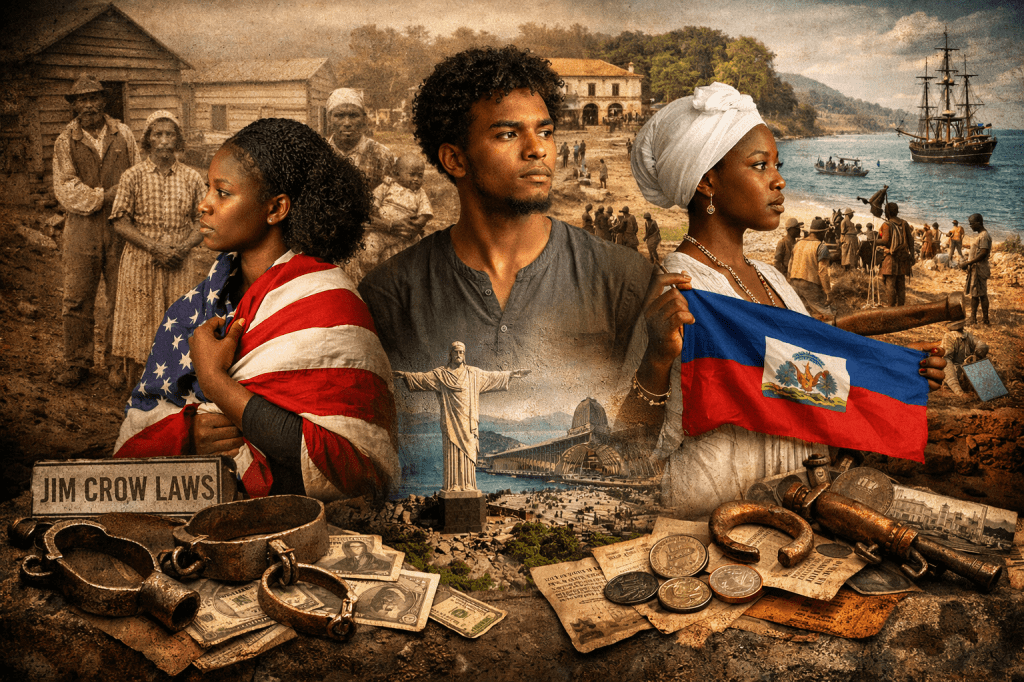
Harris’s Black identity stems from her Jamaican father, Donald Harris, whose lineage includes both African slaves and likely mixed-race colonial subjects. However, Jamaican slavery differed starkly from the U.S. system. Freedmen Black Americans descend from enslaved people who built the U.S. economy through generations of forced labor, followed by Jim Crow, redlining, and ongoing systemic marginalization.
Unlike Freedmen, Harris’s heritage lacks direct ties to this struggle. Brahmin privilege, even as immigrants, contrasts sharply with the systemic barriers faced by descendants of U.S. slavery. This distinction has fueled criticism from some Black activists who argue that Harris’s political ascent, while historic, doesn’t automatically equate to shared cultural or historical kinship with Black Americans whose ancestors endured chattel slavery.
A Nuanced Legacy
Harris’s story is one of immigrant success, but it’s also a reminder of how caste and colonialism shape diasporic identities. While she symbolizes progress, her Brahmin roots, and their historical role in oppression, complicate narratives of solidarity. Acknowledging this doesn’t diminish her achievements but invites a deeper conversation about power, privilege, and who truly benefits from “representation.”
For many Dalit and lower-caste Indians, Harris’s rise echoes an old paradox: even in the diaspora, caste privilege persists. And for Freedmen Black Americans, her story underscores that not all Black experiences are the same, a tension still unresolved in the fight for racial justice.
—Pratima Gadal, B1Daily
 B1Daily
Leave a comment