
—Michael Lyles, B1Daily
In discussions about global economics, the economic strength of Black America is often overlooked or underestimated. Yet when examined closely, the numbers reveal a remarkable reality: the economic output of Black Americans is larger than the combined economies of every nation in the Caribbean.
According to economic studies analyzing consumer spending, entrepreneurship, and labor contributions, the gross domestic product associated with Black Americans has reached roughly $1.7 trillion annually. If Black America were considered an independent economy, it would rank among the largest in the world, comparable to developed nations and significantly larger than many regional blocs.
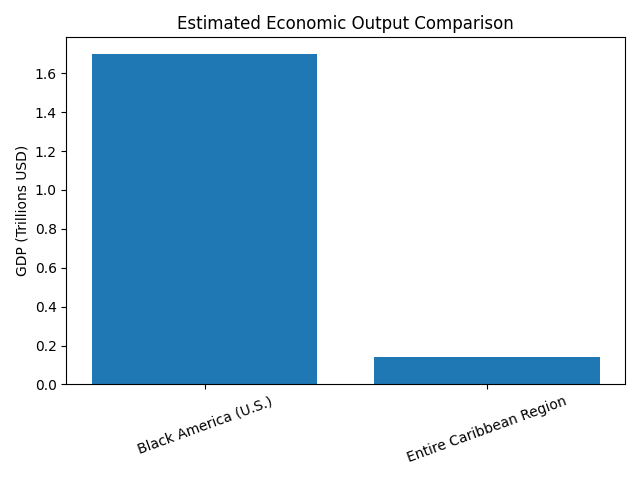
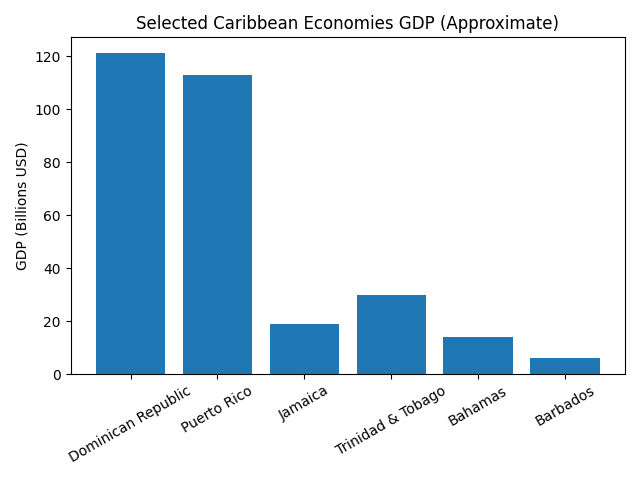
By comparison, the entire Caribbean region, including countries such as Jamaica, Haiti, Trinidad and Tobago, The Bahamas, and Barbados, has a combined GDP that falls well below that figure. While the Caribbean is home to more than 40 million people and dozens of island nations, its total economic output is estimated to be roughly $130–150 billion annually, depending on the year and economic conditions.
The comparison highlights the immense economic impact of Black Americans within the United States.
A Consumer Economy with Global Scale
Much of Black America’s economic power is reflected in consumer spending. Black households collectively spend hundreds of billions of dollars each year on housing, transportation, food, technology, and entertainment.
This spending drives major sectors of the American economy and significantly influences global brands, media industries, and cultural trends. From fashion and music to sports and digital media, Black consumers and creators shape markets far beyond U.S. borders.
Companies increasingly recognize this influence, investing heavily in marketing campaigns and product development aimed at Black consumers.
The Untapped Potential
Despite its enormous economic footprint, many economists argue that Black America’s true economic potential remains underdeveloped. Historical barriers, including redlining, discrimination in lending, and unequal access to capital, have limited wealth accumulation and business ownership.
If those structural barriers were reduced, the Black American economy could grow even further through increased entrepreneurship, investment, and wealth creation.
Some analysts believe that stronger support for Black-owned businesses, access to venture capital, and targeted economic policies could dramatically expand Black America’s already massive economic contribution.
Economic Power and Political Influence
The scale of Black America’s economic output also carries political implications. An economy worth trillions of dollars represents significant leverage in shaping policy debates, corporate behavior, and social priorities.
Advocates argue that greater economic organization, through investment networks, cooperative businesses, and community banking, could allow Black Americans to translate economic influence into stronger political and institutional power.
A Global Perspective
Comparing Black America’s GDP to that of the Caribbean is not meant to diminish the economies of those island nations. Instead, it illustrates how large and dynamic the Black American economic engine has become within the United States.
It also underscores the interconnectedness of the African diaspora. Cultural, economic, and historical ties between Black Americans and Caribbean nations remain strong, with migration, remittances, and shared heritage linking communities across borders.
Ultimately, the comparison reveals an important truth: Black America is not only a cultural powerhouse but also a major economic force on the global stage.
As awareness of this economic strength grows, it may reshape how policymakers, corporations, and communities view the role of Black Americans in shaping the future of the U.S. and global economy.
—Michael Lyles, B1Daily




 B1Daily
Leave a comment