
—Kerry Hill, B1Daily
In a development that has sent shockwaves through the legal and civil rights landscape, the U.S. Department of Justice has indicted the Southern Poverty Law Center, accusing the influential nonprofit of financial misconduct tied to its long-running efforts to monitor extremist groups.
According to the indictment, a federal grand jury returned multiple counts including wire fraud, bank fraud, and conspiracy to commit money laundering. Prosecutors allege that over a period spanning nearly a decade, the SPLC directed millions of dollars toward individuals embedded within extremist organizations, with those payments allegedly routed in ways that obscured their true purpose from donors.
At the heart of the case is a fundamental question: when does intelligence-gathering cross into deception?
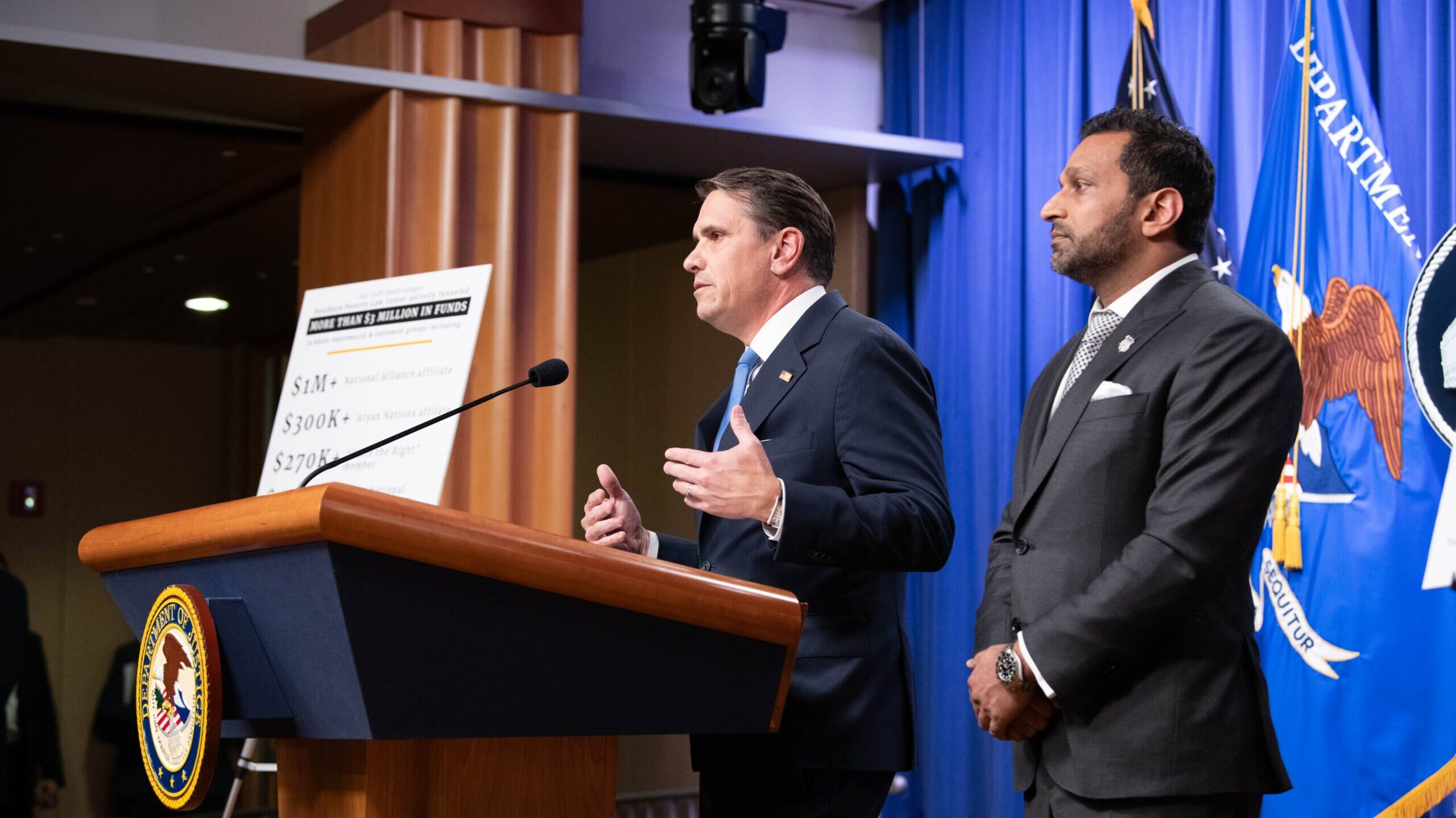
The DOJ claims the organization failed to properly disclose how donor funds were being used, suggesting that contributions intended to support civil rights work were instead funneled into covert operations. Some allegations go further, asserting that certain informants—placed inside groups such as white supremacist organizations—may have played roles that extended beyond passive observation.
The SPLC has forcefully rejected the charges. In its response, the organization argues that its use of informants is a standard and necessary tactic in tracking dangerous extremist networks, one that has historically contributed to law enforcement efforts and public safety. Leadership has characterized the indictment as politically motivated, framing it as an attack on a group that has long been a prominent watchdog against hate and extremism.
Legal analysts are already split on the implications. Some note that the use of paid informants is not unusual in investigative work, particularly when dealing with clandestine or violent groups. Others argue that the case hinges less on the use of informants and more on financial transparency—specifically whether donors were misled about how their money would be deployed.
The indictment also lands in an already polarized environment. Critics of the SPLC have long accused it of overreach and ideological bias, and they now see the charges as validation of those concerns. Supporters, however, warn that the case could have a chilling effect on organizations engaged in monitoring extremism, potentially discouraging aggressive investigative tactics at a time when such efforts remain critical.
For an organization that built its reputation on holding others accountable, the courtroom now becomes the arena where its own practices will be scrutinized in detail. The outcome could redefine not only the future of the SPLC, but also the boundaries of how nonprofits operate in the shadowy space between advocacy, investigation, and enforcement.
As the case unfolds, one thing is certain: this is no ordinary prosecution. It is a collision between law, politics, and the complex realities of confronting extremism in modern America.
—Kerry Hill, B1Daily






Leave a comment